CategoryHistory, Politics & Society

Does God Ever Lie? Who decides?

D
One of Christianity’s strongest claims about the character of God is also one of its most comforting: God does not lie. If human beings are unreliable, confused, self-interested, and capable of deception, God is supposed to represent something fundamentally different. Christians are encouraged to trust God’s promises precisely because God is understood as perfectly truthful. The idea...

Is Jesus Really the Only Way to God?

I

Christianity makes one of the largest claims a religion can make: there is one true God, Jesus uniquely reveals that God, and reconciliation with God ultimately comes through him. For many Christians, this conclusion feels less like a hypothesis than an established fact. They may point to the Bible, the resurrection, fulfilled prophecy, personal experiences of Jesus, answered prayer, the growth...

Did Jesus Rise From the Dead?

D

There are at least three very different claims hidden inside the question of whether Jesus was who Christianity says he was. The first is that Jesus of Nazareth existed. The second is that his followers believed extraordinary things about him, including that he performed miracles and appeared to them after his death. The third is that those supernatural events actually happened. These claims...

Did Jesus Actually Fulfill the Messianic Prophecies? A Deeper Look at What Judaism, Christianity, and the Hebrew Bible Say

D

One of the most familiar claims in Christianity is that Jesus fulfilled the prophecies of the Old Testament. Depending on which Christian source you encounter, you may hear that Jesus fulfilled dozens, hundreds, or even more predictions concerning the coming Messiah. For believers, these apparent fulfillments can seem like powerful evidence. If texts written centuries before Jesus accurately...

Why the United Nations Can’t Stop Wars?

W

The United Nations (UN) was founded on October 24, 1945, in the aftermath of the deadliest conflict in human history: the Second World War. Between 70 and 85 million people died, entire cities were destroyed, and the Holocaust exposed the devastating consequences of industrialized genocide. The founders hoped that by creating an international organization where nations could resolve disputes...

Resolution 181: Did the United Nations Know the Arab Majority Opposed Partition?

R

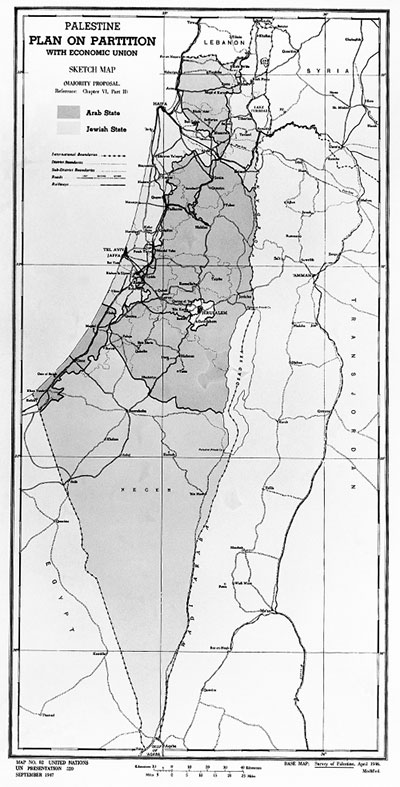
One of the most enduring questions surrounding the creation of Israel is not whether the United Nations recommended partitioning Mandatory Palestine in 1947. That is well documented. The more difficult question is whether the governments voting in favor of Resolution 181 understood that much of the Arab population living in Palestine opposed the proposal. The historical evidence leaves little...

Why Could the UN Partition Palestine but Not Stop the Violence?

W

History often leaves us with uncomfortable questions that have no simple answers. One of those questions emerges from Palestine in 1947. The United Nations General Assembly voted to recommend partitioning Mandatory Palestine into separate Jewish and Arab states through Resolution 181. Less than a year later, the State of Israel declared independence. War followed almost immediately, reshaping the...

What Was the Yishuv? How the Pre-State Jewish Community Became Israel

W

The modern State of Israel did not appear suddenly on May 14, 1948. Its creation was the culmination of decades of immigration, institution-building, diplomacy, political organization, conflict, and international decision-making. Long before Israel declared independence, a growing Jewish community known as the Yishuv had established schools, farms, labor unions, newspapers, hospitals, local...

Did the Nazis and Zionist Organizations Work Together?

D

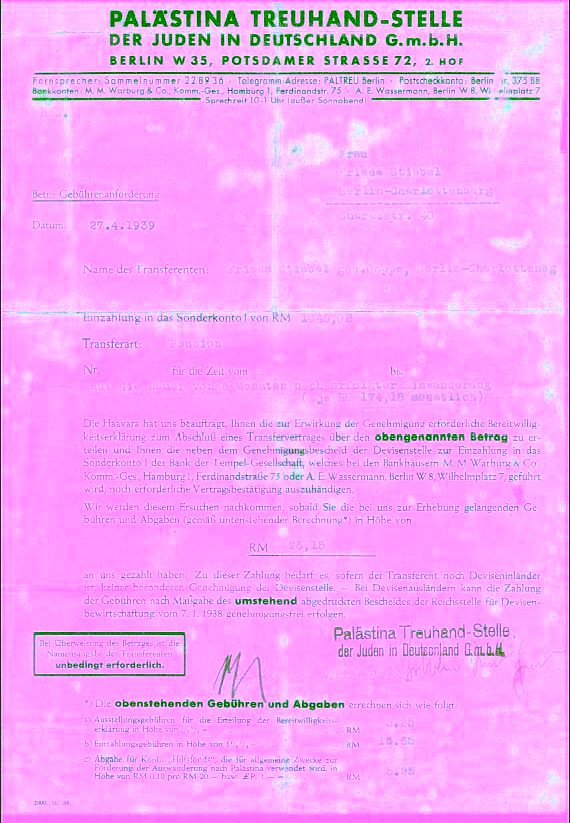
Few historical episodes generate as much controversy as the Haavara Agreement. It is frequently cited in political debates, often as proof that Zionists “collaborated” with the Nazis or, conversely, dismissed as an irrelevant footnote that has no bearing on history. Both claims oversimplify a far more complicated reality. The historical record leaves little doubt that representatives...

What Is Political Extremism?

W

Political disagreements are inevitable in any free society. Democracies depend on citizens holding different values, priorities, and visions for the future. One person may advocate for smaller government while another argues for stronger public institutions. Some support open immigration policies, while others favor tighter border controls. These disagreements are not signs that democracy is...

Get in touch

The 2nd Edition is Available Now!