History often leaves us with uncomfortable questions that have no simple answers.
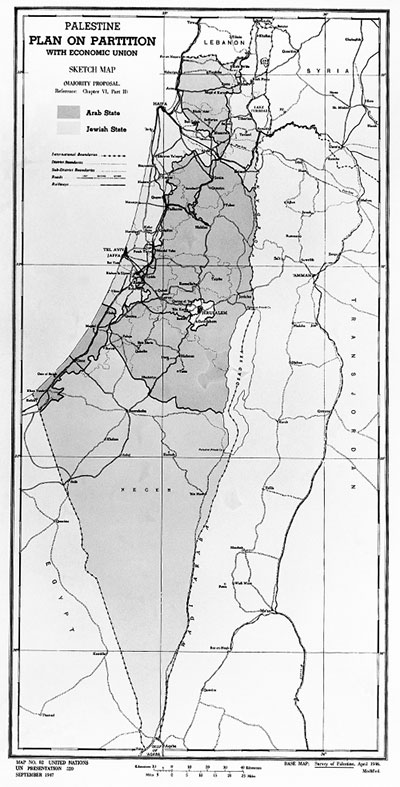
One of those questions emerges from Palestine in 1947. The United Nations General Assembly voted to recommend partitioning Mandatory Palestine into separate Jewish and Arab states through Resolution 181. Less than a year later, the State of Israel declared independence. War followed almost immediately, reshaping the Middle East and leaving hundreds of thousands of Palestinians displaced while establishing the first sovereign Jewish state in nearly two thousand years.
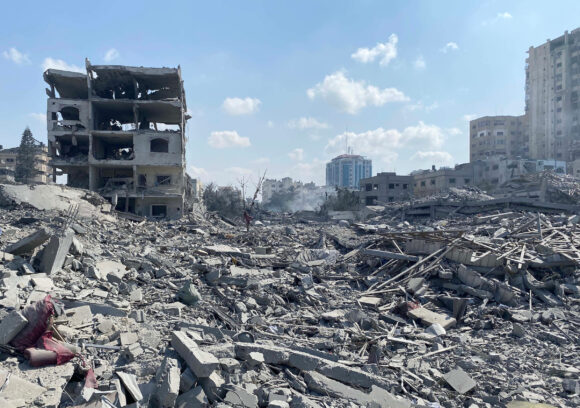
Nearly eight decades later, the same region remains one of the most closely watched conflicts on Earth. International organizations issue statements, courts hear legal arguments, ceasefire resolutions are proposed and vetoed, humanitarian agencies warn of catastrophic conditions, and governments continue debating what should be done. Meanwhile, thousands of civilians continue to die.
The contrast is striking.
How could the international community play such a significant role in creating a political framework in 1947 yet appear so limited when confronted with preventing immense human suffering today?
The answer lies not only in politics but in how international law was designed.
Resolution 181 Was a Recommendation, Not a Government
The United Nations was founded in 1945 after World War II with the hope that international cooperation could prevent another global catastrophe.
When Britain announced that it would end its Mandate over Palestine, it asked the United Nations to recommend a solution.
After months of investigation by the United Nations Special Committee on Palestine (UNSCOP), the General Assembly adopted Resolution 181 on November 29, 1947. The resolution recommended dividing Mandatory Palestine into separate Jewish and Arab states while placing Jerusalem under an international administration because of its religious significance to Jews, Christians, and Muslims.
The Jewish Agency accepted the proposal despite dissatisfaction with some of the proposed borders.
Many Palestinian Arab leaders and neighboring Arab governments rejected it, arguing that the United Nations lacked the authority to partition a country against the wishes of the Arab majority then living there and that the proposal violated the principle of self-determination.
Violence escalated almost immediately.
Civil war broke out within Mandatory Palestine, and after Israel declared independence on May 14, 1948, neighboring Arab states entered the conflict.
Resolution 181 therefore did not create peace.
It became one step within an already escalating crisis.
The United Nations Cannot Simply Order Countries to Comply
One of the most common misconceptions is that the United Nations functions like a world government.
It does not.
The General Assembly can recommend actions.
The International Court of Justice can issue advisory opinions and judgments in cases brought before it.
Various treaty bodies monitor compliance with international agreements.
The Security Council possesses stronger legal authority, but even its power depends upon the political realities of its permanent members.
This design was intentional.
The founders of the United Nations wanted international cooperation without creating a global government capable of overriding national sovereignty.
The result is an institution with significant moral authority but often limited enforcement power.
The Security Council Creates a Permanent Tension
Perhaps no institution better illustrates this contradiction than the United Nations Security Council.
Five permanent members—the United States, Russia, China, the United Kingdom, and France—possess veto power.
Even if nearly every other country agrees that action should be taken, a single veto from one permanent member can prevent binding Security Council measures.
Supporters argue that this structure prevents major powers from being forced into direct military confrontation.
Critics argue that it frequently paralyzes international action during humanitarian crises.
Both observations contain truth.
The system was designed to preserve stability among the world’s most powerful militaries.
It was never designed to guarantee rapid intervention whenever atrocities occur.
Genocide Is a Legal Determination
Public debate often uses the word genocide immediately after mass civilian deaths occur.
International law operates differently.
The 1948 Convention on the Prevention and Punishment of the Crime of Genocide defines genocide not simply by the number of people killed but by specific prohibited acts committed with the intent to destroy, in whole or in part, a national, ethnic, racial, or religious group.
That legal standard requires evidence not only of large-scale killing but also of genocidal intent.
Determining whether that threshold has been met is typically the role of courts rather than politicians.
Today, international legal bodies continue to examine allegations concerning Gaza. The International Court of Justice has ruled that South Africa’s genocide claim against Israel is legally plausible enough to proceed and has issued provisional measures ordering Israel to prevent acts prohibited under the Genocide Convention and facilitate humanitarian assistance. The Court has not issued a final ruling determining whether genocide has occurred. Other United Nations officials, humanitarian organizations, and legal scholars have reached differing conclusions regarding the available evidence and legal threshold.
Meanwhile, civilians continue to die regardless of which legal conclusions ultimately emerge.
The law often moves far more slowly than war.
The Contradiction Many People See
This creates a profound moral tension.
The international community demonstrated the ability to recommend partitioning Palestine in 1947, helping shape one of the most consequential political developments of the twentieth century.
Today, the same international system struggles to stop ongoing violence despite decades of experience, international treaties, satellite surveillance, instant global communication, humanitarian law, and widespread media coverage.
It is understandable that many observers ask:
If the world can help establish states, why can’t it reliably protect civilians?
If governments collectively promised after the Holocaust that “Never Again” would guide future action, why do humanitarian catastrophes continue to unfold in full public view?
These are not merely political questions.
They are questions about the limits of international institutions themselves.
Sovereignty Protects States and Limits Intervention
The difficulty begins with one of the foundational principles of modern international law.
States are sovereign.
This means governments generally control what happens within their own borders unless they consent to outside involvement or the Security Council authorizes collective action under the UN Charter.
That principle protects weaker nations from constant interference by stronger powers.
It also makes humanitarian intervention extraordinarily difficult.
Any attempt to weaken sovereignty enough to stop atrocities also creates the possibility that powerful countries could misuse that authority for political or military purposes.
The same rule that protects nations from domination can also delay international responses to human suffering.
Politics Never Disappears
International organizations are made up of governments.
Governments have alliances.
Military partnerships.
Economic interests.
Domestic elections.
Security concerns.
Historical relationships.
These realities shape international decision-making.
The United Nations cannot escape geopolitics because its member states bring geopolitics into every vote.
This is why responses to humanitarian crises often appear inconsistent.
Some conflicts receive extraordinary international attention.
Others receive comparatively little.
The inconsistency frustrates observers across the political spectrum because it raises difficult questions about whether human rights are applied universally or selectively.
Can International Law Evolve?
The international legal system has changed repeatedly since 1945.
The Universal Declaration of Human Rights.
The Genocide Convention.
The Geneva Conventions.
International criminal tribunals.
The International Criminal Court.
The Responsibility to Protect doctrine.
Each emerged because previous institutions proved inadequate for preventing suffering.
History suggests that international law often evolves only after the world recognizes the failures of its existing systems.
Whether today’s conflicts will produce further reforms remains uncertain.
What Can We Learn?
The history of Palestine illustrates one of the deepest paradoxes of modern international politics.
The international community possesses enough influence to shape history.
Yet it often lacks enough authority—or enough political agreement—to prevent history from becoming tragedy.
Resolution 181 helped create a political framework whose consequences continue to shape millions of lives.
The ongoing conflict reminds us that creating borders is far easier than creating lasting peace.
Perhaps the deeper lesson is that institutions, like individuals, are constrained by the identities they inherit. Nations pursue national interests. Alliances protect allies. Organizations operate within the authority they have been given rather than the authority many wish they possessed.
Understanding those limitations does not require accepting them.
It simply means recognizing that the gap between moral responsibility and political capability remains one of humanity’s greatest unresolved challenges.
Continue the Exploration
History often encourages us to ask who was right and who was wrong. Equally important is asking how human beings create systems that can accomplish remarkable things in one generation yet struggle to prevent suffering in the next.
Our book, Proof That You’re God, explores how identity, certainty, and the stories we inherit shape not only individuals but entire societies. By looking beneath the labels and divisions that define political conflict, we may begin to understand why peace remains so difficult—and why awareness is an essential part of creating a different future.