CategoryOur Blog

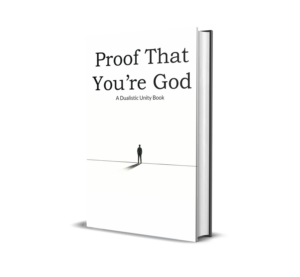
Reflections on awareness, identity, and meaning inspired by the Dualistic Unity podcast and our Book, “Proof That You’re God“. These articles explore culture, psychology, current events, and consciousness beneath everyday experience — not to provide answers, but to invite clearer seeing.

Is Jesus Really the Only Way to God?

I

Christianity makes one of the largest claims a religion can make: there is one true God, Jesus uniquely reveals that God, and reconciliation with God ultimately comes through him. For many Christians, this conclusion feels less like a hypothesis than an established fact. They may point to the Bible, the resurrection, fulfilled prophecy, personal experiences of Jesus, answered prayer, the growth...

Did Jesus Rise From the Dead?

D

There are at least three very different claims hidden inside the question of whether Jesus was who Christianity says he was. The first is that Jesus of Nazareth existed. The second is that his followers believed extraordinary things about him, including that he performed miracles and appeared to them after his death. The third is that those supernatural events actually happened. These claims...

Did Jesus Actually Fulfill the Messianic Prophecies? A Deeper Look at What Judaism, Christianity, and the Hebrew Bible Say

D

One of the most familiar claims in Christianity is that Jesus fulfilled the prophecies of the Old Testament. Depending on which Christian source you encounter, you may hear that Jesus fulfilled dozens, hundreds, or even more predictions concerning the coming Messiah. For believers, these apparent fulfillments can seem like powerful evidence. If texts written centuries before Jesus accurately...

“If You’re God, Make a Sandwich.”

&

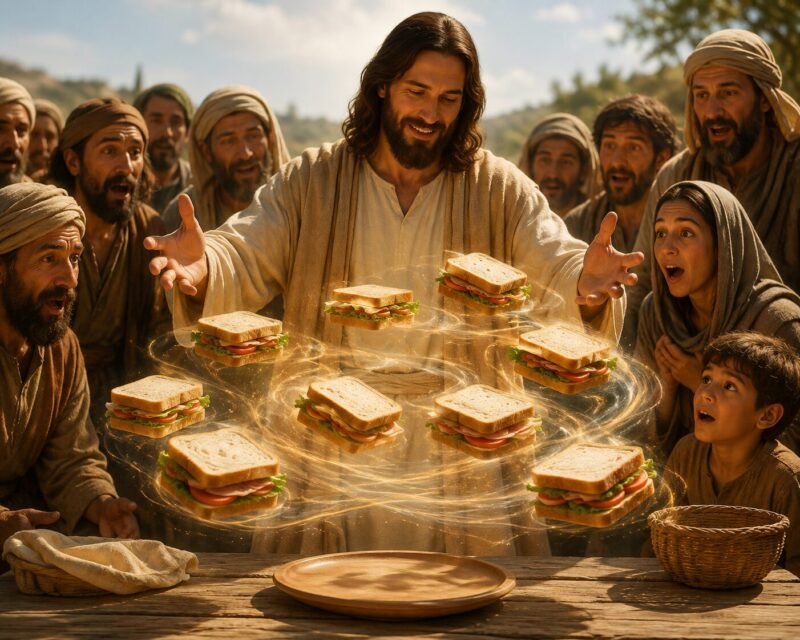
One of the most common reactions to the title of our book, Proof That You’re God, is immediate dismissal. “If you’re God, create a planet.” “Turn water into wine.” “Make a sandwich appear out of thin air.” At first glance, these responses seem like clever challenges. They appear to expose an obvious contradiction. If someone claims to be God...

Can the Bible Prove Itself?

C

Why Historians Separate Evidence from Belief One of the most persuasive arguments for many Christians is also one of the simplest: “The Bible says it is the Word of God, therefore it is the Word of God.” For someone who already accepts the Bible’s authority, this reasoning may feel entirely satisfying. Yet outside that framework, it raises an important question. Can any book...

If I Made Up Reality, How Do I Know You’re Real?

I

One of the most fascinating questions people ask when their beliefs begin to wobble is this: “If I make up my own reality, how do I know that you’re real and I didn’t make you up?” At first glance, it sounds like a profound philosophical challenge. It points toward solipsism, the idea that only your own mind can be known to exist. Philosophers have debated versions of this...

Can Billions of Christians Be Wrong? Why Popularity Isn’t Proof

C

One of the most common arguments for the truth of Christianity is surprisingly simple: How could billions of people be wrong? The reasoning feels intuitive. Christianity is the world’s largest religion, with more than two billion adherents. The Bible has been translated into thousands of languages, printed more than any other book in history, and continues to influence cultures around the...

Is there Spirituality Without Religion?

I

For much of human history, spirituality and religion were almost inseparable. If someone described themselves as spiritual, they usually belonged to a religious tradition. Their understanding of life’s deepest questions came through sacred texts, rituals, communities, and teachings that had often been passed down for centuries. Today, that relationship has changed. Many people identify as...

What Is Blind Faith? Why Trust Without Question Can Keep Us From Understanding Reality

W

Imagine you’re standing at the edge of a dense forest. Two paths stretch before you. A stranger points toward the left path and confidently says, “This is the only way. Don’t question it.” Another person standing nearby says, “I don’t know which path is correct. Let’s explore together.” Which person would you trust? Most of us would probably choose...

Being Hurt Doesn’t Mean You’re Right

B

Pain deserves compassion. Truth deserves investigation. One of the easiest mistakes to make during difficult conversations is assuming those two things are the same. When someone becomes hurt, offended, angry, or overwhelmed, the discussion often shifts away from the ideas being explored and toward deciding who deserves sympathy. Those are two very different questions. Hurt is real. Pain is real...

Get in touch

The 2nd Edition is Available Now!