Why Historians Separate Evidence from Belief
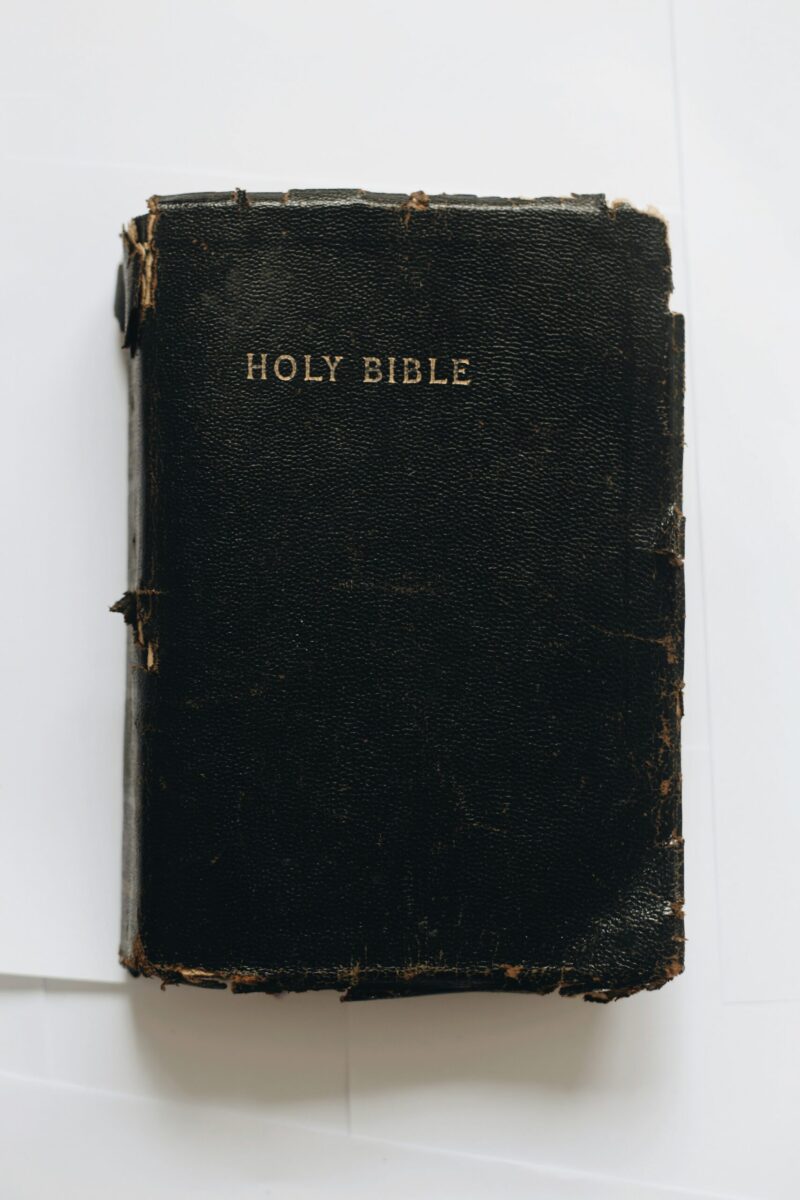
One of the most persuasive arguments for many Christians is also one of the simplest: “The Bible says it is the Word of God, therefore it is the Word of God.” For someone who already accepts the Bible’s authority, this reasoning may feel entirely satisfying. Yet outside that framework, it raises an important question. Can any book prove that it is true simply by making that claim?
The answer from history, philosophy, and logic is no.
This is not an argument against Christianity. It is a standard applied to every source of information. Any document may contain truthful statements, historical records, poetry, wisdom, eyewitness testimony, legend, or a combination of all of these. Determining which parts correspond to historical events requires examining evidence beyond the document’s own assertions.
That distinction is one of the foundations of historical inquiry.
Every Book Makes Claims About Itself
Imagine discovering an ancient manuscript that declared itself to be the perfect revelation of the universe. The manuscript insists repeatedly that everything written inside is true because it comes from a divine source.
Would historians conclude that the document had proven its own divine origin?
No.
They would ask who wrote it, when it was written, why it was written, how it was transmitted, whether independent sources support its historical claims, and what archaeological evidence exists. None of those questions assume the document is false. They simply recognize that every source deserves to be investigated rather than accepted solely on its own authority.
The Bible deserves the same thoughtful examination.
So does the Quran.
So do the Bhagavad Gita, the Book of Mormon, the Guru Granth Sahib, and every other religious text.
Using one standard for our own beliefs and another for everyone else’s makes it difficult to have an honest conversation.
The Bible Was Written by Many Human Authors
Many Christians believe that God inspired the Bible. That is a theological claim central to Christian doctrine.
Historically, however, the books of the Bible were written by numerous human authors over many centuries. The Bible is not a single book written at one moment. It is a collection of writings that includes law, poetry, songs, prophecy, letters, wisdom literature, biographies, and apocalyptic literature. The Old Testament developed across roughly a thousand years, while the New Testament was written during the first century CE by multiple authors or communities.
Jesus himself did not write any of the books that became the New Testament.
Likewise, no biblical manuscript claims to have been physically written by God.
For believers, divine inspiration explains why these human writings possess authority. For historians, the authors remain human beings living within particular cultures, languages, and historical circumstances.
Those are different ways of approaching the same collection of texts.
Inspiration Is Not the Same as Demonstration
Notice what happens when the conversation shifts from faith to evidence.
A Christian may sincerely believe God guided the authors of Scripture.
A Muslim may sincerely believe Allah revealed the Quran to Muhammad.
A Latter-day Saint may sincerely believe Joseph Smith translated the Book of Mormon through divine means.
Each claim depends upon accepting a particular religious framework. None of these claims can establish themselves merely by being written within the text itself.
This is why historians distinguish between theological belief and historical evidence. Theology begins with questions about God, revelation, and meaning. History begins by asking what can be established through documents, archaeology, language, and independent sources.
Neither discipline replaces the other.
They simply answer different kinds of questions.
A Well-Preserved Text Is Not Automatically a Verified History
One of Christianity’s strongest historical arguments concerns the preservation of the biblical manuscripts.
On this point, the evidence is impressive.
The New Testament survives in thousands of Greek manuscripts along with many thousands of early translations. Compared with many ancient works, scholars possess an extraordinary amount of textual evidence that allows them to compare copies and reconstruct the original wording with remarkable confidence.
That achievement deserves recognition. At the same time, preservation tells us something very specific. It tells us these writings were copied, transmitted, studied, and valued across generations.
It does not, by itself, demonstrate that every miracle occurred exactly as described or that every theological conclusion is historically verifiable.
Imagine finding thousands of carefully preserved copies of Homer’s Iliad. Their survival would provide confidence that we know what Homer wrote. It would not independently establish that every interaction between Achilles and the gods literally occurred.
Preservation and verification answer different questions.
Why Circular Reasoning Matters
The difficulty begins when the Bible is presented as both the claim and the proof. This is known in philosophy as circular reasoning. The reasoning follows a familiar pattern:
“The Bible is true because it is God’s Word.”
“How do we know it is God’s Word?”
“Because the Bible says so.”
That argument works only if the conclusion is assumed from the beginning.
Outside Christianity, the reasoning loses its persuasive force because the very point under discussion is whether the Bible’s claims should first be accepted. This principle extends far beyond religion. A scientist cannot prove an experiment by citing only the experiment’s own conclusions.
A journalist cannot verify a story by quoting only their own article.
A politician cannot demonstrate honesty simply by declaring themselves honest.
Independent evidence matters because it allows claims to be examined from multiple directions.
Agreement Is Not Evidence
Another argument frequently accompanies the Bible’s authority:
“Billions of Christians believe it. They can’t all be wrong.”
History encourages caution before accepting that conclusion.
Large numbers of people have sincerely believed ideas later shown to be incomplete or mistaken. For centuries, many accepted geocentrism, bloodletting, or the divine right of kings. Widespread agreement reflected cultural consensus, not objective proof.
The same principle applies to religion.
Christianity has over two billion followers.
Islam has nearly two billion.
Hinduism has over one billion.
Each tradition includes millions of intelligent, thoughtful, and deeply committed believers.
Their numbers tell us these religions profoundly shape human lives.
The numbers alone do not determine which theological claims are true.
Faith and Evidence Are Not Enemies
It is easy to assume that questioning evidence is an attack on faith.
It does not have to be.
Many Christian scholars openly acknowledge that faith and historical investigation operate differently. Faith involves trust, commitment, and personal conviction. Historical inquiry asks what can be demonstrated using publicly available evidence.
Recognizing this distinction does not diminish Christianity.
Instead, it clarifies what faith actually is.
If a belief could be proven beyond all doubt through historical methods alone, it would no longer require faith in the theological sense.
That realization invites a more honest conversation between believers and skeptics alike.
Asking Better Questions
The deeper question is not whether Christians are sincere. Millions undoubtedly are. The deeper question is not whether the Bible has shaped history. It unquestionably has.
The deeper question is whether a document can establish its own ultimate authority simply by claiming it possesses that authority.
History suggests that no source receives that privilege.
Every ancient document is examined through authorship, historical context, archaeology, independent corroboration, and careful scholarship. The Bible is no exception. Applying the same standard to every religious text is not hostility toward religion. It is consistency.
Whether someone ultimately concludes that the Bible is divinely inspired remains a matter of personal conviction. That conviction may be informed by history, philosophy, experience, theology, or community. What it cannot rest upon alone is the assertion that the Bible proves itself simply because the Bible says it does.
Truth deserves investigation.
Belief deserves honesty.
Neither is strengthened by confusing one for the other.
Continue the Exploration
Questions like these are not meant to end conversations—they are meant to begin better ones. Whether you identify as Christian, atheist, agnostic, spiritual, or simply curious, thoughtful dialogue becomes possible when we examine our assumptions with the same openness we ask of others.
If you enjoy exploring philosophy, psychology, spirituality, religion, and the human experience from multiple perspectives, continue the conversation with Proof That You’re God.
You’re also invited to join our live Patreon discussion this Sunday at 11:00 AM PST, where we explore these topics together through respectful, open-ended conversation. We welcome people of every worldview who are interested in asking deeper questions rather than defending easy answers.