
One of the first questions we ask when meeting someone is, “What’s your personality like?” The answers usually come quickly. Introverted. Extroverted. Shy. Confident. Creative. Logical. Funny. Serious. Optimistic. Anxious. These descriptions can be useful because they help us communicate patterns we notice about ourselves and others. Psychology has long recognized that...
The Addiction to Solving Yourself
Walk into almost any bookstore or scroll through social media, and you’ll find an endless stream of advice promising a better version of yourself. Become more disciplined. Heal your inner child. Wake up earlier. Meditate longer. Journal more consistently. Build better habits. Break limiting beliefs. Optimize your morning routine. Read fifty books a year. Take cold showers. Practice...
Why Do We Keep Waiting to Become Ourselves?
There is a quiet assumption woven into many of our lives: I’m not quite ready yet. We tell ourselves that life will truly begin after we lose the weight, find the relationship, earn the degree, leave the job, heal the trauma, make more money, become more disciplined, or finally feel confident. The list changes from person to person, but the underlying pattern remains remarkably consistent...
Why “Could Have Done Better” Doesn’t Mean You Did It Wrong
Few thoughts sound as reasonable as this one: “I could have done better.” On the surface, it appears humble, honest, and even motivating. After all, acknowledging room for improvement seems like a healthy way to learn. Sometimes it is. But for many people, “I could have done better” quietly transforms into something much harsher: “Because I could have done better, I...
Why Meditation Isn’t Working for You
Meditation has become one of the most widely recommended practices for reducing stress, improving attention, and supporting mental health. Thousands of scientific studies have found benefits ranging from reduced anxiety and depression symptoms to improved emotional regulation and increased psychological well-being. Mindfulness-based interventions are now used in hospitals, schools, workplaces...
Why You’re Really Addicted (It’s Not the Substance)
When people think about addiction, they often picture the substance itself. Alcohol. Nicotine. Opioids. Cocaine. Cannabis. Gambling. Social media. Pornography. Shopping. Food. The substance or behavior becomes the center of the conversation, as though it possesses some irresistible power over the person using it. Yet decades of research in psychology and neuroscience paint a more nuanced picture...
Why Every Problem Leads to Twenty More: Learning to Think in Systems
We often think of life as a collection of separate problems waiting for separate solutions. If we could just fix our anxiety, improve education, reduce poverty, strengthen our relationships, or reform society, everything else would gradually fall into place. Yet experience keeps teaching us something different. Solving one problem often reveals many others, each connected in ways we hadn’t...
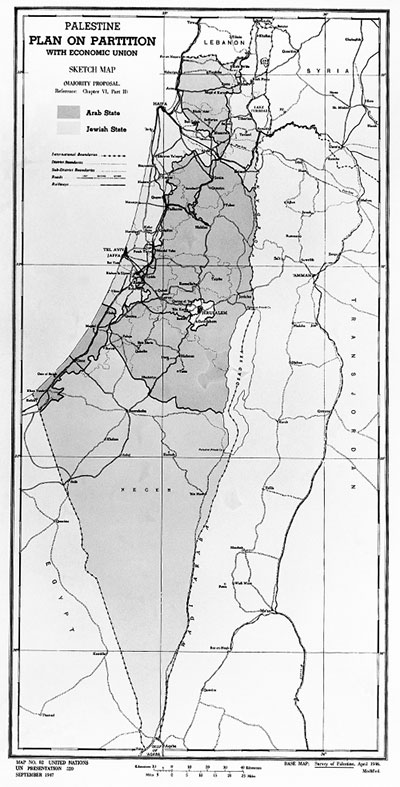
Resolution 181: Did the United Nations Know the Arab Majority Opposed Partition?
One of the most enduring questions surrounding the creation of Israel is not whether the United Nations recommended partitioning Mandatory Palestine in 1947. That is well documented. The more difficult question is whether the governments voting in favor of Resolution 181 understood that much of the Arab population living in Palestine opposed the proposal. The historical evidence leaves little...
Why Could the UN Partition Palestine but Not Stop the Violence?
History often leaves us with uncomfortable questions that have no simple answers. One of those questions emerges from Palestine in 1947. The United Nations General Assembly voted to recommend partitioning Mandatory Palestine into separate Jewish and Arab states through Resolution 181. Less than a year later, the State of Israel declared independence. War followed almost immediately, reshaping the...
What Was the Yishuv? How the Pre-State Jewish Community Became Israel
The modern State of Israel did not appear suddenly on May 14, 1948. Its creation was the culmination of decades of immigration, institution-building, diplomacy, political organization, conflict, and international decision-making. Long before Israel declared independence, a growing Jewish community known as the Yishuv had established schools, farms, labor unions, newspapers, hospitals, local...