
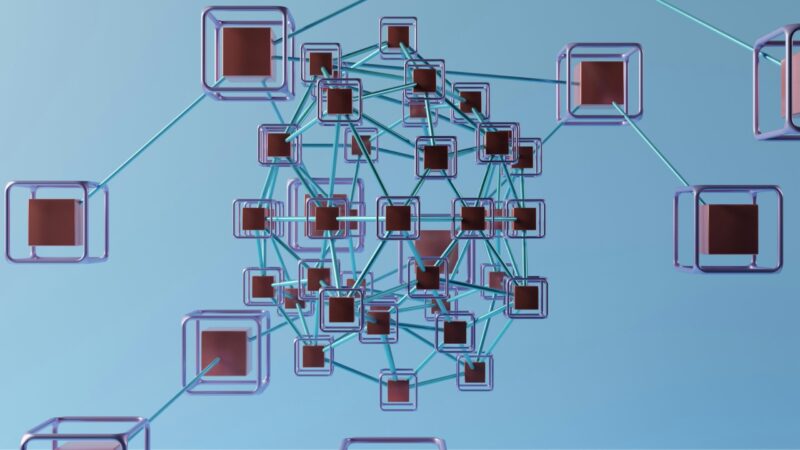
We often think of life as a collection of separate problems waiting for separate solutions. If we could just fix our anxiety, improve education, reduce poverty, strengthen our relationships, or reform society, everything else would gradually fall into place. Yet experience keeps teaching us something different. Solving one problem often reveals many others, each connected in ways we hadn’t considered.
Rather than being made of isolated parts, life is deeply interconnected. Learning to think in systems helps us understand why meaningful change is rarely about fixing one thing in isolation and more often about recognizing the relationships between many moving pieces.
Life Is Built on Interconnectedness
Across science, one lesson appears again and again: nothing exists entirely on its own.
Biologists study ecosystems as networks of relationships rather than collections of independent species. Economists examine how changes in one market ripple through others. Psychologists recognize that thoughts, emotions, biology, relationships, and environments constantly influence one another. Public health researchers understand that health outcomes are shaped not only by medicine but also by housing, education, nutrition, income, environmental conditions, and social support.
Whether we are looking at forests, families, cities, or entire civilizations, the same pattern emerges.
Everything exists within a system.
Why Simple Solutions So Often Fall Short
Many of our biggest frustrations begin with the hope that there must be one thing causing our problems.
If schools struggle, we look for one educational reform.
If crime rises, we search for one policy change.
If our mental health suffers, we hope for one technique that will solve everything.
Sometimes individual solutions genuinely make a meaningful difference. However, long-lasting change often requires understanding the many influences surrounding the issue we want to improve.
Researchers who study systems thinking describe systems as collections of interconnected parts whose interactions produce outcomes that cannot be fully understood by examining each part separately. Changing one part of the system often changes many others, sometimes in ways we never expected.
That is why complex problems rarely have simple causes—or simple solutions.
Nature Has Been Demonstrating This for Millions of Years
One of the clearest examples comes from ecology.
When wolves were reintroduced into Yellowstone National Park in 1995, scientists observed changes that extended far beyond the wolf population itself. Elk behavior changed because they avoided certain valleys. As grazing pressure declined, willow and aspen trees began recovering. Beaver populations increased because more trees became available for dam building. Wetlands expanded, creating habitat for fish, amphibians, birds, and countless other species.
Ecologists refer to these cascading effects as trophic cascades.
No single species existed independently of the others.
Each influenced the entire system.
Human societies often function the same way.
Society Is Not a Machine
We sometimes imagine society as though it were a machine with broken parts that simply need replacing.
Reality is considerably more complex.
Educational achievement is influenced by teachers, certainly, but also by nutrition, sleep, housing stability, healthcare access, parental education, family income, neighborhood safety, childhood stress, and early language exposure.
Crime rates are associated with overlapping factors that include poverty, childhood adversity, substance use, education, employment opportunities, policing practices, housing stability, and community cohesion.
Public health researchers similarly recognize that increasing life expectancy depends not only on hospitals but also on clean water, sanitation, vaccination, food security, education, environmental quality, and social connection.
Every issue exists within a network of relationships.
Attempting to fix one piece while ignoring the surrounding system often produces only temporary improvements.
The Mind Prefers Simple Stories
If life is so interconnected, why do we constantly search for one thing to blame?
Part of the answer lies in how our minds process information.
Psychologists have identified several cognitive biases that encourage us to simplify complexity. The fundamental attribution error leads us to explain people’s behavior primarily through personality while underestimating the influence of circumstances. The availability heuristic causes dramatic explanations to feel more convincing simply because they are easier to remember. Research on the need for cognitive closure shows that many people prefer quick, definite answers over prolonged uncertainty.
Simple explanations reduce mental effort.
Complexity requires patience.
The problem is that reality is under no obligation to become simpler simply because simplicity feels more comfortable.
Mental Health Is More Than a Single Variable
Consider anxiety.
Evidence-based therapies such as cognitive behavioral therapy have helped millions of people by changing patterns of thinking and behavior.
Yet anxiety can also be influenced by sleep quality, chronic stress, financial insecurity, trauma, physical illness, hormone levels, nutrition, social isolation, unsafe environments, substance use, discrimination, and workplace demands.
No single factor explains every person’s experience.
Improving several areas simultaneously often produces more lasting results than focusing on only one.
This does not mean every factor must be addressed before improvement becomes possible.
It means our lives are shaped by many influences interacting together.
Poverty Shows the Same Pattern
Poverty offers another powerful example of interconnectedness.
Increasing wages can improve financial stability.
Yet families also benefit from affordable housing, reliable transportation, accessible healthcare, quality education, childcare, safe neighborhoods, and employment opportunities.
Economists and public policy researchers increasingly describe poverty as multidimensional because financial resources interact with nearly every aspect of daily life.
Helping people often requires strengthening several connected systems rather than changing only one.
Relationships Don’t Exist in Isolation Either
People frequently believe that better communication alone will repair a struggling relationship.
Communication certainly matters.
But communication itself depends upon emotional regulation, trust, stress levels, physical health, financial pressures, attachment history, shared values, available time, and whether both people feel psychologically and physically safe.
A couple living under chronic financial stress may communicate differently than they would if those pressures disappeared.
The relationship cannot be separated from the life surrounding it.
Small Changes Can Create Big Ripples
Recognizing interconnectedness can feel overwhelming.
If every problem connects to many others, where do we begin?
Fortunately, complex systems contain feedback loops, meaning relatively small changes can sometimes create surprisingly large effects.
Helping a child develop strong reading skills early in life can influence educational achievement, career opportunities, health literacy, income, and eventually the opportunities available to the next generation.
Improving sleep may strengthen emotional regulation, decision-making, productivity, physical health, and relationships simultaneously.
Creating stronger local communities can reduce loneliness, improve mental health, increase resilience during emergencies, and strengthen trust among neighbors.
Small actions often spread much further than we realize because they become part of larger systems.
We Are Part of the System
Perhaps the easiest part of every system to overlook is ourselves.
When we speak about changing society, it can sound as though society exists somewhere outside us.
It doesn’t.
Society is the sum of billions of everyday interactions.
Every conversation influences someone.
Every act of patience changes an interaction.
Every teacher shapes future generations.
Every parent influences how a child will someday treat others.
Every friendship changes two lives at once.
The systems we hope to improve are continually being created through ordinary human behavior.
The system isn’t separate from us.
We participate in it every day.
Learning to See the Whole
One reason disagreements become so heated is that people often search for the cause of a problem.
Yet many of life’s most difficult challenges do not have one cause.
They have many.
Learning to think in systems invites us to ask different questions.
Instead of asking, “Who is responsible?” we begin asking, “What conditions helped create this?”
Instead of asking, “What’s the single solution?” we ask, “Which parts of the system can we strengthen?”
Instead of looking for one villain or one hero, we begin recognizing patterns, relationships, feedback loops, and unintended consequences.
This perspective does not eliminate complexity.
It helps us navigate it more wisely.
Life may never become simple.
But seeing its interconnectedness can make us more patient with ourselves, more compassionate toward others, and more thoughtful about the kinds of changes that truly endure.
Continue the Exploration
If this article resonated with you, consider how often we divide reality into separate pieces—self and other, success and failure, individual and society—when life continually demonstrates that everything influences everything else. Our book, Proof That You’re God, explores how identity, awareness, and human experience emerge within an interconnected reality, inviting readers to look beyond separation and discover a deeper relationship with themselves, others, and the living system we all share.