
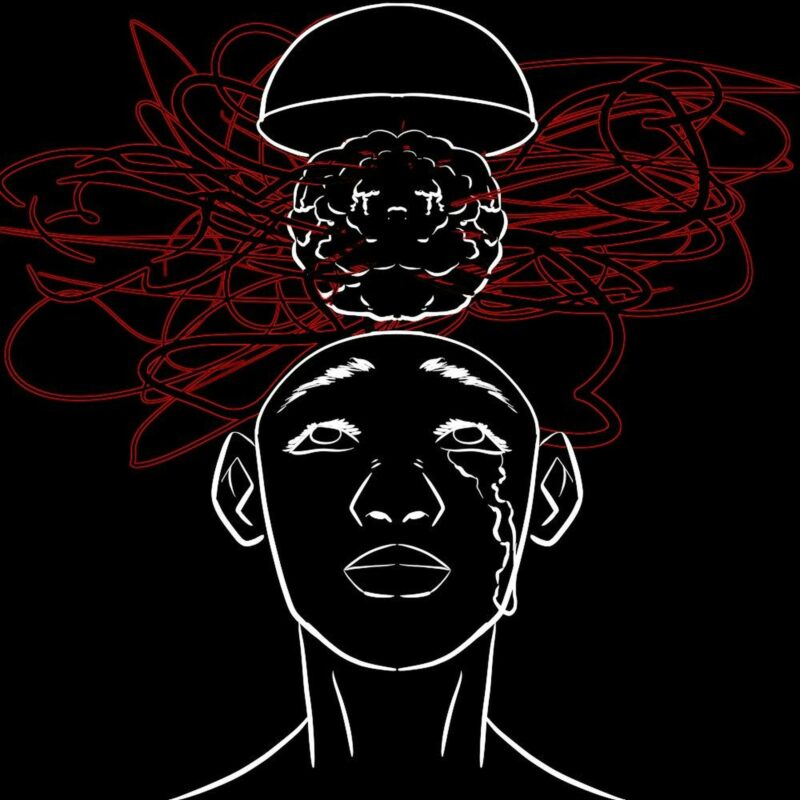
One of the most common frustrations people experience on the path of self-discovery sounds something like this:
“I’ve learned so much about myself. I’ve meditated. I’ve read the books. I’ve gone to therapy. Why won’t my mind just calm down?”
It’s an honest question, and one that many people quietly carry for years. We often assume that if we become healthy enough, aware enough, or spiritually mature enough, our minds will eventually settle into permanent peace. We imagine reaching a point where worry disappears, uncertainty no longer bothers us, and our thoughts become consistently calm, supportive, and reassuring.
When that doesn’t happen, it’s easy to conclude that we’ve failed.
But what if the problem isn’t that your mind refuses to become peaceful?
What if your mind was never designed to make peace its highest priority?
The Mind Has a Different Job
It is easy to think of the mind as though it exists to make us happy. Because we experience our thoughts so intimately, they often feel like the center of who we are. When those thoughts become anxious, repetitive, or fearful, we naturally conclude that something inside us has gone wrong.
Evolution tells a very different story.
The human brain did not evolve primarily to create happiness or inner peace. It evolved to increase the likelihood of survival and reproduction. Over hundreds of thousands of years, the individuals who noticed danger, remembered threatening situations, anticipated future problems, and responded quickly to uncertainty were generally more likely to survive long enough to pass on their genes.
This doesn’t mean the brain evolved only for fear. Human beings also developed extraordinary capacities for love, cooperation, creativity, curiosity, play, and compassion because those qualities also helped our ancestors survive and thrive. Yet our attention remains naturally drawn toward potential problems because overlooking danger often carried far greater consequences than overlooking comfort.
Your mind is not asking, “How can I become peaceful today?” More often, it is asking, “What might I be missing that could become a problem later?”
Why Negative Thoughts Arrive So Easily
Researchers often describe a phenomenon known as the negativity bias, the tendency for our brains to pay more attention to threats, criticism, losses, and unpleasant experiences than equally positive ones. This bias doesn’t mean human beings are naturally pessimistic. Rather, it reflects an adaptive strategy that helped our ancestors remain alert to situations that could threaten survival.
Imagine two prehistoric humans walking through a forest. One notices the beauty of the sunrise while the other notices movement in the bushes. Both observations are valuable, but only one may determine whether they survive the next few minutes.
Thousands of generations later, our nervous systems continue operating according to many of those same priorities, even though the dangers we face today are far more likely to involve finances, relationships, social rejection, health concerns, or uncertainty about the future than predators hiding nearby.
Your brain is still performing an ancient job in a modern world.
Prediction Is the Mind’s Greatest Strength
One of the brain’s most remarkable abilities is prediction.
Modern neuroscience increasingly describes the brain as a prediction engine. Rather than simply reacting to reality after events occur, the brain continuously generates expectations about what is likely to happen next. It compares incoming information with previous experiences, updates its predictions, and prepares the body to respond efficiently.
This remarkable ability allows you to recognize familiar faces instantly, catch a ball before consciously calculating its path, understand language almost effortlessly, and navigate familiar places without analyzing every decision from scratch.
Prediction makes everyday life possible.
It also explains why uncertainty feels so uncomfortable.
When the future becomes difficult to predict, the brain naturally becomes more active. It gathers information, imagines possible outcomes, rehearses conversations, and searches for patterns that restore a sense of certainty. From the brain’s perspective, uncertainty is not automatically dangerous. It simply represents incomplete information, and incomplete information makes accurate prediction more difficult.
Why Overthinking Feels Like Progress
Many people become frustrated because they recognize that overthinking rarely solves their problems, yet they continue doing it anyway. If it isn’t effective, why is it so difficult to stop?
The answer may lie in the purpose overthinking serves.
Imagine waiting for medical test results, wondering whether someone still loves you, or facing a major financial decision. The mind begins constructing possible futures. It rehearses conversations that haven’t happened, anticipates problems that may never arise, and repeatedly revisits the same information from different angles.
Objectively, very little changes.
Subjectively, it feels like progress because the brain believes it is becoming more prepared.
Your mind is attempting to reduce uncertainty by predicting every possible outcome before reality unfolds. The strategy often becomes exhausting because reality contains more possibilities than thought can ever fully simulate. Even so, the intention behind overthinking is understandable.
Your mind is trying to protect you.
Peace Is Not the Mind’s Responsibility
Recognizing the evolutionary purpose of the mind changes something important.
If the brain evolved to detect threats, reduce uncertainty, and prepare for the future, expecting it to generate permanent peace may be asking it to perform a task it was never designed to do.
That doesn’t make your mind defective.
It makes our expectations unrealistic.
Imagine criticizing your immune system because it notices viruses, or blaming your stomach because it reminds you that you’re hungry. Those systems perform important functions whether or not we enjoy the sensations they create.
The mind behaves similarly. Its role is to monitor, compare, predict, remember, and prepare. Those abilities have helped our species survive for hundreds of thousands of years.
Peace belongs to a different dimension of experience altogether.
When Survival Becomes the Meaning of Life
The real difficulty begins when the survival systems of the mind quietly become the foundation of our identity.
If every uncertain situation becomes a problem that must be solved immediately, every uncomfortable emotion becomes evidence that something is wrong, and every mistake becomes proof that we are failing, survival gradually expands beyond its original purpose.
Instead of helping us navigate life, it begins defining life.
We start evaluating every experience according to one central question:
“Am I safe?”
Safety is undeniably important. Without it, many other aspects of life become impossible. Yet once our basic survival needs are reasonably met, life begins presenting questions that survival alone cannot answer.
Can you love someone despite the possibility of heartbreak?
Can you create something despite the possibility of criticism?
Can you speak honestly despite the possibility of rejection?
Can you remain curious despite uncertainty?
These questions are not primarily about survival.
They are about meaning.
Meaning Requires More Than Safety
Consider some of the experiences people consistently describe as the most meaningful moments of their lives.
Falling in love.
Becoming a parent.
Creating art.
Traveling somewhere unfamiliar.
Starting a business.
Having a vulnerable conversation.
Helping another human being without expecting anything in return.
Every one of these experiences involves uncertainty. None comes with guarantees, and all involve some degree of emotional risk. If survival were the only priority, many of these experiences would appear unnecessarily dangerous. Love can end in heartbreak. Creativity invites criticism. Vulnerability can lead to rejection. Purpose often requires leaving familiar routines behind.
Yet these experiences frequently become the moments people treasure most.
Meaning and safety often overlap.
They are not the same thing.
Awareness Changes the Conversation
This is where awareness becomes so valuable.
Awareness does not silence the survival systems of the mind, nor should it. Instead, it helps us recognize those systems for what they are. We begin noticing that anxious thoughts are attempts to predict uncertainty rather than objective descriptions of reality. We recognize that the mind is trying to protect us, even when its predictions are inaccurate or unnecessarily alarming.
That realization creates space.
Instead of becoming completely identified with every fearful thought, we can appreciate the intelligence behind the mind’s efforts while recognizing that survival is only one part of being human. We stop demanding that the mind provide permanent peace and begin appreciating the extraordinary work it already performs.
Awareness doesn’t eliminate the mind’s activity.
It changes our relationship with it.
Peace Arrives Differently
Perhaps peace has been misunderstood all along.
Many of us imagine peace as the complete absence of anxious thoughts, emotional discomfort, or uncertainty. We expect the mind to eventually stop predicting problems so we can finally relax.
Life offers another possibility.
Peace may not arise because the mind stops doing its job. It may arise because we stop asking the survival systems of the mind to tell us what makes life meaningful. Once we recognize that the brain evolved to protect us rather than fulfill us, we become free to discover meaning through connection, creativity, compassion, curiosity, love, and presence.
The mind continues scanning for possible problems, just as the heart continues beating and the lungs continue breathing. None of those systems need to stop functioning for us to experience a meaningful life.
Peace is not something the mind manufactures.
It is something we begin noticing when survival no longer becomes the measure of every moment. In that space, life is no longer reduced to avoiding danger. It becomes an opportunity to participate fully in an experience that is richer, deeper, and far more mysterious than the mind could ever completely predict.
Continue the Exploration
If this reflection resonated with you, continue exploring these ideas in Proof That You’re God, where we examine awareness, identity, uncertainty, and the remarkable intelligence of the human mind. Rather than treating the mind as an enemy to conquer or silence, the book invites you to understand its evolutionary purpose while discovering the deeper awareness that allows life to be experienced beyond survival alone.
You’re also invited to join our Patreon community for our live Sunday group call at 11:00 AM PST, where we explore these ideas together through open conversation. Sometimes the greatest shift isn’t learning how to stop thinking—it’s discovering that your thoughts were never meant to carry the entire weight of what it means to be alive.