What Dignity Looks Like When It No Longer Defends Itself
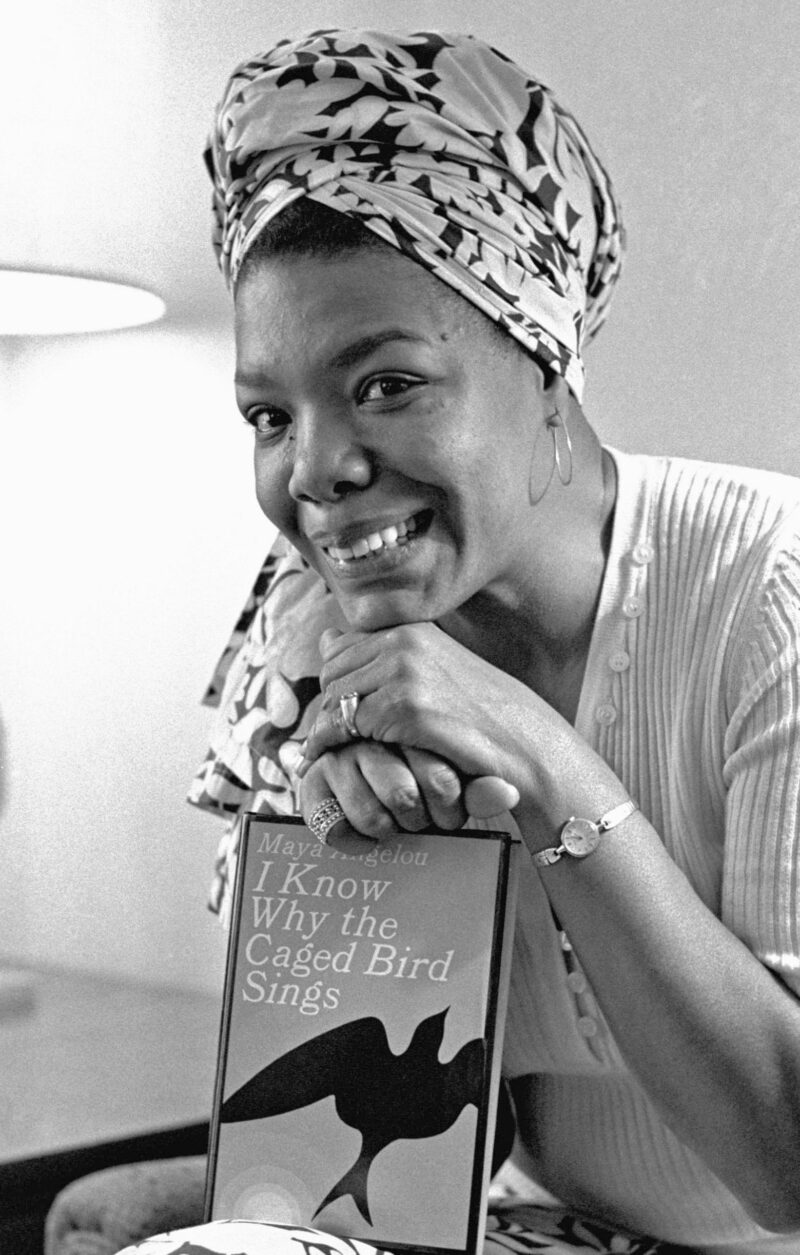
Maya Angelou is often remembered for her strength.
Her voice.
Her posture.
Her refusal to shrink in a world that repeatedly asked her to.
But to say she taught strength is to misunderstand what people actually felt in her presence.
Maya Angelou didn’t instruct people on how to be strong.
She revealed something that was already there — something that becomes visible only when a person stops negotiating with their own dignity.
That distinction matters.
Because teaching implies effort, technique, and self-improvement. What Angelou embodied was different. It was recognition. When people encountered her work, they didn’t feel coached. They felt remembered.
This is why her words still land with weight decades later. Not because they are clever or motivational, but because they come from a place beneath performance — the place where strength exists before it hardens into armor.
Strength That Was Never Built — Only Uncovered
Much of modern culture frames strength as something earned through suffering.
You endure.
You harden.
You overcome.
But Angelou’s life points to a subtler truth: suffering doesn’t create strength — it reveals what was already present when survival stopped requiring apology.
She lived through trauma, racism, silencing, and violence. Those experiences shaped her story, but they did not manufacture her dignity. They simply made it visible.
This is a core insight echoed throughout Proof That You’re God: identity is not constructed through adversity so much as uncovered when resistance loosens. What we call “becoming strong” is often just the moment we stop abandoning ourselves in order to be accepted.
Angelou didn’t become powerful by defeating her circumstances.
She became unmistakable by refusing to disappear inside them.
She Didn’t Perform Wisdom — She Lived From It
There are writers who persuade.
There are speakers who impress.
And then there are people whose words land differently — not because they are polished, but because they are inhabited.
Angelou’s authority never came from expertise alone. It came from contact. With her body. With her history. With grief, joy, shame, delight, and memory — all allowed to coexist without being reduced to lessons.
This is why her work resists summarization. You can quote her endlessly and still miss the point if you approach her as an idea instead of a presence.
She wasn’t offering conclusions.
She was standing somewhere.
Identity Without Imprisonment
Much of Angelou’s work speaks directly from identity — race, womanhood, history, pain — yet she was never confined by those categories.
This is a rare balance.
Many people feel forced to choose between:
- dissolving identity to avoid limitation, or
- clinging to identity for safety and recognition.
Angelou did neither.
She spoke from identity without mistaking it for the whole of what she was. Her life demonstrated something subtle and radical: identity can be honored without being treated as the source of self.
This same tension — between the self we think we must protect and the deeper awareness beneath it — is explored in The self you’re trying to hold together, which looks at how identity hardens under pressure and what becomes possible when it softens instead:
https://dualisticunity.com/the-self-youre-trying-to-hold-together/
Angelou didn’t reject identity. She let it remain permeable.
“When Someone Shows You Who They Are…”
One of Maya Angelou’s most widely shared lines is often framed as boundary advice:
“When someone shows you who they are, believe them the first time.”
But beneath the relational framing is a deeper perceptual insight.
Reality does not require interrogation.
The suffering comes from negotiating with what we already see.
This orientation mirrors a central theme in Proof That You’re God: clarity does not arise from force or correction, but from allowing what is present to be seen without distortion.
Angelou wasn’t encouraging judgment.
She was inviting honesty — the kind that stops exhausting itself by pretending confusion where there is already recognition.
Her Relationship With Martin Luther King Jr.
Angelou’s orientation toward dignity and clarity was not isolated.
She worked closely with Martin Luther King Jr., serving as Northern Coordinator for the Southern Christian Leadership Conference at his request. Their relationship was not simply political — it was philosophical.
Both understood something that often gets lost in historical retellings:
Justice is not created by domination. It is revealed by presence.
King’s nonviolence was frequently mischaracterized as gentleness or passivity. In reality, it was precision. A refusal to let reaction dictate reality.
Angelou carried the same precision in her voice and posture.
Neither relied on force. Both relied on clarity — a clarity that made distortion impossible to ignore.
Joy Without Denial
Another quiet misunderstanding surrounds Angelou’s joy.
Joy is often mistaken for optimism or denial — as if acknowledging beauty somehow erases suffering.
Angelou’s joy was neither naive nor performative. It existed alongside memory. Alongside grief. Alongside history.
This is not joy as escape.
It is joy as orientation.
The recognition that pain does not get to be the final authority unless we hand it over.
In Proof That You’re God, this is described not as transcendence, but as intimacy — the willingness to remain present with experience without collapsing into it.
Angelou’s joy was not something she added to her life.
It was what remained when self-betrayal ended.
Why Her Strength Feels So Rare Now
We live in a culture that confuses strength with certainty.
With loudness.
With dominance.
With unshakeable opinions.
Angelou embodied a different kind of strength — one that does not require defensiveness or control. One that does not need to be proven.
This kind of strength emerges when awareness stops turning against itself.
When the self no longer needs to be held together through effort.
When presence replaces performance.
That is why her voice still resonates. Not as nostalgia, but as relief.
What She Modeled Without Instruction
Angelou never told people to “find themselves.”
She showed what happens when someone stops leaving themselves.
When presence replaces posturing.
When dignity no longer negotiates.
When identity is held lightly enough to breathe.
Her life quietly demonstrated something radical:
You do not need permission to take up space as you are.
You do not need to become more to be whole.
Closing Reflection
Maya Angelou didn’t teach strength.
She revealed what strength looks like when it no longer needs to defend itself.
That kind of strength doesn’t come from becoming better.
It comes from remembering what was never missing.
And when we encounter someone living from that place, something in us relaxes.
Not because we have learned something new — but because we recognize something ancient.
If this exploration resonates, Proof That You’re God looks more deeply at how awareness, identity, and control quietly shape our experience — and what becomes possible when we stop mistaking effort for truth.