
The Rothschild Family’s Documented Role in Palestine and the Creation of Israel
Executive summary
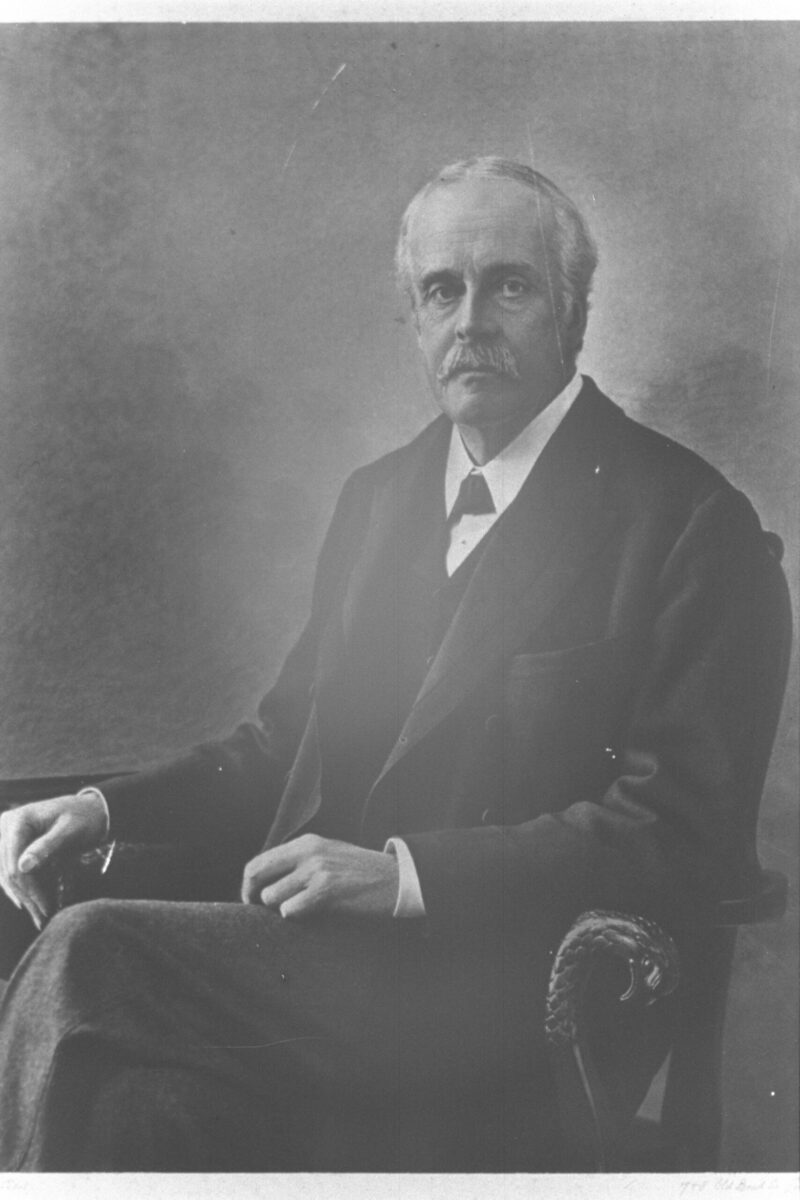
The Balfour Declaration was an official statement of British government policy issued on November 2, 1917. It took the form of a short letter from British Foreign Secretary Arthur James Balfour to Lionel Walter Rothschild, 2nd Baron Rothschild.
Balfour signed and transmitted the final letter, but he did not create the policy alone. Its wording developed through negotiations among British officials and Zionist leaders, including Chaim Weizmann and Nahum Sokolow. Several drafts circulated before the British War Cabinet approved the final policy on October 31, 1917.
The declaration was not signed as a treaty, passed by Parliament or approved by the population of Palestine. It was a unilateral British policy announcement made during the First World War, while Palestine was still formally part of the Ottoman Empire and before Britain had established internationally recognized administrative authority there.
The declaration did not explicitly promise an independent Jewish state. It supported “the establishment in Palestine of a national home for the Jewish people,” while stating that nothing should prejudice the civil and religious rights of Palestine’s existing non-Jewish communities or the rights of Jews in other countries. The phrase “national home” was deliberately less precise than “state.”
The declaration later acquired greater international and legal significance when the principal Allied powers supported its policy and the League of Nations incorporated it into the Mandate for Palestine, approved in 1922.
Specific Rothschild family members played documented roles:
- Lionel Walter Rothschild received the declaration and conveyed it to the Zionist Federation.
- Baron Edmond de Rothschild, a French member of another branch of the family, financed Jewish agricultural settlements in Ottoman Palestine beginning in the 1880s.
- Edmond and his son James were involved in institutions managing land, agriculture and settlement development.
However, the family did not possess legal authority to assign Palestine to anyone. Britain made the declaration, Allied governments supported the policy, the League of Nations approved the Mandate, Zionist organizations built political institutions, and the State of Israel was ultimately declared in 1948 following the termination of British rule and the United Nations partition recommendation.
The Palestinian Arab majority was not asked to approve the Balfour Declaration. No Palestinian referendum or representative vote authorized the designation of Palestine as the location for a Jewish national home.
1. What exactly was the Balfour Declaration?
The Balfour Declaration was a letter dated November 2, 1917, sent by Arthur James Balfour, Britain’s Secretary of State for Foreign Affairs, to Lord Rothschild.
Its central statement read:
His Majesty’s Government view with favour the establishment in Palestine of a national home for the Jewish people.
It added two qualifications: nothing should prejudice the civil and religious rights of Palestine’s existing non-Jewish communities, and nothing should prejudice the rights or political status of Jews in other countries.
The letter asked Lord Rothschild to communicate the declaration to the Zionist Federation. It was therefore an official British government message delivered through a prominent British Jewish supporter of Zionism.
The declaration was extremely brief, but its consequences were substantial. It placed the British government behind the Zionist objective of establishing a Jewish national home in Palestine.
2. Who physically wrote and signed it?
Arthur James Balfour signed the letter
The only signature on the final declaration was that of Arthur James Balfour.
Balfour was Britain’s Foreign Secretary in the wartime government led by Prime Minister David Lloyd George. The British government itself identifies him as the author of the declaration, although the final language was the product of a longer drafting and approval process.
Lord Rothschild did not sign the declaration as a co-author or contracting party. He was its recipient.
The declaration was not a bilateral agreement between Britain and the Rothschild family. It was a British government statement addressed to Lord Rothschild for transmission to the Zionist movement.
3. Who helped draft the declaration?
The final wording emerged from months of proposals, revisions and negotiations.
Important participants included:
- Arthur Balfour
- Prime Minister David Lloyd George
- Lord Milner, a member of the War Cabinet
- Leo Amery, a British official associated with the War Cabinet
- Mark Sykes, a British diplomat and political adviser
- Chaim Weizmann, a leading Zionist organizer
- Nahum Sokolow, a Zionist diplomat
- Lord Rothschild and other members of the British Zionist movement
- Edwin Montagu and other Jewish opponents or critics of political Zionism
Zionist leaders submitted proposed language to the British government. British officials then changed and narrowed the wording through successive drafts.
An archived October 3, 1917 letter from the Zionist Organization to the War Cabinet was signed by Rothschild and Weizmann, confirming that both men participated in presenting the Zionist position to the government.
This does not mean that Rothschild and Weizmann had the power to issue the declaration. They lobbied and negotiated for it. The British government decided whether to adopt it.
Why wording mattered
Earlier Zionist proposals sought language that more directly recognized Palestine as the national home of the Jewish people.
The final declaration instead supported establishing a national home “in Palestine.” It also added protective clauses concerning non-Jewish communities in Palestine and Jews living elsewhere.
These changes reflected disagreement within the British government and among British Jews. Some Jewish leaders opposed Zionism because they feared it could undermine their citizenship by suggesting that Jews living in Britain or other countries belonged politically somewhere else.
The final statement was therefore a compromise, not simply a Zionist draft accepted word for word.
4. Who officially approved the declaration?
The British War Cabinet
The declaration was approved as government policy by the British War Cabinet on October 31, 1917.
The final letter was issued two days later, on November 2.
The United States State Department’s historical records describe the declaration as a statement “approved by the Cabinet.”
The War Cabinet was the senior British executive decision-making body during the First World War. Its approval—not Lord Rothschild’s—gave the declaration its status as an official British policy.
Was there a parliamentary vote?
There was no separate vote of the full British Parliament authorizing the declaration before it was issued.
Balfour announced a policy approved by the government through the Cabinet system. Parliament later discussed and debated the declaration, but the original statement was not enacted as an ordinary statute.
This is an important distinction:
- It was official British policy.
- It was not a treaty signed by Britain and Palestine.
- It was not a law passed after a parliamentary referendum or public vote.
- It was not approved by Palestinian representatives.
5. Did King George V sign it?
No.
The final Balfour Declaration bears Balfour’s signature. It was issued in the name of His Majesty’s Government, which was the standard designation for the British government under the monarchy.
There is no royal signature on the declaration.
Under Britain’s constitutional system, major policy was made by ministers and the Cabinet, even though it was formally expressed in the name of the Crown.
6. Did Lord Rothschild sign or approve it?
Lord Rothschild did not sign the final declaration as an authorizing party.
He was:
- A prominent British Jewish aristocrat
- A former member of Parliament
- A supporter of Zionism
- An intermediary between the British government and the Zionist Federation
- The recipient of Balfour’s letter
The Rothschild Archive identifies Lionel Walter Rothschild as the person to whom Balfour addressed the declaration in his capacity as an unofficial leader within the British Jewish community.
Rothschild participated in advocacy and transmitted Zionist proposals to the government. He approved of the project politically, but his personal approval did not give the declaration governmental or legal force.
7. Who selected Palestine as the location?
There was no single meeting at which the Rothschild family or the British government first “chose” Palestine from a list and assigned it to the Jewish people.
The focus on Palestine developed primarily within the Zionist movement because of the land’s central place in Jewish history, religion and collective memory.
Theodor Herzl and other political Zionists considered different diplomatic possibilities during the movement’s early history. A British proposal in 1903 concerned territory in East Africa, commonly called the Uganda proposal, but it was rejected by the Zionist movement after intense disagreement.
The Zionist movement formally focused on establishing a legally secured Jewish home in Palestine well before the Balfour Declaration. The First Zionist Congress in 1897 adopted the Basel Program, which identified Palestine as the location of the proposed Jewish national home.
By 1917, therefore, British officials were not independently inventing Palestine as the location. They were deciding whether Britain would support a goal already being pursued by Zionist organizations.
8. Did Britain have the authority to give Palestine away in 1917?
This is one of the most important questions.
When the Balfour Declaration was issued, Palestine remained legally part of the Ottoman Empire, although British forces were in the process of conquering the region during the First World War.
Britain did not yet hold a League of Nations Mandate over Palestine. The Mandate would not be approved until 1922.
The declaration was therefore not a legal deed transferring ownership of Palestine. Britain could announce its intention to support a national home, but the letter itself did not legally convey the territory to Lord Rothschild, the Zionist Organization or Jewish settlers.
The British government was expressing a policy about a territory it expected to control after defeating the Ottoman Empire.
That is one reason Palestinians and later critics have described the declaration as a colonial act: an imperial government made a commitment concerning a land whose inhabitants had not authorized the decision.
9. Were Palestinians consulted?
There was no referendum among Palestine’s inhabitants and no representative Palestinian body approved the declaration.
At the time, the great majority of Palestine’s population was Arab, including Muslims and Christians. The declaration referred to them collectively as the “existing non-Jewish communities in Palestine,” although they constituted the large majority of the population.
The declaration promised protection of their civil and religious rights, but it did not expressly recognize their political or national rights.
This imbalance became one of the central Palestinian objections. The Jewish people were named as a national community for whom Britain supported a national home. The Arab majority was described indirectly and offered protections as existing non-Jewish communities.
Palestinian leaders repeatedly opposed British support for Zionist immigration and national development during the Mandate period. The United Nations’ historical account confirms that Britain’s Mandate incorporated the Balfour policy despite the opposition of Palestine’s Arab inhabitants.
10. Did Britain intend to create a Jewish state?
The declaration itself did not use the words Jewish state.
It referred to a national home for the Jewish people.
This language was intentionally ambiguous. Different participants understood it differently.
Some Zionists hoped that a national home would eventually develop into sovereign Jewish statehood. Some British officials supported that possibility, while others insisted that the declaration did not authorize Jewish government over the existing Arab majority.
In 1917, Balfour told Parliament that the British government hoped a Jewish national home would result from the war.
Later British policy documents sometimes tried to distinguish a Jewish national home in Palestine from turning all of Palestine into a Jewish state. Nevertheless, the institutions developed under the Mandate eventually helped create the organizational foundation for Israel.
The declaration was therefore an important step toward Israeli statehood, but it did not itself create Israel.
11. Did other governments approve the declaration?
United States
The proposed declaration was shared with U.S. President Woodrow Wilson before publication. State Department historical records state that Wilson approved the text before Britain issued it.
Wilson’s approval was politically important, but the United States was not a signatory to the letter.
France and Italy
The French and Italian governments later publicly endorsed the policy.
Allied powers and the San Remo decisions
In 1920, the principal Allied powers assigned the Mandate for Palestine to Britain through the postwar settlement developed at San Remo.
League of Nations
The most consequential international approval came when the Council of the League of Nations approved the Mandate for Palestine on July 24, 1922.
The Mandate incorporated the Balfour Declaration and required Britain to facilitate the establishment of the Jewish national home while safeguarding the rights of the existing population.
The declaration thus moved through several stages:
- Zionist advocacy and draft proposals
- British War Cabinet approval
- Balfour’s letter to Lord Rothschild
- Support from Allied governments
- Incorporation into the League of Nations Mandate
12. Did the League of Nations approval mean Palestinians agreed?
No.
The League of Nations was an organization of states dominated by the victorious Allied powers after the First World War. The indigenous inhabitants of Palestine did not hold a referendum on the Mandate’s terms.
The League’s approval gave Britain an international administrative mandate under the system existing at that time. It did not demonstrate Palestinian consent.
Palestinian Arabs continued to oppose the Balfour policy and the Mandate’s provisions concerning the Jewish national home.
It is therefore accurate to say that the policy received approval from imperial and international governmental institutions. It is not accurate to say that it received democratic authorization from the people living in Palestine.
13. Why was the declaration addressed to a Rothschild?
Lionel Walter Rothschild was chosen because he was a prominent and socially influential British Jewish supporter of Zionism.
He was not acting as “owner” of Palestine, nor was Britain giving the land to his family personally.
The letter asked him to communicate the policy to the Zionist Federation. His role was therefore that of an influential representative and intermediary.
Addressing the declaration to Rothschild also reflected the way British officials conducted political communication at the time: through socially prominent individuals believed to represent particular organizations or communities.
It should not be interpreted as evidence that the Rothschild banking businesses purchased Palestine from Britain.
14. Was “the Rothschild family” involved?
The answer is yes, but only if the involvement of specific individuals is described accurately.
The Rothschild family was large, spread across several European countries and divided into different branches. Its members did not all act as one political organization, and they did not all hold identical opinions about Zionism.
Several individual Rothschilds had significant roles.
Lionel Walter Rothschild
Walter Rothschild was the recipient of the Balfour Declaration and helped convey Zionist proposals to the British government. Lionel Walter Rothschild was not merely selected at random because he was wealthy or Jewish. The available historical record shows that he was an active supporter of political Zionism, a participant in negotiations over the wording of the Balfour Declaration, a former member of Parliament, an inherited peer and, by 1917, a leading public figure associated with the English Zionist Federation. He used his name, social standing and access to communicate Zionist proposals to the British government. The final declaration was addressed to him because he could receive it as a recognizable representative of the organized British Zionist movement and transmit it to the Federation.
His documented role was political and representative. He was not the legal purchaser of Palestine and did not personally issue the declaration.
Baron Edmond de Rothschild
Edmond James de Rothschild, a member of the French branch of the family, was one of the most important private financiers of early Jewish agricultural settlement in Ottoman Palestine.
Beginning in the 1880s, he provided financial assistance, agricultural expertise and administrative support to struggling Jewish settlements. His aid helped several settlements survive and expand.
The Rothschild Foundation’s archive records that Edmond funded Jewish communities in Palestine and encouraged agriculture and industry.
His activities preceded both the Balfour Declaration and the formal establishment of the British Mandate.
Palestine Jewish Colonization Association
Edmond’s settlement operations were eventually connected with the Jewish Colonization Association. In 1924, he established the Palestine Jewish Colonization Association, commonly known as PICA, to manage land, settlements and development projects.
His son James Armand de Rothschild served as its president.
PICA participated in:
- Land acquisition
- Agricultural development
- Settlement management
- Industrial projects
- Infrastructure development
These activities helped develop parts of the Jewish community and economy that existed before Israel was established.
15. Did Rothschild money purchase all of Palestine?
No.
There is no credible evidence that the Rothschild family purchased Palestine as a whole or acquired sovereign ownership over it.
Specific Rothschild-funded organizations bought particular parcels of land, generally through transactions recognized under Ottoman or later British Mandate legal systems.
Land purchases did not amount to purchasing political sovereignty over the country.
Before 1948, Jewish individuals and organizations owned a minority of the land in Mandatory Palestine. Other land was owned by Arab individuals and families, religious institutions, companies, villages, the state or communal entities.
The creation of Israel did not occur because the Rothschilds bought the entire territory. It resulted from a combination of:
- Zionist migration and institution-building
- Land purchases by several organizations and individuals
- British policy under the Mandate
- International diplomacy
- European antisemitism and Jewish refugee movements
- The Holocaust and its aftermath
- The United Nations partition recommendation
- The end of British rule
- The 1947–1949 war
- Israeli military and political control of territory
- The displacement of most Palestinian Arabs from the territory that became Israel
Reducing this process to a Rothschild purchase is historically false.
16. Did the Rothschild family finance the creation of Israel?
Certain Rothschilds made substantial financial contributions that supported the development of Jewish settlements and institutions before statehood. In that limited and documented sense, they contributed to the foundation upon which Israel was later built.
However, saying that “the Rothschild family financed the creation of Israel” without qualification is misleading.
Israel was not the product of one family’s money. It was built through a broad international movement involving:
- Jewish settlers and workers
- Zionist political organizations
- Philanthropists and donors from many countries
- The Jewish National Fund
- The Jewish Agency
- Labor organizations
- Agricultural collectives
- Political parties
- Armed organizations
- British colonial authorities
- Refugees and immigrants
- International diplomacy
- Military victory in 1948
The Rothschild contribution was important, particularly in early agricultural settlement, but it was one component of a much larger process.
17. Did the Rothschilds control the British government?
There is no verified historical evidence that the Rothschild family secretly controlled the British government or ordered it to issue the declaration.
Lord Rothschild and Zionist leaders had political access and influence. They advocated for a policy that the British government ultimately adopted.
Political advocacy by wealthy and influential individuals is a legitimate subject for historical investigation. It should be documented through meetings, correspondence, donations, organizations and government records.
It becomes inaccurate when influence is transformed into an unsupported claim of total control.
The British government had its own motives for supporting Zionism, including wartime diplomacy, imperial strategy, attitudes toward Jewish history and religion, and the expectations of individual ministers.
Different historians disagree about the relative importance of those motives. The surviving records do not support a single explanation in which the Rothschild family commanded Britain to hand over Palestine.
18. Why did Britain support the proposal?
Britain’s motives were mixed rather than singular.
Historians have identified several considerations:
Imperial strategy
Palestine was strategically located near the Suez Canal, the route to British imperial possessions in Asia, and important transportation routes in the eastern Mediterranean.
British leaders wanted influence over the territory after the expected defeat of the Ottoman Empire.
Wartime diplomacy
Some British officials believed support for Zionism might encourage favorable political opinion among Jewish communities, particularly in the United States and Russia.
These beliefs sometimes relied on exaggerated or stereotypical assumptions about worldwide Jewish influence. That does not mean Jewish communities actually operated as a single international political force.
Christian and biblical beliefs
Some British political leaders had religious or cultural beliefs that viewed Jewish restoration to Palestine favorably.
Sympathy with Jewish persecution
Antisemitism, pogroms and exclusion in Europe strengthened the case that Jewish people needed protection and a place of refuge.
Zionist lobbying
Chaim Weizmann, Nahum Sokolow, Lord Rothschild and others successfully developed relationships with British officials and advocated for government support.
Postwar territorial planning
Britain and France were already negotiating how Ottoman territories would be divided after the war. Support for Zionism became part of Britain’s effort to shape the region’s political future.
No single motive fully explains the declaration.
19. Was Palestine promised to more than one party?
British wartime diplomacy produced overlapping and disputed commitments.
These included:
- Correspondence between British official Henry McMahon and Sharif Hussein of Mecca concerning Arab independence
- The secret Sykes–Picot Agreement between Britain and France
- The Balfour Declaration supporting a Jewish national home in Palestine
The geographical and legal interpretation of the Hussein–McMahon correspondence remains disputed, particularly concerning whether Palestine was included in the territory contemplated for Arab independence.
What is clear is that Britain communicated different expectations to Arab leaders, France and the Zionist movement while pursuing its wartime interests.
This contributed substantially to later distrust.
20. Did the Balfour Declaration create Israel?
No—not by itself.
The declaration was an important diplomatic foundation, but the State of Israel was established more than thirty years later.
Major intervening stages included:
- The British conquest of Palestine
- The League of Nations Mandate
- Increased Jewish immigration
- Development of Jewish political and military institutions
- Palestinian opposition and revolt
- The Holocaust
- Britain’s decision to terminate the Mandate
- The 1947 UN partition recommendation
- Civil war in Palestine
- Israel’s declaration of independence on May 14, 1948
- War between Israel, Palestinian forces and neighboring Arab states
The Balfour Declaration made British support for a Jewish national home official. It did not determine every later event or itself establish a sovereign state.
21. Who legally recommended dividing Palestine into Jewish and Arab states?
That occurred much later through the United Nations.
On November 29, 1947, the UN General Assembly adopted Resolution 181, recommending that Palestine be divided into:
- A Jewish state
- An Arab state
- An internationally administered area around Jerusalem
This was a General Assembly recommendation, not a treaty accepted by both communities.
The Jewish Agency accepted partition as a basis for statehood. Palestinian Arab leaders and surrounding Arab states rejected it, arguing among other things that it divided the country against the wishes of its Arab majority.
The proposed division was never implemented exactly as drawn because war began almost immediately.
Therefore, the Balfour Declaration and the UN partition plan were distinct decisions made thirty years apart.
22. What did the Palestinian population receive under the declaration?
The declaration promised that nothing should prejudice the civil and religious rights of the existing non-Jewish communities.
It did not expressly guarantee:
- Palestinian national self-determination
- Political sovereignty
- Majority rule
- Control over immigration
- Territorial independence
- A Palestinian state
This contrast was fundamental.
The declaration expressly supported a national home for one population while referring to the majority through a negative category—“non-Jewish communities”—and protecting only specified civil and religious rights.
That language reflected the colonial political environment in which the declaration was written.
23. What did the declaration mean by “existing non-Jewish communities”?
The phrase referred principally to the Palestinian Arab population, including Muslims and Christians.
These communities formed the overwhelming majority of Palestine’s population in 1917.
The wording did not call them Palestinians or Arabs and did not identify them as a people with national rights.
This omission was not accidental in its effect, even though historians may disagree about the precise motives of every drafter. It created an asymmetry between recognition of Jewish national aspirations and the limited protections named for the existing majority.
24. What can be stated with confidence?
The verified record supports the following conclusions:
- Arthur James Balfour signed the declaration.
- It was addressed to Lionel Walter Rothschild.
- Lord Rothschild was the recipient and political intermediary, not a co-sovereign or purchaser of Palestine.
- Zionist leaders, including Chaim Weizmann and Nahum Sokolow, participated in developing and advocating proposed language.
- British officials revised the wording.
- The British War Cabinet approved the final policy.
- Parliament did not hold a prior public vote specifically authorizing the letter.
- The Palestinian population did not vote on or consent to the declaration.
- Britain did not yet possess the League of Nations Mandate when the declaration was issued.
- The declaration supported a “national home,” not explicitly a sovereign Jewish state.
- The League of Nations incorporated the declaration into the Mandate for Palestine in 1922.
- Specific Rothschild family members materially supported Zionist settlement and institution-building.
- The Rothschild family did not legally purchase Palestine as a country.
- No verified evidence shows that the family secretly controlled Britain or single-handedly created Israel.
- Israel’s establishment resulted from a much broader political, demographic, military and international process.
Conclusion
The Balfour Declaration was written and issued by the British government, signed by Foreign Secretary Arthur James Balfour and approved by the British War Cabinet. Lord Rothschild received the letter because he was a prominent British Jewish supporter of Zionism and an intermediary with the Zionist Federation.
Palestine was not selected by Rothschild alone. The Zionist movement had already focused on Palestine because of its historical and religious significance to Jewish people. Britain then chose to support that movement’s objective as part of its wartime and imperial policy.
No Palestinian referendum authorized the decision. At the time, the Arab inhabitants constituted the overwhelming majority of Palestine’s population, yet the declaration recognized Jewish national aspirations while describing Palestinians only as existing non-Jewish communities whose civil and religious rights should not be prejudiced.
Individual Rothschilds did contribute significantly to the Zionist project. Baron Edmond de Rothschild financed early agricultural settlements, Walter Rothschild served as a political intermediary, and James de Rothschild helped oversee later development institutions. These roles are documented and historically important.
They do not establish that the Rothschild family owned Palestine, dictated British policy, or independently created Israel. The state emerged through decades of Zionist organizing, British colonial administration, international decisions, migration, institution-building, war and Palestinian displacement.
The most accurate conclusion is:
The Rothschilds were influential participants and financiers in parts of the Zionist movement, but the Balfour Declaration was a British government decision and the creation of Israel was not the work of one family.
Continue the Exploration
Whether you consider yourself pro-Israel, pro-Palestine, politically undecided, or you’re only beginning to learn about this history, we invite you to keep exploring.
History is rarely changed by reading a single article. Understanding grows when we become willing to examine not only events, but also the assumptions, identities, cultures, fears, loyalties, and narratives that shape the way every one of us interprets those events. Two people can look at the same facts and reach very different conclusions, not because one necessarily cares more than the other, but because each is viewing them through a different lens.
Our goal is not to tell you what to think. It is to encourage the kind of awareness that allows us to think more clearly, ask better questions, recognize our own biases, and remain open to learning—even when the answers are uncomfortable.
If this article sparked your curiosity, consider exploring our collection of articles on identity, culture, perception, awareness, belief, fear, conflict, and the psychology of being human. These subjects may seem unrelated at first, but they often reveal the deeper patterns that influence politics, history, and human relationships across every nation and generation.
For readers who want to explore these questions even further, our book, Proof That You’re God, examines how identity, perception, and consciousness shape the way we experience ourselves, one another, and the world we share. Whatever conclusions you ultimately reach about Israel, Palestine, the United States, or any other subject, we hope your understanding continues to expand through curiosity, careful investigation, and a willingness to question both the world around you and the assumptions within yourself.