What if your deepest values aren’t revealed by what you believe—but by what continually shapes the way you live?
Few questions are more important than this one.
What do I truly value most?
At first, the answer often seems obvious. Most of us would say we value love, honesty, freedom, family, health, kindness, or authenticity. We may even have a list of principles we hope to live by and sincerely believe they define the kind of person we are.
But if someone quietly observed your life for a year without ever asking what you believed, would they describe those same values?
That isn’t meant to create guilt or self-judgment. It’s simply an invitation to notice something many of us rarely question.
Perhaps our values are revealed less by what we say and more by what our lives repeatedly revolve around.
Values Are More Than Good Ideas
It’s easy to mistake values for opinions.
We often assume our values are the ideas we agree with or the principles we admire. Yet admiration and embodiment aren’t the same thing. Most people believe kindness is important, but that doesn’t mean they’re always kind. Most people value honesty, but nearly everyone has avoided telling the whole truth at some point. We can genuinely believe in something while still struggling to live from it.
Perhaps values are better understood as patterns than declarations.
Over time, they become visible through the choices we repeatedly make, especially when life becomes uncomfortable, uncertain, or emotionally demanding. In those moments, our priorities quietly reveal themselves without needing to be explained.
We Rarely Choose Our First Values
Very few of us consciously decide what matters most when we’re young.
Instead, we inherit our earliest values from the people and environments around us. We learn what is praised, what earns approval, what leads to belonging, and what risks rejection. Families, schools, friends, communities, cultures, and media all contribute to a picture of what a successful or meaningful life is supposed to look like.
There’s nothing wrong with learning from others. That’s how every human being begins.
The question is whether the values organizing your life today still feel genuinely your own, or whether they’ve simply become familiar enough that you’ve stopped questioning them.
When Success Stops Feeling Meaningful
Many people spend years pursuing goals they eventually discover they never truly wanted. A promotion, a larger house, more recognition, more influence, or a growing can all be deeply meaningful when they genuinely reflect what matters to us.
The difficulty begins when we’re chasing those things because we’ve quietly accepted someone else’s definition of success. Without realizing it, we begin measuring our lives against expectations we never consciously chose.
That’s why it’s possible to achieve everything you thought you wanted and still feel strangely empty.
Not because success is disappointing.
Because the destination belonged to someone else’s map.
Your Life Is Already Answering the Question
Imagine someone quietly observed your life for an entire year. They noticed how you spent your time, your attention, your money, your conversations, and your energy. They watched what consistently excited you, what repeatedly distracted you, what you protected, what you avoided, and what you sacrificed when life became complicated.
Without ever asking what you believed, they would probably have a surprisingly accurate understanding of what your life has been organized around.
Our values aren’t hidden somewhere inside us.
They’re continually expressed through ordinary decisions.
Values Change Because We Change
One reason people often feel lost at different stages of life is because their values naturally evolve.
The things that mattered at twenty rarely remain identical at forty. Experiences such as falling in love, becoming a parent, losing someone close to us, changing careers, or facing illness reshape not only our circumstances but our understanding of what genuinely matters.
This isn’t evidence that you’ve become inconsistent.
It’s evidence that you’re alive.
Life keeps teaching us, and if we’re paying attention, our values mature along with our understanding.
Fear Often Disguises Itself as Purpose
Sometimes what we call values are actually strategies for avoiding discomfort.
We tell ourselves we value achievement, but perhaps we’re trying to avoid failure. We tell ourselves we value independence, but perhaps we’re protecting ourselves from vulnerability. We tell ourselves we value certainty, when what we’re really trying to escape is uncertainty.
Fear has a remarkable ability to disguise itself as purpose.
That’s why it’s worth asking whether your priorities are helping you participate more fully in life or quietly protecting you from experiences you’d rather avoid.
Values Are Lived in Ordinary Moments
It’s tempting to believe our values are revealed during life’s biggest decisions, but more often they’re expressed in moments so ordinary we barely notice them. They’re present in the way we speak to someone who can’t offer us anything in return, whether we’re willing to admit when we’re wrong, how we respond when plans fall apart, and whether we listen to understand or simply wait for our turn to speak.
These moments rarely seem extraordinary while they’re happening.
Yet together they quietly become the architecture of a life.
Living from Values Instead of Identity
Perhaps the greatest challenge isn’t discovering the right values.
Perhaps it’s allowing them to remain alive instead of turning them into another identity to defend.
Someone who values curiosity doesn’t need to appear knowledgeable all the time. Someone who values compassion doesn’t need to become “the compassionate person,” and someone who values honesty doesn’t need to build an identity around always being right. Genuine values remain flexible because they’re expressed through our relationship with life rather than our image of ourselves.
The moment a value becomes something we have to perform, it quietly stops guiding our lives and begins protecting our identity instead.
Questions Worth Sitting With
The next time you find yourself wondering what truly matters, ask yourself:
- What has my attention been organized around lately?
- Which values genuinely come from my own experience, and which have simply been inherited?
- What am I pursuing, and why does it feel important?
- Are my priorities expanding my life or protecting me from fear?
- If no one else could judge my choices, how would I choose to live?
These questions aren’t meant to produce a perfect list of values.
They’re invitations to notice the life you’re already creating.
Final Thoughts
Perhaps your deepest values aren’t something you need to invent.
Perhaps they’re something you gradually uncover by paying closer attention to the life you’re already living.
Every choice reveals something. Every relationship reflects something. Every challenge clarifies something. Life continually shows us what matters, not through abstract ideas but through direct experience. As we grow, our values naturally become less about achieving an ideal identity and more about participating honestly in each moment we encounter.
Maybe the question isn’t simply, “What do I truly value most?”
Maybe it’s, “What kind of relationship with life allows those values to express themselves naturally?”
Like every meaningful question, the answer isn’t something you’ll discover once and carry forever.
It’s something life continues revealing.
Continue the Exploration
If this article resonated with you, you’ve likely discovered that values are about much more than deciding what’s important. They’re woven into the relationship between awareness, identity, fear, and the countless ordinary choices that quietly shape a life.
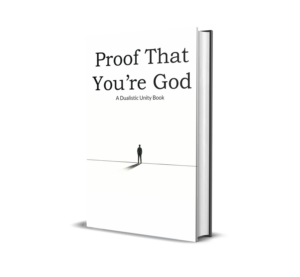
Throughout Proof That You’re God, these themes are explored from many different perspectives. Rather than asking you to adopt a new philosophy or a better set of values, the book invites you to look more deeply at the assumptions from which your values emerge. Through an exploration of awareness, identity, meaning, control, and perception, it asks a simple but profound question:
What changes when your life is organized by direct experience instead of inherited assumptions?