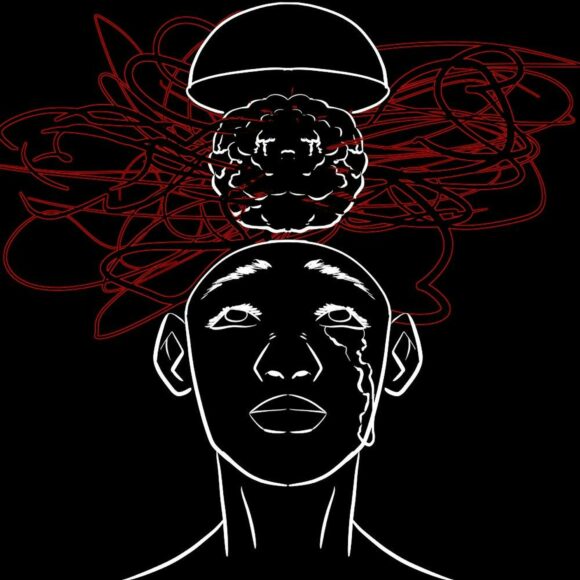
Doomscrolling isn’t simply a bad habit. It’s the mind trying to find certainty in a world that keeps reminding it to stay afraid.
Most people have experienced it.
You pick up your phone to check one notification or read a quick headline. A few minutes later you’re still scrolling. One article leads to another. News becomes more alarming. Videos become more emotional. Predictions become more catastrophic. Before long, thirty minutes—or even several hours—have disappeared.
You don’t feel informed.
You feel heavier.
This behavior has become so common that it now has its own name: doomscrolling.
While it’s often described as an addiction to bad news, that explanation only scratches the surface. Doomscrolling isn’t simply about consuming negative information. It’s about the way uncertainty captures the human mind and convinces us that one more article, one more video, or one more opinion might finally make us feel prepared.
The difficulty is that the feeling of “enough” rarely arrives.
What Is Doomscrolling?
Doomscrolling is the habit of continuously consuming negative, alarming, or emotionally charged news and social media content, even when doing so increases stress, anxiety, or emotional exhaustion.
The behavior became especially common during the COVID-19 pandemic, but it has since expanded into nearly every area of modern life. Politics, economics, climate change, artificial intelligence, global conflict, crime, celebrity controversies, and personal tragedies all compete for our attention every day.
Unlike staying informed, doomscrolling feels difficult to stop.
Even after recognizing that the experience is making us feel worse, we often keep scrolling anyway.
Understanding why requires looking beneath the habit itself.
Your Brain Isn’t Looking for Bad News
It’s easy to assume we enjoy negativity because we keep returning to it.
The reality is almost the opposite.
Your nervous system is designed to notice potential threats before everything else.
For most of human history, paying attention to danger improved survival. The people who noticed signs of predators, conflict, famine, or changing weather were more likely to stay alive than those who ignored them.
That tendency still exists today.
The only difference is that instead of occasionally encountering danger, we now carry an endless stream of possible threats in our pockets.
Our biology hasn’t changed nearly as quickly as our technology.
The Search for Certainty
Consider what usually happens while doomscrolling.
You’re rarely searching for more fear.
You’re searching for relief.
You want the article that finally explains everything.
The expert who knows what’s going to happen.
The video that makes uncertainty disappear.
The opinion that allows you to relax.
Notice what happens instead.
Every answer introduces another question.
Every prediction creates another possibility.
Every headline leads to another headline.
The search continues because uncertainty itself never receives the reassurance it was hoping for.
Algorithms Don’t Understand Peace of Mind
Another way of looking at doomscrolling is through the technology itself.
Social media platforms and news websites are designed to maximize attention.
They don’t measure whether content improves your well-being.
They measure whether you continue looking.
Fear, outrage, surprise, and uncertainty happen to be extraordinarily effective at keeping people engaged. A frightening headline encourages another click. A controversial opinion invites another comment. An uncertain future motivates another search.
The algorithm isn’t trying to make you anxious.
It’s simply rewarding whatever captures your attention.
Unfortunately, anxiety is very good at paying attention.
Why Doomscrolling Feels Impossible to Stop
The difficulty begins when the mind mistakes information for control.
When life feels uncertain, gathering information feels productive. It creates the sense that we’re preparing ourselves for whatever happens next.
Sometimes information is genuinely useful.
But there comes a point where additional information no longer increases understanding.
It simply increases stimulation.
You stop learning.
You start looping.
Instead of answering uncertainty, each new piece of information reinforces the feeling that there’s still more you need to know before you can finally relax.
Anxiety Loves Unfinished Stories
What often goes unnoticed is that the internet rarely presents complete stories.
Breaking news unfolds in fragments.
Experts disagree.
Rumors spread before facts.
Updates constantly replace previous updates.
The human mind naturally wants closure.
It wants endings.
It wants certainty.
The internet almost never provides either.
As a result, many people remain psychologically attached to stories that haven’t actually reached a conclusion.
The scroll becomes an unconscious search for an ending that doesn’t yet exist.
The Cost of Constant Vigilance
Remaining informed is valuable.
Remaining constantly vigilant is exhausting.
Over time, doomscrolling can make the world appear far more dangerous than it actually is because the mind begins estimating reality based on what receives the most attention rather than what occurs most often.
Acts of kindness rarely become breaking news.
Ordinary days rarely become viral content.
Peace is usually quiet.
Conflict is loud.
This doesn’t mean the problems we read about aren’t real.
It means our perception becomes distorted when conflict is the primary lens through which we experience the world.
Why Self-Shame Doesn’t Help
Many people criticize themselves after doomscrolling.
“I wasted another hour.”
“I have no self-control.”
“I need more discipline.”
Self-criticism usually misses the point.
You weren’t trying to sabotage yourself.
You were trying to feel safer.
Recognizing that changes the conversation completely.
Instead of asking, “Why am I so weak?”
A more useful question becomes:
“What is my mind hoping to find?”
Compassion doesn’t excuse unhealthy habits.
It makes understanding them possible.
Addressing the Root of Doomscrolling
Trying to force yourself to stop scrolling through willpower alone often turns the habit into another battle with yourself.
The deeper solution begins by understanding the need beneath the behavior.
Notice when you reach for your phone.
Is it boredom?
Loneliness?
Stress?
Uncertainty?
An uncomfortable conversation?
A quiet moment you don’t know how to sit with?
The scroll often begins long before your thumb touches the screen.
It begins with discomfort.
Once you recognize that, you gain choices that weren’t visible before.
Instead of immediately opening another app, pause for a moment.
Take one slow breath.
Ask yourself what you’re actually looking for.
If the answer is certainty, recognize that no headline can permanently provide it.
If the answer is connection, consider calling someone instead of reading strangers argue online.
If the answer is rest, give yourself permission to step away rather than continuing to stimulate an already overwhelmed mind.
Small interruptions matter.
They create enough space for awareness to participate before habit automatically takes over.
Learning to Stay Informed Without Becoming Consumed
The goal isn’t ignorance.
Staying informed helps us make thoughtful decisions and participate responsibly in society.
The challenge is learning the difference between intentional attention and compulsive attention.
You don’t have to read every update.
You don’t have to respond to every controversy.
You don’t have to carry every tragedy as though it belongs entirely to you.
Choose trusted sources.
Set specific times to catch up on the news.
Allow yourself to be fully present with the people and experiences immediately around you.
Awareness isn’t found by knowing everything.
It’s found by relating consciously to whatever you’re experiencing now.
Final Thoughts
Doomscrolling isn’t a character flaw.
It’s a deeply human response to uncertainty amplified by technology designed to capture attention.
The more frightening the world appears, the more convincing it becomes that the next article will finally provide clarity.
Yet certainty has always been remarkably difficult to find.
The invitation isn’t to stop caring about the world.
It’s to stop confusing endless consumption with meaningful participation.
You can care deeply without carrying every headline.
You can stay informed without remaining overwhelmed.
And you can step away from the screen without stepping away from reality.
Sometimes the healthiest response isn’t finding one more answer.
It’s remembering that your attention is one of the most valuable things you have—and choosing where it truly belongs.
Continue the Exploration
Doomscrolling reveals something much deeper than our relationship with technology. It reveals how the mind responds to uncertainty, fear, and the desire for control. Proof That You’re God explores why awareness—not certainty—offers a fundamentally different relationship with those experiences, allowing us to participate in life without becoming consumed by every thought, prediction, or possibility.