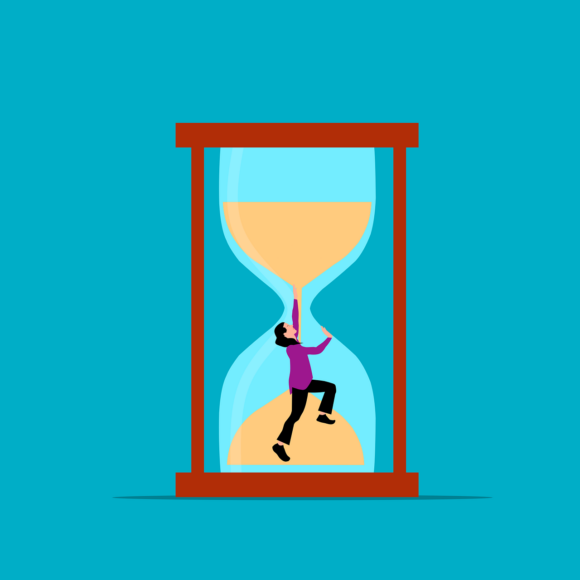

Sometimes the harder we try to relax, the more impossible it becomes.
Stress has a way of narrowing our attention. The mind begins scanning for problems to solve, conversations to replay, bills to pay, decisions to make, and futures to prepare for. One concern quickly gives rise to another until it feels as though life has become one continuous attempt to prevent the next thing from going wrong.
During those moments, advice like “just relax” can feel almost insulting.
Relax… while your finances are uncertain.
Relax… while a relationship feels strained.
Relax… while your future seems unclear.
The difficulty isn’t that we don’t know relaxation would feel better. The difficulty is that trying to relax often becomes one more task the mind believes it needs to accomplish. Relaxation turns into another goal, another expectation, another problem waiting to be solved.
The irony is difficult to miss. The more desperately we pursue relaxation, the further away it seems to become.
Relaxation Cannot Be Forced
Imagine trying to fall asleep.
Anyone who has experienced insomnia knows the strange paradox. The more determined you become to fall asleep, the more awake you often feel. Your attention shifts toward the fact that you aren’t sleeping, which creates even more frustration, making sleep even less likely.
Relaxation works in much the same way.
You cannot command your nervous system to let go through sheer force of will. Telling yourself to calm down while your entire body feels threatened often creates another layer of conflict. Now you’re not only stressed—you’ve begun judging yourself for being stressed.
Notice what happens when stress becomes the enemy.
The body tightens even further.
Stress Is Often a Conversation About the Future
When we look closely, much of our stress isn’t actually about this moment.
It’s about the moment after this one.
The unpaid bill becomes the imagined consequences of not paying it. A difficult conversation becomes dozens of imagined conversations that haven’t happened yet. A health concern expands into an entire future built from uncertainty.
The mind is remarkably good at rehearsing possibilities. This ability has obvious advantages. It allows us to prepare, anticipate danger, and make thoughtful decisions. At the same time, it quietly blurs the distinction between what is happening and what could happen.
The body doesn’t always recognize that difference.
If the future is being vividly imagined, the nervous system often responds as though the threat has already arrived.
There Is Wisdom in Taking the Next Breath
One of the simplest practices available to us is also one of the easiest to overlook. Breathing doesn’t erase uncertainty. It doesn’t solve financial problems. It doesn’t instantly repair relationships.
Yet notice what changes when your attention settles onto a slow, deliberate breath. Your shoulders soften, even if only slightly. Your jaw begins to unclench. Your heartbeat gradually slows.
The mind may continue generating concerns, but your body receives a different message. Instead of preparing for immediate danger, it begins receiving evidence that, in this moment, survival is not under direct threat.
That shift matters.
Not because it solves the future, but because it changes your relationship to the present.
Doing Nothing Isn’t Wasting Time
Modern culture treats stillness with suspicion.
If we’re sitting quietly, we often feel guilty for not being productive. If we’re resting, we wonder whether we should be working. Even moments meant for recovery become opportunities to optimize ourselves. Over time, rest begins feeling like something that must be earned. Another way of looking at this is that rest has quietly become another achievement.
But genuine rest doesn’t usually happen because we’ve completed every responsibility. If that were true, very few people would ever relax.
Rest happens because we stop insisting that every moment must be useful.
There is something quietly restorative about allowing yourself to sit for a few minutes without trying to improve your mood, solve your problems, or become a better version of yourself.
Nothing has been fixed.
Yet something important has changed.
You have stopped adding more pressure to an already burdened mind.
The Desire for Control Creates Additional Tension
Stress often carries an invisible companion.
Control. When life feels uncertain, the mind naturally searches for certainty. It wants guarantees that everything will work out, that relationships will heal, that money will arrive, that difficult emotions will disappear. These desires are deeply understandable.
Yet they also ask life to provide something it has never promised. We can influence many things. We can communicate honestly. We can create budgets. We can apply for jobs. We can apologize. We can ask for help. We can care for our bodies.
All of these actions matter.
None of them guarantee an outcome.
The deeper question is whether some of our tension comes not from uncertainty itself, but from demanding certainty where none has ever existed.
You Don’t Have to Solve Your Entire Life Today
Stress has a remarkable ability to convince us that everything needs attention immediately.
Every unfinished task feels equally urgent. Every unanswered question demands resolution. Every uncertainty becomes evidence that we’re falling behind.
Life rarely asks that much of us.
Most days simply ask us to meet the next conversation honestly. Pay the next bill when we’re able. Make the next decision with the information available. Take the next breath.
There is surprising peace in allowing today to remain today instead of requiring it to contain the answers for the rest of your life.
Relaxation May Be an Act of Trust
It may be that relaxation has less to do with changing our circumstances than changing our relationship with them. Trust doesn’t mean believing everything will unfold exactly as we’d like.
Trust means recognizing that we’ve already survived countless moments we once believed we couldn’t handle.
Consider how many futures you’ve worried about that never unfolded the way you imagined. Consider how many painful experiences eventually revealed strengths, relationships, or insights you couldn’t have anticipated beforehand.
Life has never asked us to predict every turn.
It has only asked us to keep participating.
Making Space Instead of Finding Peace
Many people search for peace as though it were a destination. The search itself can become exhausting. Another possibility is that peace isn’t something we create. It’s something we notice when we stop filling every available space with resistance.
For a few moments, nothing needs to be solved. Nothing needs to be fixed. Nothing needs to be understood. There is simply breathing. There is simply sitting. There is simply being alive. Those moments may seem small.
Over time, they begin changing the way we meet everything else.
The Quiet Freedom Already Here
There will almost certainly be more uncertainty tomorrow. More decisions. More responsibilities. More moments when life refuses to follow our plans. Yet there is also this moment. This breath.
This opportunity to release your shoulders, soften your jaw, and notice that you don’t have to carry your entire future all at once.
The peace we’re searching for may not arrive when life finally becomes controllable.
It may begin the moment we stop expecting it to be.
Continue the Exploration
If this article resonated with you, our companion Patreon essay, “The Space Between Breaths,” explores why stillness can feel so uncomfortable, why the mind resists doing nothing, and how the deepest form of rest may emerge not from escaping life but from allowing ourselves to fully meet it.
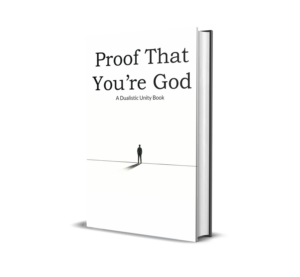
You can also continue this exploration in Proof That You’re God, where we examine awareness, identity, and the illusion of separation. As our relationship with uncertainty begins to change, we often discover that peace isn’t something hidden in the future—it has been quietly available beneath our struggle to control life all along.