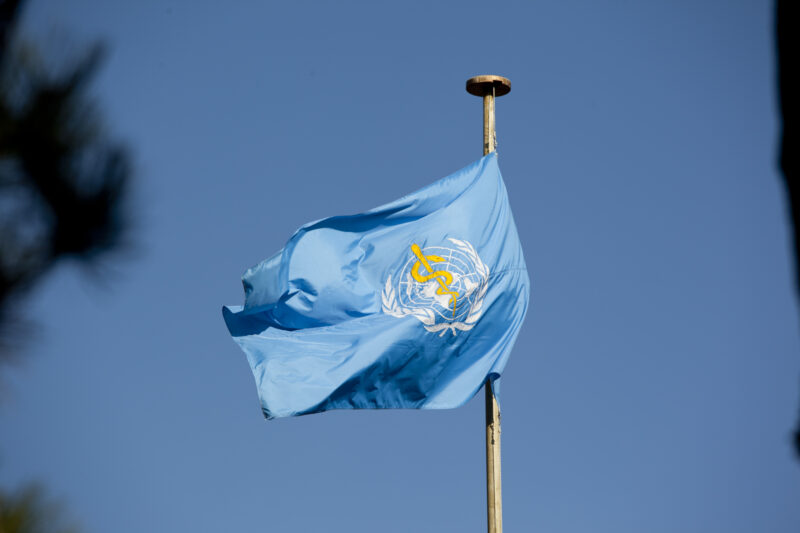
When the United States withdraws from the World Health Organization, it’s easy to treat the moment as purely political.
Policy disagreement.
Funding disputes.
Ideological differences.
But events like this rarely land with such intensity because of logistics alone. They land because they touch something deeper—something existential.
Health is one of the few domains that makes interdependence impossible to ignore.
And when interdependence becomes uncomfortable, control tends to take its place.
Control as a Response to Uncertainty
The modern world is saturated with uncertainty. Pandemics, climate instability, economic fragility, and informational chaos all erode the sense that outcomes can be predicted or contained.
In moments like this, the instinct to reclaim control intensifies.
Control promises safety.
Control promises clarity.
Control promises relief.
But control also narrows perspective.
When faced with systems too complex to fully manage, separation can feel like the only available move. Pulling away creates the illusion of agency—we decide, we manage, we protect.
Yet the very reason global health organizations exist is because no nation can actually stand outside the system they’re part of.
Health as a Collective Reality
Health is not an individual achievement. It’s not even a national one.
It emerges from shared infrastructure, shared knowledge, shared trust, and shared responsibility. Bodies don’t operate in isolation, and neither do the systems that support them.
Viruses, misinformation, and fear all spread relationally. They move through connection, not containment.
This is why global health cooperation exists at all—not because humans are especially wise, but because reality leaves no alternative.
The Deeper Pattern Beneath Withdrawal
When an institution or individual withdraws from relationship, it’s rarely because connection is unnecessary. It’s because connection feels threatening.
Threat doesn’t always mean danger. Often it means exposure.
Participation in a shared system requires:
- Transparency
- Accountability
- Willingness to be affected
And that can feel intolerable when identity is already under strain.
This is the same psychological pattern that shows up internally. When emotions become overwhelming, the impulse is to suppress or dominate them. When identity feels uncertain, rigidity replaces curiosity.
That dynamic is explored more deeply in why control doesn’t bring relief—where attempts to stabilize experience through dominance are revealed to increase tension rather than resolve it.
Global withdrawal follows the same arc.
Fragmentation Feels Safe—Until It Doesn’t
Fragmentation simplifies the world. It reduces variables. It creates an inside and an outside.
But it also removes feedback.
When systems stop listening to one another, blind spots multiply. When perspectives narrow, confidence often increases—right up until reality intervenes.
This is not unique to governments. It’s a human pattern.
We retreat when complexity exceeds our capacity to hold it.
Interconnection Was Never Optional
The uncomfortable truth is that interconnection isn’t a value we adopt—it’s a condition we live within.
We can cooperate with it, resist it, or deny it. But we can’t escape it.
Global health institutions, for all their flaws, exist because separation doesn’t work at scale. Withdrawal doesn’t undo interdependence; it just makes navigating it harder.
What This Moment Asks of Us
This moment isn’t asking for agreement. It’s asking for awareness.
Awareness of how fear shapes decisions.
Awareness of how control replaces relationship.
Awareness of how quickly identity tightens when uncertainty rises.
The most consequential aspect of this withdrawal isn’t what it changes externally—it’s what it reflects internally.
A world struggling to stay present with complexity.
Closing Reflection
When systems fracture, it’s rarely because cooperation failed. It’s because the psychological cost of participation felt too high.
But avoidance doesn’t remove the underlying reality—it postpones our encounter with it.
Health, like awareness, doesn’t function in isolation. It emerges from relationship, responsiveness, and the willingness to remain engaged even when certainty disappears.
If this inquiry resonates, Proof That You’re God explores these same dynamics at the level of lived experience—how identity, fear, and control shape both personal suffering and collective outcomes.
You can explore the book here:
Proof That You’re God