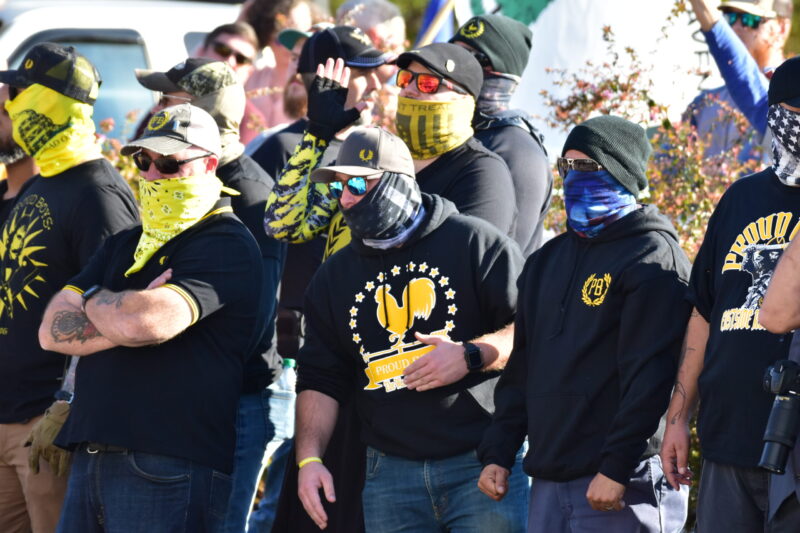
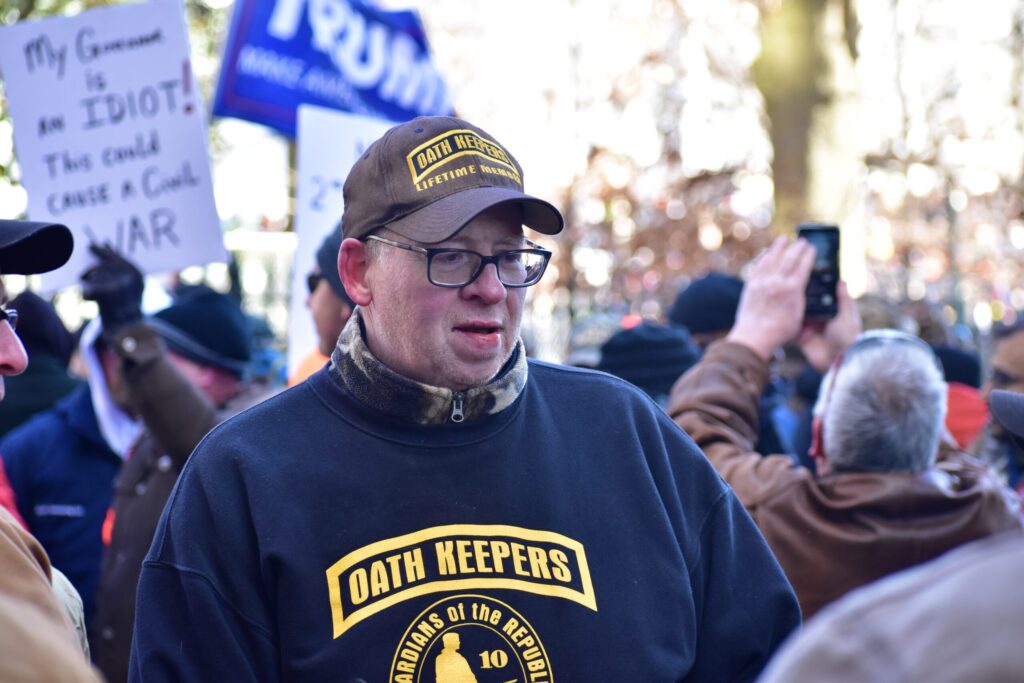
When extremist groups emerge within a democracy, comparisons to Nazi Germany often follow quickly. The Proud Boys and Oath Keepers have frequently been described as modern brownshirts, America’s version of the SS, or even a new Gestapo. These comparisons carry enormous historical weight because the organizations they reference became central instruments in one of history’s most destructive dictatorships.
The question deserves more than slogans.
Calling every extremist group “Nazis” can flatten history and make genuine warning signs easier to dismiss. At the same time, refusing to examine historical similarities simply because they are uncomfortable risks ignoring patterns that historians have spent decades documenting. The responsible approach is neither exaggeration nor denial. It is comparison grounded in evidence.
The Proud Boys and Oath Keepers are not identical to the SA, SS, or Gestapo. They exist within a constitutional system that still contains competitive elections, independent courts, multiple political parties, and a free press. They do not command the police, operate concentration camps, or exercise the legal authority of the state in the way Nazi organizations eventually did.
Yet some aspects of their organization, rhetoric, and relationship to political power resemble the early stages of authoritarian movements more than many Americans would like to admit.
Understanding the Nazi Organizations
The SA (Sturmabteilung), commonly known as the Brownshirts, was the Nazi Party’s original paramilitary organization. During the 1920s and early 1930s, its members protected Nazi rallies, intimidated political opponents, fought communists and socialists in the streets, disrupted meetings, and helped normalize political violence as an acceptable part of public life. Before Hitler became dictator, the SA’s primary function was less about governing than creating an atmosphere where opposition became increasingly dangerous.
The SS (Schutzstaffel) began as Hitler’s personal bodyguard before evolving into one of the most powerful institutions in Nazi Germany. Under Heinrich Himmler, it became responsible for intelligence, policing, concentration camps, racial policy, and eventually the administration of genocide. Membership required extraordinary ideological loyalty to Hitler and the Nazi worldview.
The Gestapo was the secret state police. Unlike the SA, which often operated publicly through intimidation, the Gestapo investigated, arrested, interrogated, and imprisoned people considered enemies of the regime. It functioned as the political police of a dictatorship rather than an independent law-enforcement agency.
These organizations had different responsibilities, but they shared one defining characteristic: they existed to protect a political movement rather than constitutional principles.
Who Are the Proud Boys?
The Proud Boys were founded in 2016 as a self-described “Western chauvinist” organization. Although leaders have often denied being a white-supremacist group, researchers have documented repeated associations between Proud Boys chapters and white-nationalist activists, antisemitic rhetoric, anti-Muslim activism, political violence, and extremist mobilization. The Anti-Defamation League and the Southern Poverty Law Center classify the group as extremist because of its repeated involvement in violence and its embrace of authoritarian and exclusionary politics.
Members have participated in numerous confrontations with protesters across the United States. During the January 6, 2021 attack on the U.S. Capitol, Proud Boys leaders played central organizing roles and several were convicted of serious federal crimes, including seditious conspiracy.
Their identity is built around confrontation. Violence is not officially described as the group’s purpose, but confrontation with perceived enemies has repeatedly become one of its defining characteristics.
Who Are the Oath Keepers?
The Oath Keepers emerged in 2009 with a different public identity. The organization recruited current and former military personnel, police officers, and first responders who pledged to refuse unconstitutional government orders. On the surface, this mission appeared centered on defending the Constitution.
Over time, however, investigations found increasing involvement in conspiracy theories, anti-government mobilization, armed political demonstrations, and preparations for violent conflict. Like the Proud Boys, members of the Oath Keepers participated in the January 6 attack, and founder Stewart Rhodes was convicted of seditious conspiracy.
Unlike the Proud Boys, whose culture often emphasizes street confrontation, the Oath Keepers cultivated an image of disciplined patriots prepared to defend the nation against what they believed was government tyranny.
Despite their different origins, both organizations increasingly found themselves aligned behind Donald Trump’s political movement.
Are They Comparable to the SA?
Of the three Nazi organizations, the strongest historical comparison is with the early SA.
The Brownshirts existed before Hitler fully consolidated power. They operated outside ordinary state institutions while working in support of a political movement. Their visibility mattered. Public marches, uniforms, physical intimidation, and street violence demonstrated that opposing the Nazis could carry personal risk.
The Proud Boys share several functional similarities.
They have repeatedly appeared at political demonstrations prepared for confrontation. Their presence can discourage opponents from attending events or speaking publicly. Violence itself becomes part of the political message. The goal is not always to defeat an opponent physically but to demonstrate dominance and willingness to escalate.
The comparison is not perfect. The SA numbered in the millions, operated within a collapsing democracy, and ultimately became deeply integrated into Nazi power before being partially purged during the Night of the Long Knives in 1934.
The Proud Boys remain far smaller and possess no formal government authority.
Nevertheless, the underlying political function—using organized intimidation to shift the boundaries of acceptable political participation—bears a meaningful resemblance.
Are They Comparable to the SS?
The comparison becomes much weaker here.
The SS developed into an elite institution of the Nazi state. It commanded police forces, intelligence agencies, concentration camps, and military units while enforcing Nazi racial ideology across occupied Europe.
Neither the Proud Boys nor the Oath Keepers possesses anything approaching that institutional power.
However, one feature deserves attention: ideological loyalty.
The SS demanded loyalty not simply to Germany but to Adolf Hitler personally. The organization existed because the leader and the nation had become psychologically fused.
Both the Proud Boys and Oath Keepers demonstrated extraordinary loyalty to Donald Trump during the period surrounding the 2020 election. Court records, congressional investigations, and public communications showed that many members sincerely believed Trump’s false claims that the election had been stolen. Rather than accepting certified election results, some prepared to resist the transfer of power itself.
Personal loyalty to a leader over constitutional procedure is one of authoritarianism’s defining warning signs.
That does not make these organizations equivalent to the SS.
It does reveal a similar psychological pattern.
Are They Comparable to the Gestapo?
The comparison with the Gestapo is the weakest.
The Gestapo exercised legal authority as the political police of Nazi Germany. It arrested, interrogated, imprisoned, and terrorized opponents while operating with minimal judicial oversight.
The Proud Boys and Oath Keepers possess no such legal authority.
They cannot issue warrants, imprison political opponents, conduct state surveillance, or enforce government policy through official policing powers.
If the comparison has any relevance, it would only emerge if such organizations became integrated into state policing or received official authority to suppress political opposition.
That has not occurred.
The Relationship Between Extremist Groups and Political Leaders
History shows that authoritarian leaders do not always create extremist organizations.
Sometimes they inherit them.
Sometimes they encourage them indirectly.
Sometimes they simply avoid condemning them clearly enough for the groups to understand they are unwelcome.
Donald Trump’s relationship with these organizations illustrates this ambiguity.
During the first presidential debate in 2020, when asked to condemn white supremacists and militia groups, Trump responded, “Proud Boys, stand back and stand by.” He later stated that he did not know the group and clarified that they should stand down. Nevertheless, Proud Boys members immediately adopted the phrase as a slogan and interpreted it as recognition from the president.
This illustrates something important about political communication.
Leaders influence movements not only through direct orders but through signals.
Supporters hear encouragement where critics hear ambiguity.
January 6 Changed the Conversation
Before January 6, many observers viewed these organizations primarily as fringe activist groups.
After January 6, they became linked to one of the most significant attacks on the peaceful transfer of presidential power in American history.
Federal investigations documented planning, coordination, communications, and organized movement by members of both organizations before the Capitol attack. Senior leaders of each group were later convicted of seditious conspiracy.
The attack demonstrated that political violence no longer existed only as isolated street confrontations. It had become connected to an attempt to disrupt a constitutional process.
That development makes historical comparisons more serious.
Violence Changes Democratic Culture
Democracy depends upon citizens believing that political disagreement can occur without physical intimidation.
When organized groups increasingly appear armed, threaten opponents, disrupt public events, or celebrate violence, participation begins to change.
Some people stop attending demonstrations.
Others stop running for office.
Journalists become more cautious.
Election workers resign.
Public officials require security.
Ordinary citizens begin calculating personal risk before expressing political opinions.
The immediate victims are not only the individuals directly threatened.
The victim becomes democracy itself.
Why Some Supporters Find These Groups Appealing
Most Trump supporters are not Proud Boys or Oath Keepers.
Most conservatives reject political violence.
Recognizing this distinction is essential.
At the same time, some citizens find these organizations attractive because they promise certainty during periods of rapid social change.
Economic insecurity, demographic change, distrust of institutions, declining confidence in government, cultural conflict, and fears about national identity all create conditions where militant organizations can appear reassuring.
Members often describe themselves as protectors rather than aggressors.
History shows that this self-understanding is remarkably common.
The Brownshirts believed they were protecting Germany.
The members of countless authoritarian movements throughout history have understood themselves as patriots defending civilization.
Very few wake up believing they are becoming enemies of democracy.
The Danger Is Larger Than Any One Organization
The deeper lesson from Nazi Germany is not that every extremist group eventually becomes the SS.
It is that democracies become vulnerable when political violence becomes normalized, when opponents become enemies instead of fellow citizens, when loyalty to leaders becomes more important than loyalty to institutions, and when enough ordinary people conclude that intimidation is justified because it serves the “right” cause.
Authoritarian movements are rarely built by one organization alone.
They are sustained through networks of supporters, politicians, donors, media personalities, online communities, bureaucrats, and citizens who gradually accept behaviors they would once have rejected.
History reminds us that institutions usually erode long before they disappear.
What the Evidence Shows
The Proud Boys most closely resemble the early political function of the SA: organized public intimidation, willingness to use violence, and visible support for a political movement.
The Oath Keepers resemble neither the SA nor the SS perfectly, but their emphasis on disciplined organization, military identity, and extraordinary loyalty to Trump’s election claims places them within the broader pattern of authoritarian movements that prioritize allegiance over constitutional process.
Neither organization is equivalent to the SS or the Gestapo. They lack the legal authority, institutional reach, and central role in state repression that defined those organizations under Nazi rule.
That distinction matters because historical accuracy strengthens, rather than weakens, democratic vigilance.
The most important warning is not that America has recreated Nazi Germany.
It is that democracies can gradually normalize political intimidation, personality cults, and violence without recognizing how much has changed until those behaviors become ordinary.
Continue the Exploration
History is most useful when it teaches us to recognize human patterns rather than simply identify villains. The same fears that drove people toward authoritarian movements nearly a century ago—fear of uncertainty, loss of identity, social change, and perceived national decline—continue to shape political life today.
Our book, Proof That You’re God, explores how the mind creates divisions between “us” and “them,” why identity becomes something we feel compelled to defend, and how certainty can quietly become more important than truth. Understanding these psychological patterns does not require abandoning accountability or ignoring genuine political dangers. It helps us recognize how ordinary people can become participants in extraordinary systems of exclusion and why preserving our shared humanity remains one of democracy’s strongest protections.