Dancing has existed for as long as human history can remember. Long before gyms, fitness trackers and exercise science, people moved together around fires, during harvests, at weddings, in ceremonies, celebrations and moments of grief. Every culture on Earth has developed some form of dance, even when separated by oceans and thousands of years of history. That remarkable consistency raises an interesting question.
Why?
If dancing were simply entertainment, it seems unlikely that nearly every civilization would have independently discovered it. Increasingly, research suggests that dance is far more than recreation. It engages the body, the brain and our relationships in ways that few other activities can. As scientists continue investigating dementia, healthy aging and mental health, dancing has emerged as one of the most fascinating forms of movement available to us.
Why Is Dancing Different?
Walking is excellent for cardiovascular health. Strength training builds muscle and supports bone density. Yoga improves flexibility and balance.
Dance does something unusual.
It asks your brain to solve problems while your body is moving.
Every dance involves constant decisions. You anticipate rhythm, coordinate your arms and legs, remember patterns, adjust your balance, respond to music, navigate space and often interact with other people—all at the same time. The brain isn’t simply telling the body what to do. It is continually learning, predicting and adapting.
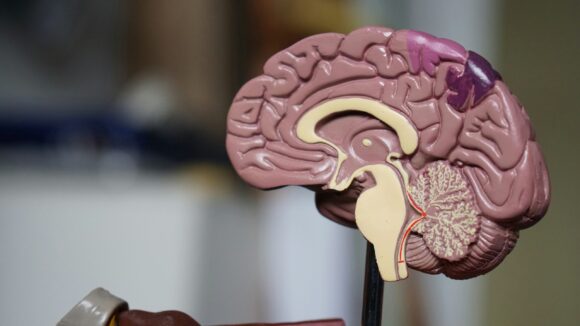
Researchers believe this combination of physical activity and cognitive engagement may help strengthen neural connections throughout the brain. Several systematic reviews have found that dance programs can improve balance, executive function, memory and overall cognitive performance in older adults, including some people living with mild cognitive impairment. While dance is not a cure for dementia, it has become one of the most promising lifestyle activities being studied for healthy brain aging.
The deeper lesson is that movement becomes something more powerful when it also requires awareness.
The Brain Loves Novelty
One reason dance appears to benefit the brain is that it constantly introduces novelty.
Walking the same route every morning eventually becomes automatic. The body can perform much of the activity with relatively little conscious attention.
Dance is different.
Even simple dancing asks the brain to remain present. A change in rhythm requires an adjustment. A new step creates uncertainty. Turning, reaching, balancing or synchronizing with another person all require the brain to build and strengthen new pathways.
Learning itself becomes part of the exercise.
Notice what happens when you stop worrying about getting every movement exactly right.
Curiosity replaces performance.
That shift alone changes the experience from trying to achieve something into participating in something.
Music Changes the Experience
Dance rarely exists without music, and music has profound effects on the human brain.
Listening to music activates widespread brain networks involved in movement, memory, emotion, language and reward. Familiar songs often trigger vivid autobiographical memories. People living with advanced dementia sometimes struggle to remember names while effortlessly singing songs they learned decades earlier.
Scientists continue exploring exactly why this occurs, but it appears that music accesses neural systems that remain relatively resilient even as other cognitive abilities decline.
When movement and music are combined, the experience becomes even richer.
The body follows rhythm.
The mind anticipates patterns.
Emotion becomes part of the movement.
Exercise becomes play.
Dancing Connects Us
Exercise is often portrayed as an individual pursuit.
Dance reminds us that movement can also be relational.
When two people dance together, they coordinate timing, posture, attention and communication without necessarily speaking. Groups synchronize with one another through rhythm. Entire communities can share an experience using nothing more than movement and music.
Social connection itself is associated with healthier cognitive aging. Loneliness has emerged as one of the modifiable risk factors associated with dementia, while meaningful relationships appear to support both emotional and cognitive well-being.
Dance naturally creates opportunities for connection.
You don’t need to be a professional.
You simply need to move.
Dance Alone
Some of the most meaningful dancing happens when no one else is watching.
Close the curtains.
Turn on your favourite song.
Forget whether anyone would call it “good.”
Your body doesn’t require an audience to benefit from movement.
Dancing alone allows you to experiment without judgment. It encourages playfulness, emotional expression and freedom from performance. There is no score to keep, no competition to win and no expectation to impress anyone.
There is only movement.
Dance With Friends
Friendships often become increasingly sedentary as people grow older. Conversations move from parks to restaurants, from games to couches, from movement to sitting.
Imagine replacing one evening of passive entertainment with music.
Dance in the kitchen.
Dance in the backyard.
Dance in the garage.
Laugh at the awkwardness.
Research consistently shows that people are more likely to maintain healthy habits when those habits are enjoyable and shared with others.
Joy may be one of the most underrated forms of consistency.
Dance With Family
Children rarely need permission to dance.
Adults often believe they do.
Family dancing creates memories that no photograph can fully capture. Grandparents, parents, teenagers and young children can all participate together regardless of skill level.
Nobody has to perform.
Everyone simply moves.
Years later, people often remember how a moment felt far more vividly than whether every step was perfect.
Dance With Strangers
One possibility is that the people who begin as strangers may not remain strangers for very long.
Dance classes create something increasingly rare in modern life: communities built around shared participation rather than shared opinion.
Nobody needs to agree politically.
Nobody needs identical beliefs.
Everyone simply learns together.
Whether it is salsa, swing, ballroom, line dancing, hip-hop, folk dancing or contemporary movement, each class becomes an opportunity to strengthen both the brain and the social connections that help support it.
Dance in the Rain
Not every dance needs polished floors.
Sometimes the rain arrives.
Instead of seeing it as an interruption, consider letting it become part of the experience.
Children instinctively understand this.
Adults often spend years relearning it.
Of course, stay safe during storms, avoid lightning and dress appropriately for the conditions. The point is not recklessness. It is remembering that life does not always require ideal circumstances before we participate in it.
Dance in the Sun
Sunlight itself supports health by helping regulate circadian rhythms, improving mood and allowing the body to produce vitamin D when conditions are appropriate.
A favourite song outdoors can become something remarkably simple.
Movement.
Fresh air.
Light.
Attention.
Sometimes well-being is less complicated than we imagine.
Dance for Fun
Many people abandon activities the moment they stop being productive.
Dance reminds us that enjoyment has value.
Not every beneficial activity needs to be optimized.
Not every movement needs to burn the maximum number of calories.
Not every hobby needs to become an achievement.
Play is not the opposite of productivity.
For human beings, play is often one of the ways we learn, adapt and remain psychologically flexible throughout life.
Dance for a Workout
If you enjoy intense exercise, dance can absolutely provide it.
Fast-paced styles elevate heart rate, improve endurance, strengthen muscles and challenge coordination simultaneously. Unlike many repetitive workouts, dancing constantly changes the demands placed on both body and brain.
Time often feels different while dancing.
An hour can pass surprisingly quickly when attention is focused on rhythm rather than repetition.
That may explain why so many people continue dancing long after they would have abandoned another exercise program.
Dance for Your Brain
The most exciting discoveries about dance may not involve professional dancers at all.
They involve ordinary people.
People recovering from illness.
Older adults trying to remain independent.
Individuals living with mild cognitive impairment.
Families looking for something joyful they can still do together.
Researchers continue investigating exactly how dance influences the brain, and many questions remain unanswered. What is becoming increasingly clear, however, is that dance combines many of the ingredients known to support healthy aging: physical activity, learning, balance, memory, social engagement, emotional expression and enjoyment.
Few activities bring all of those together so naturally.
The Invitation
You do not need perfect rhythm.
You do not need expensive equipment.
You do not need a dance studio.
You do not need permission.
Dance alone.
Dance with your partner.
Dance with your children.
Dance with your parents.
Dance with your friends.
Dance with strangers.
Dance in your living room.
Dance in your kitchen.
Dance in the rain.
Dance in the sunshine.
Dance because your body can.
Dance because your mind benefits.
Dance because joy is worth practicing.
And if all you have today is one song, let that be enough.
Continue the Exploration
Dancing reminds us that we are more than thinking minds observing life from a distance. We are living, moving participants in an experience that unfolds through the body, our relationships and the present moment. Sometimes the deepest understanding doesn’t arrive through analysis—it arrives through participation.
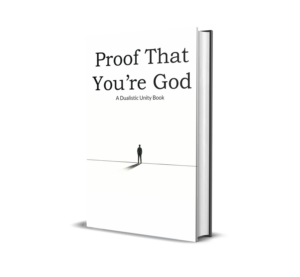
If this perspective resonates with you, continue the exploration in Proof That You’re God. The book invites readers to question the assumptions they hold about identity, awareness and what it truly means to be alive, discovering that understanding often begins not with certainty, but with direct experience.