Every election cycle seems to generate speculation about the physical and mental health of presidential candidates. In recent years, those conversations have intensified around Donald Trump. Critics have pointed to his speech patterns, verbal mix-ups, apparent moments of drowsiness during public events, emotional volatility, and increasingly frequent questions about cognitive decline. Supporters often dismiss these observations as politically motivated attacks, while opponents sometimes treat them as proof of dementia.
Neither response is particularly satisfying.
The more useful conversation is not whether strangers on the internet can diagnose a president from television clips. They cannot. Dementia is a medical diagnosis that requires clinical evaluation, and it is not possible to determine whether someone has dementia from edited videos, isolated incidents, or public appearances alone. At the same time, it is reasonable for citizens to ask questions about the health of people entrusted with extraordinary power. Those two ideas can coexist.
The deeper question is not simply whether Donald Trump has dementia. It is how democratic societies should respond whenever credible concerns arise about the cognitive health of any leader.
What Would Dementia Actually Mean?
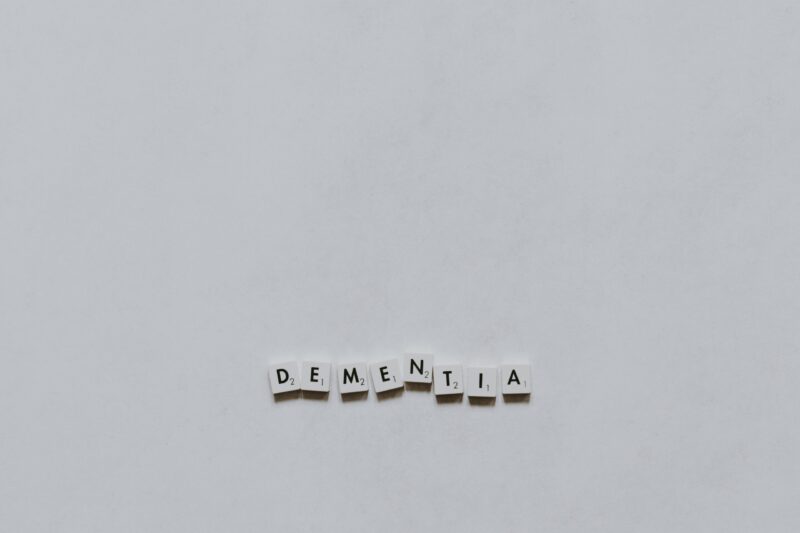
Dementia is not a single disease. It is an umbrella term describing a decline in cognitive abilities severe enough to interfere with daily functioning. Alzheimer’s disease is the most common cause, but there are many others, including vascular dementia, Lewy body dementia, and frontotemporal dementia. Symptoms vary depending on the cause and the individual.
Early symptoms can include memory problems, difficulty finding words, impaired judgment, changes in personality, confusion, reduced ability to plan, and altered emotional regulation. Some forms affect language more than memory. Others primarily affect behavior or impulse control.
The important point is that many of these symptoms also occur in people without dementia. Aging, sleep deprivation, stress, anxiety, depression, medication side effects, hearing loss, and numerous medical conditions can all influence cognition. Even healthy individuals occasionally misspeak, forget names, or lose their train of thought.
That complexity is precisely why diagnosis belongs to physicians rather than political commentators.
Why Do So Many People Believe the Claim?
The persistence of the claim raises another interesting question.
Why are so many people convinced?
Some observers point to Donald Trump’s frequent digressions, repeated stories, unusual associations, verbal substitutions, and occasional confusion between names or events. Others cite videos in which they believe he appears unusually tired or asleep during public proceedings. Still others focus on emotional characteristics, describing him as increasingly impatient, irritable, or reactive compared to earlier decades.
These observations are real in the sense that people are genuinely making them, but they are not, by themselves, evidence of dementia. Public behavior can have many explanations, and without access to comprehensive medical information, conclusions remain speculative.
Notice how quickly uncertainty becomes certainty once political identity enters the conversation. People often begin with observations but end with diagnoses.
Those are very different things.
Does Anger Point Toward Dementia?
Some forms of dementia can involve changes in mood, frustration tolerance, impulse control, or emotional regulation. Increased irritability or aggression can occur in certain patients, particularly as the disease progresses.
However, anger itself is not evidence of dementia.
An individual may be angry because of personality, stress, strategy, ideology, fatigue, frustration, medical conditions, environmental pressures, or countless other factors. Some political figures intentionally cultivate confrontational public personas because conflict attracts media attention and energizes supporters.
One possibility is that observers sometimes confuse personality with pathology.
Someone can behave impulsively without having dementia. Likewise, someone with dementia may not display noticeable anger at all.
What About Apparent Sleeping During Public Events?
Videos circulating online have led some viewers to conclude that Donald Trump has fallen asleep during official events. Many people sincerely believe they have seen this happen repeatedly.
Even so, brief video clips rarely provide enough context to determine whether someone was actually asleep, momentarily resting their eyes, looking downward, fatigued after travel, or simply captured from an unflattering camera angle. Different clips vary considerably in quality and context, making broad conclusions difficult.
It is also worth remembering that presidents routinely maintain demanding schedules involving international travel, disrupted sleep, security briefings, and extended public appearances.
If someone genuinely appeared to be frequently falling asleep in situations requiring sustained attention, that would naturally raise questions about health. But those questions would still require medical evaluation rather than internet certainty.
If It Were True, Would the Government Hide It?
History gives people reasons to ask this question.
Governments have not always been fully transparent about the health of national leaders. President Franklin D. Roosevelt’s declining health was minimized during World War II. John F. Kennedy’s significant medical conditions were largely concealed from the public during his presidency. Ronald Reagan was diagnosed with Alzheimer’s disease years after leaving office, though debate continues about whether any early symptoms appeared while he was serving. Woodrow Wilson’s severe stroke left his wife and advisers handling many presidential responsibilities while the full extent of his condition remained hidden from the public.
These historical examples demonstrate that governments have, at times, limited public knowledge about presidential health.
That does not mean every modern claim is true.
It does mean citizens have legitimate reasons to ask how much transparency they should expect from leaders whose decisions affect millions of lives.
Why Would Officials Avoid Disclosure?
If a sitting president were diagnosed with a condition significantly affecting cognitive function, the incentives surrounding disclosure would be enormous.
Public confidence could decline. Financial markets might react. International adversaries could perceive weakness. Political parties could fear electoral consequences. Government officials might worry about constitutional uncertainty or national security implications.
None of those possibilities prove concealment.
They simply explain why questions about presidential health are unlikely ever to be politically neutral.
The Difficulty Begins When Politics Replaces Evidence
Political identity has an extraordinary ability to distort perception.
Supporters often minimize behaviors they would criticize in opponents. Critics frequently interpret every unusual behavior as confirmation of their existing beliefs.
The result is a strange form of collective blindness.
One group concludes that every stumble proves dementia.
Another concludes that no concern is ever legitimate.
Reality is rarely so accommodating.
Scientific thinking asks a different question: What evidence would actually change our minds?
That question is becoming increasingly rare in political discussions.
A Broader Conversation About Leadership
Donald Trump is hardly the only political leader whose health has become a public issue. Similar questions have surrounded presidents, prime ministers, monarchs, and dictators throughout history. The underlying issue extends beyond any one individual.
How old should leaders be?
How transparent should medical evaluations become?
Who determines when someone is cognitively incapable of serving?
Should every president receive standardized, independent neurological assessments that are publicly released?
These questions deserve careful discussion regardless of who occupies the office.
If citizens are expected to trust leaders with military authority, economic policy, diplomacy, and nuclear weapons, it is understandable that they would also want confidence in those leaders’ cognitive abilities.
Looking Beyond the Individual
It is easy to become consumed by one politician’s health while overlooking the larger system.
A functioning democracy should not depend entirely upon the cognitive abilities of a single person. Institutions, constitutional safeguards, independent courts, professional civil servants, medical transparency, and informed citizens all exist precisely because human beings are imperfect.
The conversation about dementia ultimately points toward a deeper concern.
How much of our confidence rests on assumptions we rarely examine?
How much do we actually know?
And how much are we simply repeating because it aligns with our existing political identity?
Questions like these rarely produce immediate certainty, but they often produce something more valuable: intellectual honesty.
Continue the Exploration
Political debates often encourage us to choose sides before we have fully examined our own assumptions. Yet the most meaningful questions are not always about proving someone else wrong. They are about understanding how our own minds reach conclusions in the first place.
If this article encouraged you to think more carefully about certainty, identity, and perception, you may enjoy Proof That You’re God. Rather than telling you what to believe, the book explores how beliefs are formed, why we become attached to them, and how greater awareness can transform the way we understand ourselves, other people, and the world we share.