
We often talk about change as if it lives somewhere outside of us.
If only the system were different. If only the laws were fair. If only corruption were rooted out. If only the right people were in power.
There’s an assumption embedded in all of this: that the problem is over there — structural, political, institutional — and that our role is simply to oppose it, critique it, or replace it.
But systems don’t arise in isolation.
They are built, maintained, and reinforced by human psychology.
And that means the system is not separate from us.
It is an expression of us.
The Illusion of an External Problem
Modern political conversation often frames injustice as a technical error.
A flaw in policy. A failure of regulation. A breakdown in oversight.
And while these critiques aren’t wrong, they’re incomplete.
Because behind every law, every loophole, every corrupted incentive structure is a very ordinary set of human motivations:
The desire to secure advantage. The fear of falling behind. The need to belong. The longing to be significant. The urge to protect identity at all costs.
These aren’t pathologies reserved for politicians or executives.
They’re the same impulses that show up in everyday life — in careers, families, friendships, and even spiritual communities.
The difference is scale.
When these motivations operate at scale, they look like corruption.
Up close, they look like cutting corners, protecting image, avoiding failure, or quietly hoping to benefit from a system we publicly criticize.
How Systems Get Corrupted
Most systems do not begin as exploitative.
They begin as attempts to organize cooperation. To distribute resources. To protect against chaos.
But over time, incentives shift.
Rules get bent. Power concentrates. Narratives emerge to justify why some deserve more than others.
And here’s the uncomfortable part: these shifts persist not only because a few benefit — but because many hope to.
People condone systems that exploit because they imagine themselves someday on the winning side.
Even those harmed by the system often defend it — not because it works for them, but because abandoning it would mean abandoning a dream of future inclusion.
This is why inequality sustains itself psychologically, not just economically.
It offers a story.
And stories are powerful.
The Narrative Beneath the Structure
At the heart of every system is a narrative about value.
Who matters. Who deserves. Who is responsible. Who failed.
These narratives are rarely questioned because they stabilize identity.
If I can locate the problem entirely outside myself, I remain innocent.
If injustice is caused only by them, I don’t have to examine how I participate, benefit, or quietly align with the same values in smaller ways.
But systems don’t persist because of villains alone.
They persist because ordinary people — all of us — are invested in the stories that justify them.
This is why outrage often feels satisfying but impotent.
It discharges emotional energy without touching the deeper structure.
Democracy and Its Repeating Pattern
One of the founding fathers of the United States, John Adams, warned:
“Democracy never lasts long. It soon wastes, exhausts, and murders itself. There never was a democracy yet that did not commit suicide.”
Not because democracy is flawed in principle.
But because it relies on a level of collective responsibility that human psychology struggles to sustain.
Self-interest creeps in. Short-term thinking dominates. Identity overrides care for the whole.
Votes become symbolic acts of righteousness rather than sustained engagement.
People are given a voice every few years to choose between carefully marketed figures they’ve never met, operating within systems that offer little real accountability once power is granted.
And when disappointment follows, blame is assigned — outward.
Rarely inward.
The System Is Not the Enemy
It’s tempting to personify the system as something hostile.
An adversary to defeat.
But doing so misses something essential.
The system is not an enemy.
It is a mirror.
It reflects the collective level of awareness, responsibility, and honesty we’re capable of sustaining.
This doesn’t mean injustice should be ignored.
It means it should be understood at its root.
Because without addressing the psychology that creates systems, changing the structure alone only reshuffles who benefits.
Awareness Before Reform
This is where many movements stall.
They correctly identify what’s broken. They passionately call for reform.
But they underestimate how deeply the same patterns live inside the people demanding change.
We want fairness — as long as it doesn’t threaten our own advantage. We want accountability — as long as we aren’t scrutinized. We want equality — as long as we don’t lose status.
These contradictions aren’t moral failures.
They’re unexamined conditioning.
And no system can outgrow the awareness of the people sustaining it.
This deeper pattern — how clarity about problems doesn’t automatically lead to meaningful change — is explored more fully in Why clarity often feels harder the more we understand, where insight alone is shown to be insufficient without integration.
Responsibility Without Blame
To say “the system is what we are” is not to assign guilt.
It’s to reclaim agency.
Blame fragments. Responsibility integrates.
When responsibility is externalized, change becomes performative.
When responsibility is internalized, change becomes relational.
It shows up not as ideology, but as behavior.
How Change Actually Happens
Real change doesn’t announce itself.
It doesn’t arrive through slogans or sweeping reforms alone.
It unfolds through countless small shifts:
- In how we lead.
- In how we work.
- In how we compete.
- In how we listen.
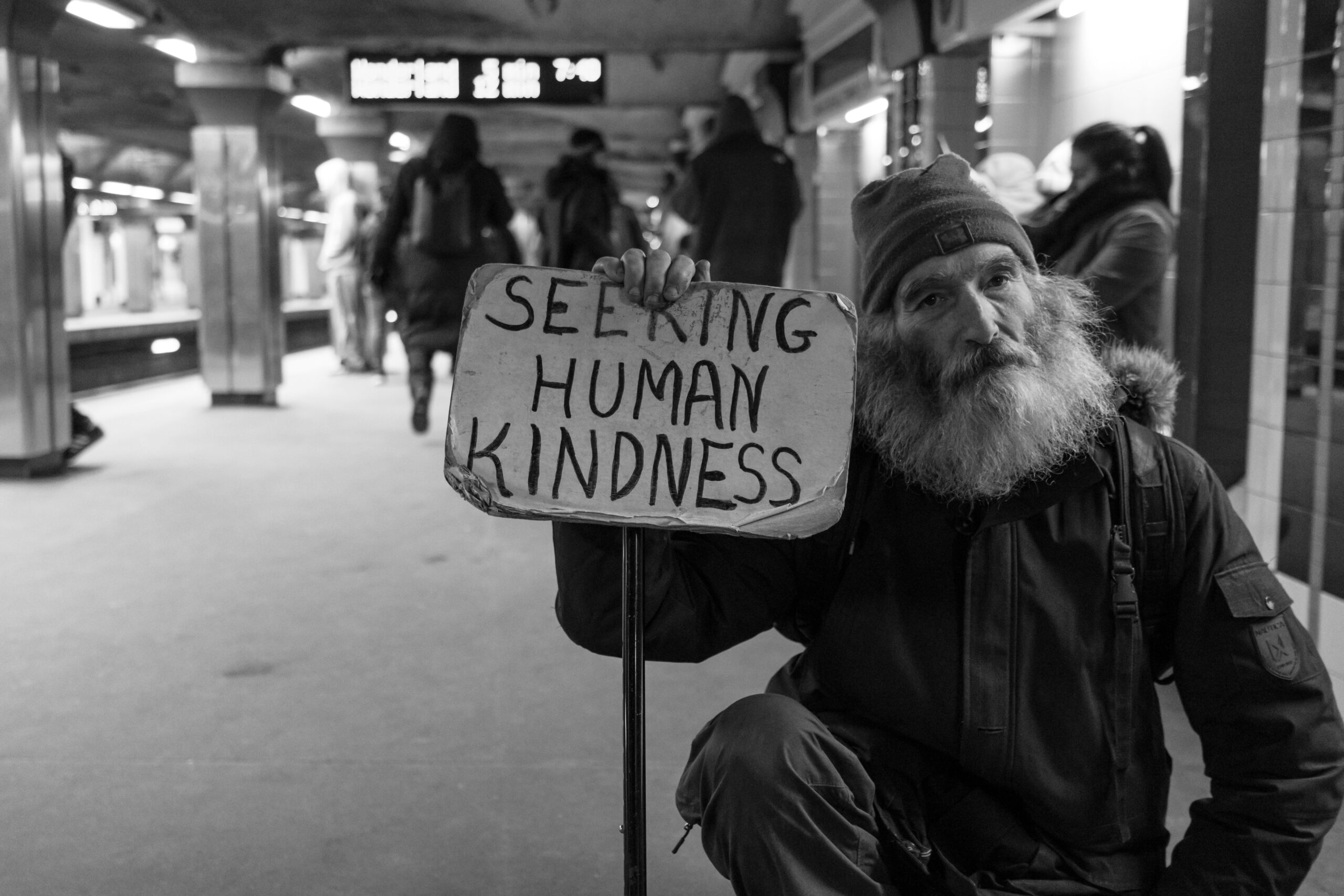
- In how we treat people who offer us nothing in return.
When selfishness loosens, systems soften.
When narratives lose their grip, incentives change.
When people become less obsessed with image, status, and legacy, structures slowly reorganize around different values.
This kind of change is slow.
But it’s durable.
Why “Be the Change” Isn’t a Slogan
This is why the phrase “be the change you want to see in the world” exists.
Not as moral instruction. Not as self-help advice.
But as a description of how reality actually functions.
What we call “the system” is animated moment by moment through human behavior, values, incentives, and attention. There is no separate mechanism operating independently of the people who live inside it.
This insight is also the foundation beneath ideas like manifesting a “new earth.” Not as wishful thinking, but as recognition: the observer and the observed are not separate. The world we experience is inseparable from the way we meet it.
When awareness changes here, expression changes everywhere it flows.
Change doesn’t propagate because people demand it loudly enough. It propagates because priorities, behaviors, and identities quietly reorganize at the level where systems are actually generated — in human beings.
When selfishness loosens here, it loosens everywhere it expresses itself. When responsibility is embodied rather than outsourced, it reshapes families, workplaces, institutions, and cultures.
The phrase isn’t asking individuals to fix the world.
It’s pointing to something far more uncomfortable and far more empowering:
That the world is already moving through us.
And whatever we consistently embody — consciously or unconsciously — becomes the blueprint for the systems we critique, resist, and attempt to reform.
You Are the World
This insight isn’t new.
As Jiddu Krishnamurti famously said:
You are the world.
Not as a metaphor.
As a description.
The same forces shaping nations shape conversations. The same incentives shaping economies shape relationships. The same fears shaping politics shape parenting.
There is no meaningful boundary between personal and collective psychology.
Only scale.
The Quiet Work
To change ourselves is not a retreat from responsibility.
It’s the deepest form of it.
When we become less driven by selfish narratives, our impact ripples outward — through businesses, families, communities, and even brief encounters with strangers.
This doesn’t absolve institutions.
It grounds reform in reality.
Because systems change when the people animating them do.
Not all at once.
But unmistakably.
The Invitation
This work isn’t glamorous.
It doesn’t grant moral superiority.
It doesn’t offer certainty.
But it does something more radical.
It returns responsibility to where it’s always been.
Here.
If this reflection resonates, Proof That You’re God explores this same terrain — how identity, selfishness, and awareness shape not only personal experience, but the world we collectively create.
Not as a solution.
As an invitation to see clearly — and live accordingly.