There are moments when the world feels unbearably loud.
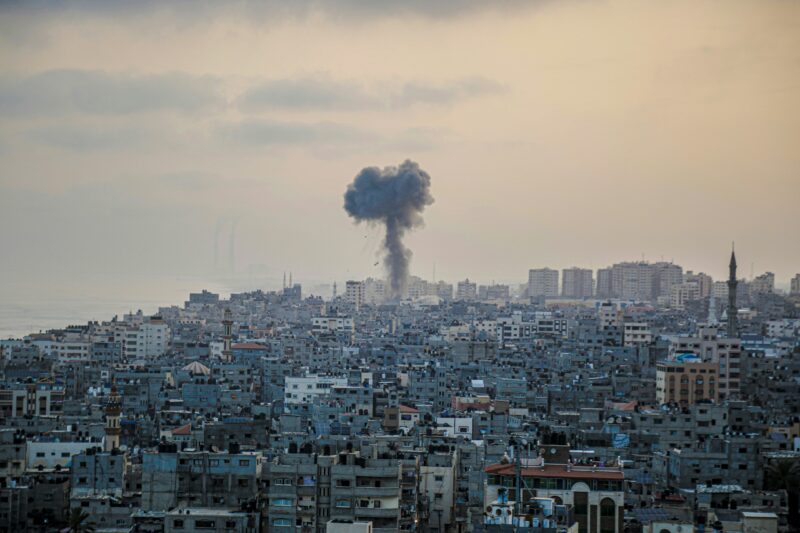
Screens fill with images from Gaza and Israel — devastation, grief, outrage, certainty. Headlines demand moral clarity. Social feeds apply pressure to speak, to condemn, to declare where one stands. Silence is interpreted as complicity. Hesitation is treated as betrayal. Nuance feels dangerous, even immoral.
The human cost is undeniable. Lives are lost. Families are destroyed. Trauma compounds itself in real time.
And yet, alongside the visible suffering, something else is unfolding — something psychological, less visible, but just as consequential.
The Gaza–Israel conflict is not only a geopolitical crisis. It is a clear and painful demonstration of what happens when identity becomes sacred — when belonging, certainty, and self-definition harden to the point where questioning feels like annihilation and violence begins to feel inevitable.
This is not an article about who is right.
It is not an argument for a political solution.
It is an examination of the psychological machinery that turns stories into weapons, and why suffering alone rarely dissolves the cycle once identity has taken control.
The Pressure to Choose
One of the most striking features of modern conflict is not only the violence itself, but the pressure experienced by people far removed from it.
Choose a side.
Speak now.
Signal your position.
The demand carries moral urgency, as though clarity itself could reduce suffering. But beneath this urgency lies something more uncomfortable than compassion: a deep intolerance for uncertainty.
When violence is visible and ongoing, not knowing what to think feels unbearable. Ambiguity threatens the mind’s sense of order. So it reaches for something solid — a narrative that restores coherence and protects identity.
Heroes and villains.
Oppressors and victims.
Us and them.
This isn’t cruelty. It’s psychology.
The mind seeks certainty not because it wants to harm, but because uncertainty feels like psychological freefall. Identity offers ground.
How Identity Turns Stories Into Absolutes
Identity is built from stories. Stories about who we are, what we stand for, and what threatens that sense of self. When identity feels stable, stories remain flexible. When identity feels threatened, stories harden.
In the context of conflict, this hardening accelerates.
History becomes selective. Context becomes weaponized. Facts are filtered through allegiance. Atrocities are emphasized or minimized depending on who commits them. Suffering becomes real or abstract based on narrative alignment.
None of this requires hatred.
It requires identification.
Once a story becomes “who I am,” questioning it feels like erasure. And when large groups experience that threat simultaneously, violence — physical, rhetorical, or ideological — begins to feel justified, even necessary.
This dynamic isn’t unique to Gaza and Israel. It appears wherever identity becomes non-negotiable. What makes this conflict so revealing is the intensity with which certainty is demanded and amplified.
It is part of the broader psychological pattern of why the world feels so loud right now — a collision between collective identity and constant media reinforcement that leaves little room for reflection.
Why Suffering Rarely Ends the Cycle
There is a common belief that exposure to suffering naturally produces empathy, and that enough empathy will end violence.
History does not support this.
Atrocities often do not soften identity — they strengthen it. Trauma becomes proof. Pain becomes justification. Each side points to its wounds as evidence of moral legitimacy.
Identity does not ask, “What ends suffering?”
It asks, “What preserves who we are?”
This is why cycles of violence persist across generations. Not because people forget the past, but because they remember it selectively, through stories designed to protect belonging and continuity.
In Proof That You’re God, this pattern is addressed directly: violence is not sustained by hatred alone, but by the psychological need for certainty and self-definition. As long as identity remains unquestioned, suffering is continuously converted into fuel rather than resolution.
The Seduction of Moral Purity
Few things are as intoxicating as moral clarity.
If we are right, then they must be wrong.
If we are victims, then they must be aggressors.
If we are justified, then they deserve what happens.
This framing feels clean. It offers relief from ambiguity. It restores a sense of righteousness in the face of chaos.
But moral purity requires dehumanization — sometimes subtle, sometimes explicit. The other becomes a symbol, a threat, a justification, rather than a lived human experience.
This does not mean all actions are equal.
It means identity cannot be trusted to arbitrate truth.
When identity is sacred, violence becomes thinkable. When violence becomes thinkable, it becomes repeatable.
What Gets Lost in the Demand to Be Right
When discourse collapses into position-taking, something essential disappears: the capacity to feel without defending.
Grief becomes ammunition.
Fear becomes certainty.
Anger becomes righteousness.
Many people engaging with this conflict are not directly involved, yet carry enormous emotional weight. They are asked to perform allegiance, absorb trauma, and maintain moral vigilance — all while knowing they have little influence over the outcome.
This is why engagement often leads not to clarity, but to exhaustion, anxiety, and numbness. The nervous system was never designed for continuous moral emergency, especially when identity is under threat.
Seeing Without Siding
A fear often arises when non-dual perspectives are introduced:
If I don’t choose a side, does that mean I don’t care?
This fear misunderstands what is being pointed to.
Seeing without identity does not remove compassion.
It removes distortion.
It allows suffering to be felt without immediately converting it into justification for further harm. It allows grief to remain grief, rather than becoming proof. It keeps the human cost central instead of subordinate to narrative allegiance.
This is not neutrality.
It is clarity.
And clarity is deeply threatening to systems that depend on certainty to survive.
The Cost of Sacred Identity
When identity becomes sacred, everything else becomes expendable.
Truth becomes negotiable.
Nuance becomes dangerous.
Human lives become symbolic.
This is as true for nations as it is for individuals.
The tragedy of Gaza and Israel is not only the visible destruction, but the way identity ensures its own continuation. Each generation inherits not just trauma, but the stories that make letting go feel impossible.
Until identity itself is questioned, solutions remain cosmetic.
What This Asks of Us Personally
Most people reading this will never shape geopolitical outcomes.
But everyone participates in the psychological environment that sustains conflict.
Every time certainty is valued over curiosity.
Every time identity is defended instead of examined.
Every time suffering is filtered through allegiance.
Proof That You’re God does not ask readers to adopt better positions. It asks them to notice the mechanism that produces positions in the first place.
Because the same structure that fuels global violence also fuels personal conflict — only at a different scale.
An Invitation, Not a Resolution
This article does not resolve the Gaza–Israel conflict.
It points to something more uncomfortable — and more honest.
Violence does not begin with weapons.
It begins with identity that cannot be questioned.
Until that is seen clearly, history will continue to repeat itself under new names, new flags, and new justifications.
If this perspective resonates — or unsettles — Proof That You’re God explores these dynamics far more deeply, not as theory, but as lived inquiry into how identity forms, defends itself, and eventually loosens.
The book does not tell you what to think about the world.
It asks whether the self doing the thinking might be the real battleground.