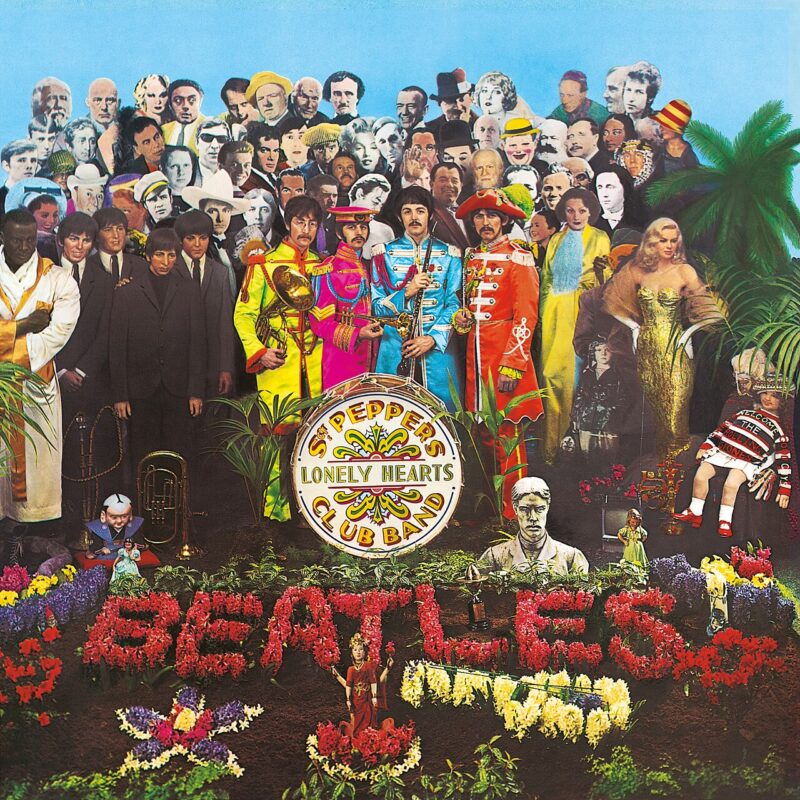
In 1967, Within You Without You appeared quietly on Sgt. Pepper’s Lonely Hearts Club Band.
It didn’t sound like a hit.
It didn’t sound Western.
It didn’t sound interested in performance or spectacle.
Instead, it sounded like a conversation humanity keeps postponing.
We were talking about the space between us all…
More than half a century later, that space feels wider than ever.
The Illusion of Separation
The song opens by naming something most people sense but rarely articulate: the space between us isn’t physical—it’s psychological.
And the people who hide themselves behind a wall of illusion
Never glimpse the truth
Then it’s far too late
When they pass away
This isn’t moral judgment. It’s observation.
The “wall of illusion” isn’t ignorance. It’s identification—with roles, beliefs, identities, and stories that make separation feel real and necessary.
When people hide behind these walls, they don’t lose intelligence or sincerity. They lose contact.
And without contact, truth isn’t attacked—it’s simply never encountered.
Love as Recognition, Not Sentiment
When the song speaks of love, it doesn’t mean romance or virtue.
We were talking about the love we all could share
When we find it, to try our best to hold it there…
This is love as recognition—the felt sense that what’s looking out from here is not fundamentally different from what’s looking back at us.
That’s why the line that follows isn’t idealistic so much as quietly devastating:
With our love, we could save the world, if they only knew
What’s missing isn’t effort.
It’s knowing.
“No One Else Can Make You Change”
One of the most important lines in the song arrives without drama:
Try to realise it’s all within yourself
No one else can make you change
This isn’t self-help. It’s responsibility.
Change doesn’t come from fixing the world, convincing others, or winning arguments. It comes from seeing through the illusion that the problem is “out there” in the first place.
And that realization doesn’t inflate the self—it shrinks it:
And to see you’re really only very small
Small, not in value—but in centrality.
Within You, Without You
The refrain carries the heart of the song:
And life flows on within you and without you
This isn’t poetry for poetry’s sake. It’s a precise description of experience once separation relaxes.
Life isn’t happening to you.
And it isn’t happening for you.
It’s happening as what you call “you,” and just as much as what you don’t.
This isn’t a belief to adopt. It’s something that becomes obvious when the effort to stand apart eases—a theme explored more directly in Why Clarity Often Feels Harder the More We Understand.
Gaining the World, Losing the Soul
The song doesn’t ignore ambition, success, or progress.
We were talking about the love that’s gone so cold
And the people who gain the world and lose their soul
This isn’t a condemnation of achievement. It’s a warning about disconnection.
When identity, success, and certainty become substitutes for intimacy with life, something essential thins out—even as external metrics improve.
They don’t know
They can’t see
Are you one of them?
That question isn’t accusatory. It’s invitational.
Seeing Beyond Yourself
The closing movement of the song offers no promise of salvation—only clarity:
When you’ve seen beyond yourself then you may find
Peace of mind is waiting there
And the time will come when you see we’re all one
“Seeing beyond yourself” doesn’t mean becoming selfless. It means seeing that the self you’ve been defending isn’t what you thought it was.
And when that happens, peace isn’t manufactured.
It’s uncovered.
Why This Matters Now
We live in a time defined by hardened identities, moral certainty, and endless argument about who’s right.
What’s striking about The Beatles’ message here is how little it cares about sides.
It points instead to the structure beneath conflict: the assumption of separation.
As long as that assumption goes unquestioned, the space between us grows—no matter how loudly we speak about unity.
A Quiet Ending
“Within You, Without You” doesn’t offer solutions.
It doesn’t prescribe practices.
It doesn’t call for belief.
It simply points to something that becomes obvious when we stop hiding behind the walls we’ve built.
Life flows on.
Within you.
Without you.
And the distance between those two turns out to be imagined.
Closing Invitation
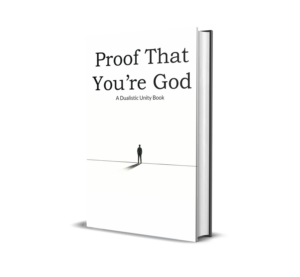
The insight echoed throughout this song is explored more fully in Proof That You’re God—not as philosophy or metaphor, but as a lived inquiry into what remains when the illusion of separation is honestly examined.