
Public discourse doesn’t usually reward uncertainty.
It rewards confidence. Speed. Conclusions. The ability to sound decisive even when the ground beneath the argument is shaky. In a media environment driven by algorithms, attention, and outrage, the pressure to land somewhere—anywhere—is constant.
That’s why the evolution of Alex O’Connor has become increasingly interesting.
Not because of the specific positions he holds.
Not because he’s arrived at a new worldview.
But because of something far rarer: he’s resisted the urge to replace certainty with a new form of certainty.
And that restraint is something we can all learn from.
From Answers to Inquiry
Alex O’Connor first became widely known through clear, articulate critiques of religion. His early work was sharp, logical, and confident—very much in line with the expectations of a debate-driven, secular audience.
There’s nothing wrong with that phase. In fact, it served an important function. It helped many people articulate doubts they were already carrying and dismantle ideas that no longer made sense to them.
But what’s notable isn’t where he started.
It’s that he didn’t stop there.
As his work has matured, something subtle has shifted. The tone softened. The urgency to win receded. The questions became slower, heavier, and more existential.
Rather than rushing to new answers, he began sitting longer with the implications of not having them.
That move—away from performance and toward patience—is where the real lesson lies.
The Temptation to Replace Certainty
When someone lets go of a belief system, there’s a powerful temptation waiting in the wings: replacement.
Religion is abandoned, only to be replaced with:
- moral absolutism
- ideological purity
- political certainty
- scientific reductionism
- or a rigid form of skepticism
The structure stays the same. Only the labels change.
What often goes unnoticed is that this impulse isn’t about truth. It’s about stability. Certainty gives the nervous system something to hold onto. It offers identity, orientation, and a sense of safety.
What makes Alex’s evolution notable is his increasing reluctance to do this.
Rather than swapping religious certainty for secular certainty, he’s allowed questions to remain open—even when that openness is uncomfortable, unsatisfying, or unpopular.
That’s not indecision.
That’s integrity.
Letting Questions Cost You Something
There’s a version of questioning that’s cheap.
It asks questions only until a preferred answer appears. It performs skepticism as style, not risk. It critiques others while leaving the questioner fundamentally unchanged.
And then there’s a deeper kind of questioning—one that costs you orientation.
This kind of inquiry:
- erodes identity
- complicates morality
- destabilizes meaning
- removes easy consolation
It doesn’t just challenge ideas.
It challenges the need for ideas to function as anchors.
What’s increasingly visible in Alex’s work is a willingness to let questioning do this kind of work—to let it unsettle rather than resolve.
That willingness is rare, especially in public figures whose livelihoods often depend on projecting clarity.
Why This Matters Culturally
We live in a time that is both information-saturated and meaning-starved.
Everyone has answers.
Few people have patience.
The loudest voices are often the most certain, and the most certain voices are rarely the most honest. Complexity gets flattened. Nuance gets punished. Ambiguity is treated as weakness.
In that context, a public thinker who slows down rather than speeds up stands out.
Alex’s evolution reflects something broader that’s happening culturally: many of the old certainties—religious and secular alike—are no longer holding. But instead of collapsing into nihilism or grasping for new dogmas, some thinkers are choosing a harder path.
They’re choosing to stay with the tension.
This matters because it models a different way of engaging with the world—one that doesn’t require constant outrage or premature resolution to feel grounded. It shows that seriousness doesn’t require certainty, and meaning doesn’t require metaphysical guarantees.
This broader cultural pressure—where noise, certainty, and performance dominate—is something we explore more deeply in our work on why the world feels so loud, and why quieter forms of integrity often go unnoticed.
The Difference Between Skepticism and Humility
Skepticism is often mistaken for humility.
But skepticism can become just as rigid as belief if it hardens into identity. When being “the skeptic” becomes the point, questioning turns into a shield rather than an opening.
What distinguishes Alex’s more recent posture is a movement away from skepticism as performance and toward humility as practice.
Humility doesn’t mean:
- abandoning reason
- accepting everything
- or refusing to make judgments
It means recognizing the limits of what reason can secure emotionally.
It means admitting that some of our deepest questions—about meaning, time, death, and value—may not resolve cleanly without being reduced.
And rather than forcing them to, humility lets them remain open.
Integrity Without Arrival
One of the most important things to say clearly is this:
Integrity does not require arrival.
There is no final position that inquiry must reach in order to be legitimate. There is no finish line where questioning ends and certainty begins again, purified and safe.
What Alex’s trajectory illustrates is that inquiry can deepen without converging on a doctrine.
That’s difficult for many people to tolerate, because we’re trained—intellectually and emotionally—to believe that unresolved questions signal failure.
But unresolved questions can also signal honesty.
They can mean we’ve stopped pretending to know what we don’t.
Why This Isn’t About Agreement
It’s important to be explicit about what this article is not doing.
This is not an attempt to claim Alex O’Connor as representative of any particular philosophical or experiential framework. It’s not suggesting convergence, endorsement, or alignment of views.
Agreement is irrelevant here.
The value lies in method, not outcome.
You don’t have to agree with Alex’s conclusions—or lack thereof—to learn from the way he holds his inquiry. You don’t have to share his assumptions to recognize the courage it takes to let go of easy replacements.
What’s being highlighted is a quality of engagement that transcends ideology.
A Model Worth Protecting
In a world increasingly dominated by:
- algorithmic outrage
- certainty as branding
- and identity as belief
people who demonstrate restraint deserve attention.
Not because they’re right.
But because they’re careful.
Alex’s evolution shows that it’s possible to:
- change without disowning the past
- question without performing superiority
- speak publicly without rushing to closure
That kind of integrity doesn’t just benefit philosophical discourse. It benefits relationships, politics, culture, and inner life.
It reminds us that not knowing doesn’t have to be a crisis.
It can be a practice.
What We Can Actually Learn
So what can we all learn from Alex O’Connor?
Not what to think.
Not what to believe.
Not where inquiry should lead.
But this:
- Let questions change you, not just your arguments
- Resist the urge to replace old certainties with new ones
- Allow discomfort without turning it into identity
- Stay serious without becoming rigid
- Let inquiry remain alive
These aren’t philosophical positions.
They’re ethical commitments to honesty.
And in a time that rewards certainty far more than sincerity, that kind of integrity is worth noticing—and protecting.
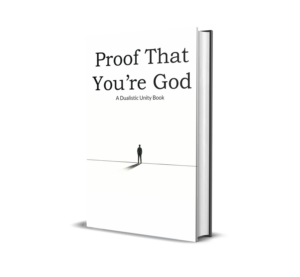
If these reflections resonate, they’re part of a larger exploration we go into more deeply in Proof That You’re God. The book isn’t an argument and it doesn’t offer conclusions to adopt. It traces what happens when questioning is allowed to remain honest—when certainty isn’t replaced, but gently examined until it loosens on its own. If you’re interested in the territory where identity, meaning, and inquiry begin to soften rather than harden, the book is an extension of that same spirit.