Why Every City on Earth Needs a Shared Resource Library
There was a time when survival didn’t depend on owning everything.
You didn’t need your own ladder.
You didn’t need your own plow.
You didn’t need to buy a tool you’d use twice a year and store forever.
You needed access.
And you needed each other.
Somewhere along the way, modern life replaced shared wisdom with private ownership — and then quietly blamed us for struggling under the weight of it.
Ownership Was Never the Point
We’re told independence means self-sufficiency.
But what it actually means today is duplicated expense.
Every apartment complex contains:
- 50 drills used twice a year
- 30 blenders gathering dust
- 100 ladders stored in closets
- Countless people who know how to fix things — quietly isolated from one another
This isn’t abundance.
It’s fragmentation.
And it’s exhausting.
This kind of fragmentation isn’t just about stuff — it’s part of a larger pattern where modern systems overwhelm us with noise, responsibility, and disconnection while quietly removing shared supports. It’s one reason why the world so often feels loud and exhausting, even when nothing is technically “wrong.”
The Library of Things Is Not a New Idea — It’s a Remembered One
Libraries already proved something radical:
Knowledge shouldn’t be owned — it should be shared.
A Library of Things simply extends that truth to the physical world:
- Borrow a carpet cleaner instead of buying one
- Try a dehydrator before committing money and storage
- Share tools that don’t need to be owned by everyone
It’s not anti-capitalism.
It’s pro-sanity.
It’s a system designed for real human lives — especially:
- Renters
- Seniors downsizing
- Students
- Families on tight budgets
- People living in smaller spaces
But Things Aren’t the Only Scarcity We’ve Created
Here’s the part we rarely talk about:
Every city is also full of unused human wisdom.
The retired electrician who would happily teach.
The gardener who knows what actually grows locally.
The bookkeeper who could help someone avoid debt.
The mechanic who could show a teenager how engines work.
The elder who remembers how communities used to function.
So what if libraries didn’t just lend objects?
What if they also lent skills — voluntarily, ethically, consensually?
Introducing: The Library of Things and People
Imagine walking into a library and finding:
- A shelf where you borrow a blender
- A calendar where you attend a free skills session
- A community room where knowledge is shared, not sold
No guru economy.
No hustle culture.
No monetization of care.
This wouldn’t replace professionals.
It wouldn’t undercut trades.
It wouldn’t turn libraries into job centers.
It would simply lower the barrier to participation in everyday life.
This Isn’t Radical. It’s Remembered.
For most of human history, survival wasn’t an individual project.
Tools were shared.
Skills were passed down.
Knowledge moved through communities — not platforms.
Belonging came before ownership.
What we call “innovation” today is often just remembering what worked —
before we mistook isolation for strength.
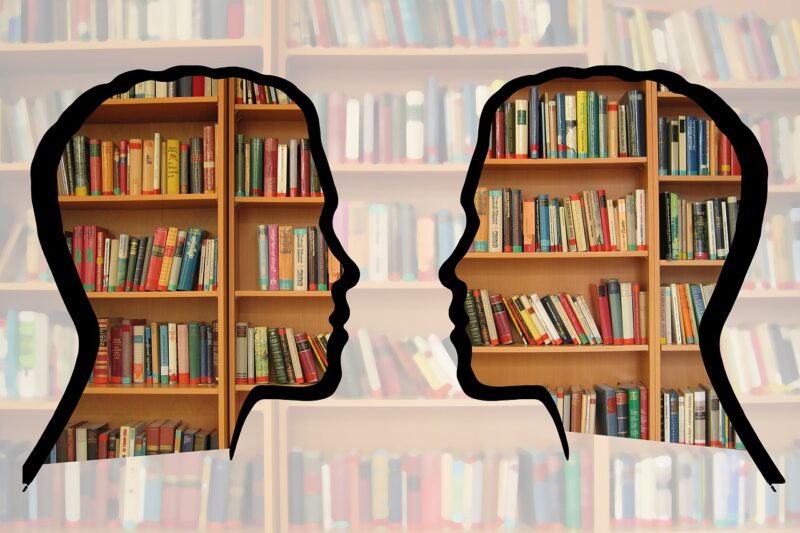
Libraries were never just about books.
They were about preserving access.
They were about trust.
They were about the idea that intelligence and capability don’t belong to a few — they move through all of us.
And remembering doesn’t mean ignoring what we’ve learned.
Any system built on trust still needs clear boundaries —
not because people are dangerous, but because clarity protects everyone.
What Makes This Safe
A Library of Things — and especially a Library of People — works when safety is designed from the beginning, not added later in response to harm.
These principles are non-negotiable.
1. Minors Are Never Alone With Adults
Ever.
All interactions involving minors must take place:
- In public, observable spaces within the library
- With the child’s parent or legal guardian present
- With library staff present when appropriate
There are no one-on-one “expert sessions” with minors — regardless of credentials, reputation, or intent.
This protects children and volunteers.
2. No Private Homes. No Closed Rooms.
All Library of People activities happen:
- Inside libraries
- In designated community rooms
- In other public, observable spaces approved by the library
There are no private residences, no closed-door meetings, and no off-site one-on-one sessions.
Boundaries stay visible.
3. Clear Scope: Sharing Knowledge, Not Authority
Volunteers:
- Share practical skills or lived experience
- Do not provide medical, legal, therapeutic, or spiritual services
- Do not act as mentors, gatekeepers, or decision-makers in someone else’s life
This program is about capability, not control.
4. Transparency Over Credentials
Volunteers are not required to be “experts.”
They are required to be:
- Clear about what they are offering
- Honest about their limits
- Willing to defer when something falls outside their scope
No titles.
No hierarchy.
No assumed authority.
5. Consent Is Ongoing
Everyone involved can:
- Say no
- Leave at any time
- Change their mind
- Stop participating without explanation
There is no pressure, obligation, or moral debt.
Participation is voluntary — always.
6. Libraries Provide Oversight
Libraries:
- Host and schedule all activities
- Maintain clear codes of conduct
- Ensure staff presence or visibility
- Provide simple reporting pathways if boundaries are crossed
This is not informal networking.
It is a stewarded public program.
Why Naming Boundaries Builds Trust
Clear boundaries:
- Make participation safer
- Protect volunteers
- Reassure parents and caregivers
- Give libraries confidence to support and expand programs
Trust isn’t created by silence.
It’s created by clarity.
A Call to Every Library, Everywhere
To librarians, city planners, volunteers, and neighbors:
You already have the building.
You already have trust.
You already have systems for borrowing and care.
All that’s missing is willingness.
Willingness to say:
“You don’t have to own everything to belong here.”
Start small.
One shelf.
One item.
One volunteer hour.
Let libraries become what they were always meant to be:
A shared system for the community.
This Is Not Charity. It’s Remembering.
We don’t need more apps.
We don’t need more stuff.
We don’t need more experts telling us we’re broken.
We need spaces that reflect a simple truth:
We were never meant to do this alone.
And we were never lacking what we need.
As explored in Proof That You’re God, the crisis isn’t scarcity —
it’s misidentification.
We forgot that intelligence, care, and creativity already move through us —
not from institutions down to us.
A Library of Things (and People) doesn’t invent something new.
It remembers that we are all in this together.