
There’s a particular emotional response that arises almost automatically when we encounter something we don’t understand.
It isn’t curiosity.
It’s embarrassment.
A subtle tightening in the chest. A quick mental move to self-judgment. A feeling that says, I should already know this.
And almost immediately, not knowing stops being a neutral fact and starts feeling like evidence of something personal:
That you’re behind.
That you missed something.
That this gap in understanding reflects a failure on your part.
This response is so common that it’s rarely questioned. But it’s also profoundly disconnected from reality.
Because if not knowing were actually a failure, no one would ever learn anything at all.
Why the feeling feels so real
We don’t come into the world knowing how to speak, reason, or understand ourselves. Every form of knowledge—practical, emotional, or existential—begins in not knowing.
And yet, somewhere along the way, ignorance quietly shifts from a starting point to a verdict.
Not knowing stops being where learning begins and becomes something to hide.
This shift doesn’t happen because knowledge itself changes. It happens because identity gets involved.
Understanding becomes something you are, rather than something you develop.
And once understanding is tied to identity, not knowing feels like a threat.
When not knowing becomes about “me”
The emotional sting of not knowing rarely comes from the information itself.
It comes from the story that forms around it:
If I were smarter, more aware, more evolved, I wouldn’t be confused right now.
In that moment, not knowing is no longer about the subject in front of you.
It’s about who you think you’re supposed to be.
This is why the response feels so immediate and personal. The mind isn’t evaluating information—it’s defending identity.
Confusion becomes humiliation. Uncertainty becomes inadequacy.
And learning quietly shuts down.
The danger hidden inside this reaction
This identity-based response to not knowing has consequences that often go unseen.
When not knowing feels like failure, the mind instinctively avoids it.
Questions go unasked. Curiosity narrows. Exploration feels risky.
Instead of engaging with what’s unclear, people tend to:
- pretend to understand
- repeat what sounds correct
- cling to familiar positions
- defend partial knowledge as certainty
Not because they’re dishonest—but because the emotional cost of admitting uncertainty feels too high.
This is how ignorance quietly sustains itself.
Why awareness changes the relationship to not knowing
The shift begins when the emotional response itself becomes visible.
Not as something to correct—but as something to recognize.
When you notice the tightening reminder of I should already know this, a distinction becomes possible:
- there is not knowing
- and there is the feeling of being diminished by it
These are not the same thing.
The feeling belongs to identity.
The not knowing belongs to reality.
Seeing that distinction matters.
Because once the emotional charge is recognized as identity-based, it loses some of its authority. It’s no longer a verdict—it’s a reaction.
And reactions can be seen without being obeyed.
This distinction sits at the heart of broader reflections on why awareness doesn’t automatically bring clarity—and why understanding often deepens only when identity loosens.
Understanding doesn’t come from being right
This is where a deeper confusion often sits.
Many people unconsciously believe that understanding is proven by being correct.
But correctness and understanding are not the same.
Correctness is static. It repeats what’s already known.
Understanding is dynamic. It changes as reality is seen more clearly.
To understand something, you must be willing to stand in not knowing long enough for insight to emerge.
That willingness disappears when not knowing feels like failure.
This is why environments that reward being right often suppress genuine understanding.
Learning requires surviving not knowing
Every meaningful insight—about the world, about relationships, about yourself—passes through a period of confusion.
There is no shortcut around it.
But confusion is only productive when it’s allowed.
When it’s treated as evidence of inadequacy, the system retreats. When it’s recognized as part of learning, curiosity reopens.
This is not a mindset shift.
It’s a relational shift.
A different way of being with uncertainty.
Why pushing past the feeling matters
The emotional discomfort of not knowing is real—but it isn’t informative.
It doesn’t tell you anything true about your capacity to understand.
What it reveals is how tightly identity has wrapped itself around knowledge.
Moving past that feeling doesn’t mean ignoring it. It means not letting it dictate what you’re allowed to explore.
This is where growth actually happens—not in certainty, but in honesty.
Honesty about what you don’t know.
Honesty about the fear that arises there.
Honesty about the difference between identity and understanding.
From self-protection to curiosity
When not knowing stops being treated as a personal flaw, something subtle shifts.
Curiosity returns.
Questions feel lighter. Exploration feels possible. Understanding becomes something you participate in rather than perform.
This doesn’t make learning easy—but it makes it real.
And it opens a door that certainty always keeps closed.
A final reflection
If not knowing often feels like failure, it doesn’t mean you’re incapable of understanding.
It usually means understanding has been tied too closely to identity.
Separating the two isn’t about lowering standards—it’s about reclaiming the conditions that make learning possible.
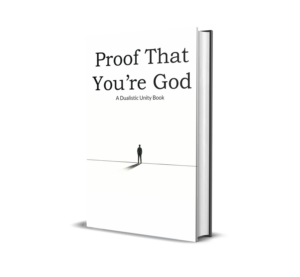
This movement—from defending what you know to honestly meeting what you don’t—is explored more deeply in Proof That You’re God. Not as an argument for ignorance, but as an invitation to see what becomes available when identity steps out of the way.
Nothing new is learned by pretending to know.
Everything meaningful begins somewhere else.