
Emotional numbness is usually described as something broken.
A shutdown.
A defense.
A symptom to fix.
So when it arrives, most people panic quietly.
They tell themselves:
- “I should feel something.”
- “This means I’m disconnected.”
- “Something has gone wrong.”
But there’s a lesser-known side to numbness that often goes unspoken.
Sometimes, numbness comes with clarity.
Not joy.
Not peace.
But a strange, clean seeing — as if the emotional static has briefly dropped away.
And that can be unsettling in its own way.
When the Noise Goes Quiet
For many people, emotional life is loud.
Constant interpretation.
Constant reaction.
Constant inner commentary about what everything means.
Then, sometimes without warning, it stops.
You’re still functioning.
Still thinking.
Still moving through the day.
But the emotional charge is gone.
And in that absence, you may notice:
- Thoughts feel less sticky
- Situations feel simpler
- Decisions feel oddly straightforward
- The world appears flatter, but clearer
This isn’t dissociation in the dramatic sense.
It’s more like the volume knob has been turned down.
Why This Can Feel Disturbing
Clarity without emotion can feel wrong.
We’re conditioned to believe that feeling deeply is the same as being alive. That emotion gives meaning, color, and authenticity to experience.
So when numbness brings clarity, it raises uncomfortable questions:
- If I can see this clearly without emotion, what was emotion doing before?
- Was I confusing intensity with truth?
- Is this clarity real — or is it emptiness pretending to be insight?
Because the experience doesn’t fit a clean narrative, it’s often dismissed or pathologized immediately.
But doing that misses something important.
Numbness Isn’t Always an Absence
Not all numbness is the same.
Sometimes numbness is collapse — exhaustion after prolonged emotional strain.
But sometimes it’s a pause in reactivity.
A moment where the system stops interpreting long enough for perception to reset.
This kind of numbness doesn’t feel foggy.
It feels… bare.
And that bareness can reveal how much of emotional experience is layered on top of direct perception.
Seeing Without Comment
One of the most striking aspects of this state is how little commentary accompanies experience.
Events still happen.
Thoughts still arise.
But the automatic emotional labeling softens:
- “This is bad”
- “This is dangerous”
- “This means something about me”
Without those overlays, reality is perceived more directly.
Not better.
Not worse.
Just less filtered.
This can feel like relief — or like loss — depending on how attached you are to emotional intensity as a measure of aliveness.
Why People Rush to Escape It
Because numbness is uncomfortable, most people try to do something with it.
They:
- Stimulate themselves
- Analyze it
- Worry about it
- Try to “get their feelings back”
Ironically, this effort often reactivates the very emotional turbulence that created the numbness in the first place.
The clarity disappears.
The noise returns.
And the system goes back to familiar patterns.
Which reinforces the belief that numbness was something to escape.
The Misunderstanding at the Center
The core misunderstanding is this:
Clarity doesn’t require emotional intensity.
We’ve learned to associate feeling strongly with being real.
But clarity often emerges when emotional charge subsides, not when it peaks.
That doesn’t mean emotion is wrong or unnecessary.
It means emotion is not the sole carrier of truth.
A Parallel With Waiting to Feel Normal
This experience closely mirrors the pattern explored in the moment you realize you’ve been waiting to feel normal — the way subtle assumptions about how experience should feel quietly shape perception.
In both cases, something becomes visible not through effort, but through the absence of usual interference.
Not because something new appears — but because something habitual steps aside.
This is part of a broader pattern explored in why clarity often feels harder the more we understand — where effort, interpretation, and self-monitoring unintentionally obscure what’s already present.
Why This State Is Temporary (and That’s Okay)
This clarity rarely lasts.
Emotion returns.
Narrative returns.
The sense of “me” returns with its preferences and reactions.
That doesn’t invalidate the experience.
It shows that clarity isn’t a permanent state to maintain — it’s a glimpse of how perception functions when it’s less entangled.
Trying to preserve it turns it into another goal.
Letting it be what it is allows it to inform understanding without becoming an identity.
Nothing Needs to Be Done With It
This is important.
If you experience emotional numbness with clarity:
- You don’t need to analyze it
- You don’t need to interpret it
- You don’t need to hold onto it
- You don’t need to fear it
Simply noticing what perception is like without emotional amplification is enough.
That noticing integrates the insight naturally.
The Quiet Recalibration
Over time, experiences like this can soften your relationship with emotion itself.
You begin to see:
- Emotion as movement, not truth
- Clarity as available without intensity
- Awareness as prior to both numbness and feeling
Not as beliefs — but as lived recognition.
And that recognition subtly changes how seriously emotional weather is taken.
This Isn’t a Recommendation
This isn’t an argument for numbness.
It’s not saying:
- “Numbness is good”
- “Emotion is bad”
- “You should aim for this state”
It’s saying:
When numbness happens, something can be learned — if it isn’t immediately rejected.
That learning doesn’t come from analysis.
It comes from presence.
A Final Reframe
Emotional numbness doesn’t always mean something has shut down.
Sometimes it means something has gone quiet long enough to be seen.
And when emotion returns — as it will — it does so into a slightly wider context.
One where clarity is no longer dependent on feeling a certain way.
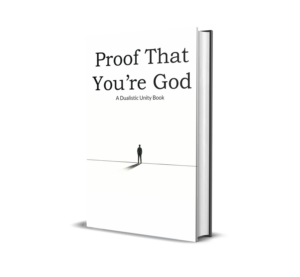
If this reflection resonates, Proof That You’re God explores this same dynamic across anxiety, identity, control, and meaning — how relief and clarity often arrive not through effort, but through the softening of what’s been unconsciously maintained.
Nothing needs to be forced.
What’s seen, integrates.