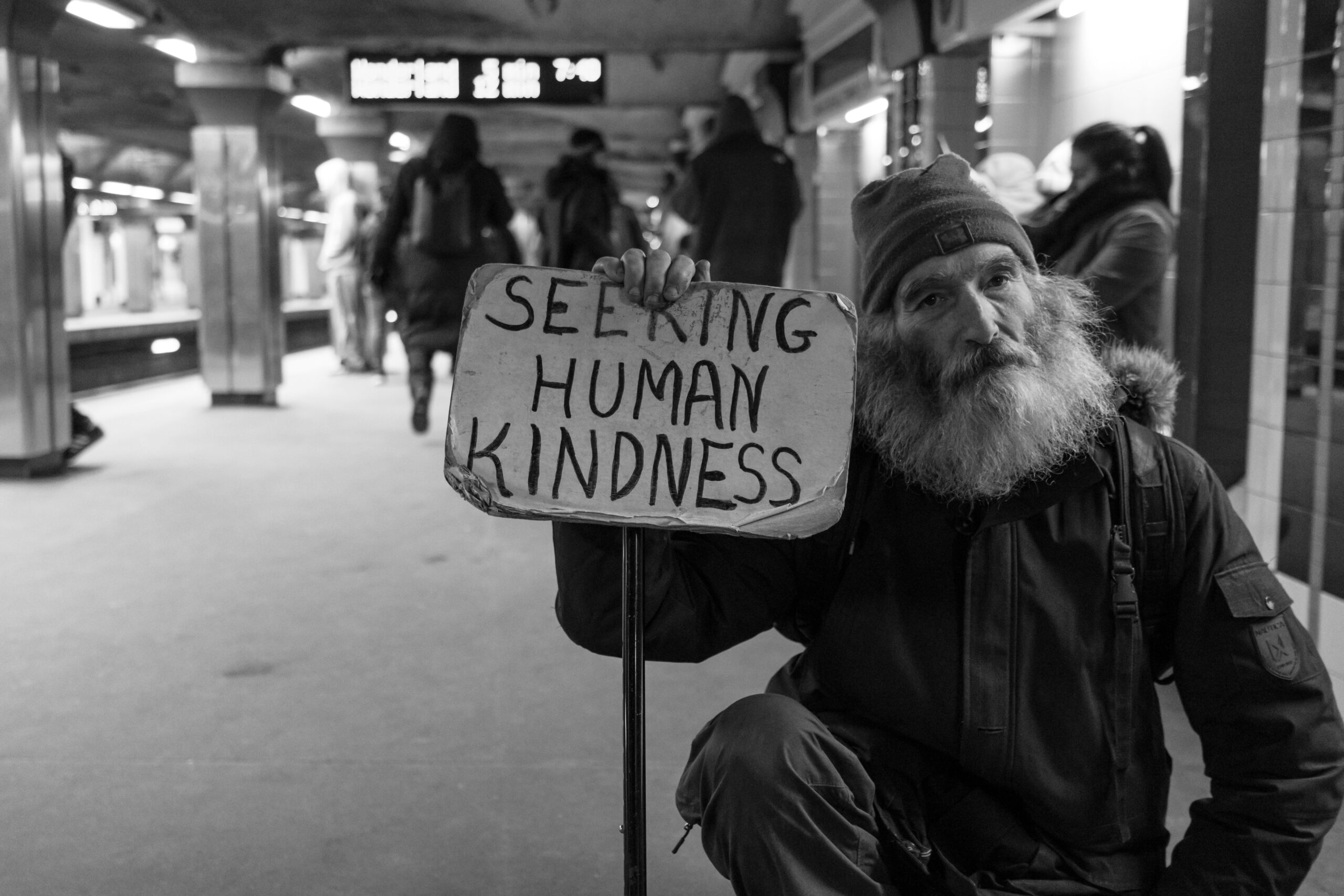

Rising prices are real. But the deeper cost may be how scarcity quietly reshapes the way we think, relate, and live.
Few questions have become as common in everyday conversation as this one.
Why is everything so expensive?
Groceries cost more. Housing feels increasingly out of reach. Insurance premiums climb. Rent rises. Utilities, transportation, healthcare, and education all seem to demand more while many paychecks struggle to keep pace. It isn’t surprising that so many people feel like they’re running harder simply to stand still.
These concerns are real. Inflation, supply chains, housing shortages, government policies, corporate pricing, labor markets, and global instability all play meaningful roles in shaping the economy. There are practical reasons why everyday life has become more expensive for millions of people.
Yet after acknowledging those realities, another question begins to emerge.
What happens to us psychologically when life starts feeling unaffordable?
That question reaches beyond economics. It asks how scarcity changes the way we experience ourselves and each other.
Scarcity Doesn’t Only Affect Your Wallet
Money has always been more than numbers.
It represents security, opportunity, freedom, comfort, and, for many people, the ability to care for those they love. When those things feel threatened, the nervous system responds accordingly.
Notice what happens when every trip to the grocery store becomes an exercise in calculation. Purchases become negotiations. Small decisions carry emotional weight. Instead of asking what would nourish you, your attention shifts toward what you can afford without regret.
Over time, this mindset begins expanding into other areas of life.
People postpone vacations. Delay medical appointments. Avoid seeing friends because going out feels irresponsible. Hobbies disappear. Creativity feels indulgent. Even rest can start feeling like something that has to be earned.
The cost of living slowly becomes the cost of living well.
The Mind Starts Measuring Everything
One of the mind’s favorite habits is comparison.
When resources feel limited, comparison becomes even more active. We begin measuring salaries, lifestyles, homes, careers, investments, and accomplishments. Social media amplifies this tendency by exposing us to thousands of carefully curated examples of apparent success.
It becomes easy to believe everyone else is somehow managing while you’re falling behind. The difficulty is that comparison rarely measures reality. It measures appearances.
Many people projecting financial confidence are carrying enormous debt. Others inherited opportunities that remain invisible. Some sacrifice relationships, health, or peace of mind to maintain a particular lifestyle. From the outside, none of this is obvious.
Comparison convinces us that our struggle is unique while everyone else’s comfort is effortless.
That illusion creates loneliness long before it creates financial solutions.
Fear Changes the Way We Think
Stress narrows attention. This isn’t a character flaw. It’s one of the brain’s survival mechanisms. When resources appear scarce, the mind naturally prioritizes immediate problems over long-term possibilities.
The consequence is that life begins revolving around emergencies.
Every unexpected bill feels catastrophic. Every financial setback reinforces the belief that stability is always one mistake away from disappearing. Decisions become increasingly reactive because the future feels uncertain.
Consider how much mental energy disappears into constant financial vigilance. Checking bank accounts multiple times a day. Calculating every purchase. Replaying spending decisions. Imagining worst-case scenarios.
Even when income eventually improves, many people discover that the anxiety remains because the habit of vigilance has become deeply familiar.
The external problem may lessen while the internal relationship with uncertainty remains unchanged.
More Money Doesn’t Always End Scarcity
It seems reasonable to believe that enough money would finally eliminate financial stress.
Sometimes it does. Sometimes it doesn’t.
Another way of looking at this is through the lens of adaptation.
As income rises, expectations often rise alongside it. Larger homes create larger mortgages. Better jobs introduce greater responsibilities. More possessions require more maintenance. Lifestyle expands until yesterday’s luxury becomes today’s normal.
This isn’t greed. It’s how human adaptation works. The finish line keeps moving because the mind quickly adjusts to what once seemed extraordinary.
The deeper issue isn’t simply how much we have.
It’s whether our sense of security depends entirely on having more tomorrow than we have today.
The Economy Runs on Desire
Modern economies don’t simply provide necessities.
They encourage endless consumption.
Advertising rarely tells us we’re enough. It introduces subtle dissatisfaction before offering products that promise relief. We are encouraged to upgrade, optimize, improve, replace, personalize, and reinvent ourselves through what we purchase.
This creates an unusual relationship with desire.
Instead of asking whether something genuinely adds value to our lives, we begin asking whether owning it will make us feel more complete.
Many purchases are attempts to satisfy emotional needs that money alone cannot resolve.
Belonging. Recognition. Status. Security. Confidence.
The purchase may provide temporary satisfaction, but the underlying need quietly remains.
When Survival Becomes Identity
Financial pressure doesn’t only affect budgets. It can begin shaping identity itself. Someone who repeatedly struggles financially may gradually stop saying, “I’m experiencing financial difficulty,” and instead begin believing, “I’m bad with money,” or “I’ll never get ahead.”
These statements feel factual because they’ve been repeated so often. Yet they’re interpretations rather than permanent truths.
Our circumstances influence our stories, but they do not have to define who we are.
The moment identity becomes fused with financial struggle, every setback begins feeling personal rather than situational.
That distinction matters more than it first appears.
The Hidden Cost of Constant Pressure
One consequence of prolonged financial stress receives surprisingly little attention.
People lose space to think.
When the mind is occupied with surviving today, it becomes increasingly difficult to reflect on tomorrow. Curiosity shrinks. Creativity declines. Patience wears thin. Relationships become strained because stress seeks somewhere to express itself.
Notice how often financial conversations become conversations about worth.
“I should be doing better.”
“I’ve failed.”
“I’ve fallen behind.”
These statements sound like economic observations, but they are actually judgments about identity.
Money becomes the language through which we evaluate ourselves.
That may be the most expensive transaction of all.
There Is Wisdom in Practical Action
Recognizing the psychological effects of scarcity doesn’t replace practical responsibility.
Budgets matter. Saving matters. Negotiating salaries matters. Learning new skills matters.
Supporting policies that improve affordability matters. Helping one another matters.
Acknowledging the inner experience doesn’t eliminate the importance of outer action.
Both deserve attention.
One addresses the circumstances.
The other addresses our relationship with those circumstances.
Ignoring either leaves the picture incomplete.
The Freedom That Cannot Be Purchased
It may be that the greatest form of wealth isn’t found in eliminating every financial concern.
Life will always contain uncertainty. Markets rise and fall. Jobs change. Unexpected expenses appear. Economic systems evolve. Complete certainty has never been available for purchase. The freedom many people seek may come from discovering that their value isn’t determined by market prices, account balances, or the endless race to accumulate more.
This realization doesn’t pay the mortgage. It doesn’t reduce grocery prices. It doesn’t solve inflation. But it changes something equally important. It loosens the belief that your humanity can be measured by your financial position. Once that belief begins to soften, money returns to being what it has always been: a tool.
Useful. Necessary. Powerful. But never the measure of your worth.
Continue the Exploration
Much of our suffering begins when the mind mistakes external conditions for internal identity. Proof That You’re God explores how this confusion shapes nearly every aspect of human experience—from money and success to fear, comparison, and the search for security. If this article resonated with you, the book offers a deeper exploration into why we so often confuse what we have with who we are—and how recognizing that difference can fundamentally change the way we live.