
Freedom is usually imagined as relief.
Less pressure.
More space.
A sense of ease.
So when freedom arrives and feels unsettling—disorienting, anxious, or even painful—it can be confusing. Something must be wrong. Maybe the wrong choice was made. Maybe the freedom wasn’t real.
But this reaction is not a mistake.
It’s a pattern.
And it shows up precisely because freedom removes something we were unconsciously relying on.
Freedom Isn’t the Same as Comfort
Much of what we call comfort is actually structure.
Predictability.
Familiar roles.
Known constraints.
Even when those structures are limiting, stressful, or painful, they provide orientation. They tell us who we are, what’s expected, and where responsibility seems to live.
Freedom disrupts that.
When a job ends, a relationship dissolves, a belief system collapses, or a long-held identity loosens, the immediate experience isn’t openness—it’s absence.
And absence feels like instability.
The Loss No One Talks About
Freedom is often framed as gain.
But experientially, it begins as a loss.
A loss of:
- external direction
- familiar pressure
- clear boundaries
- someone or something to push against
When those disappear, there’s a sudden increase in responsibility—not moral responsibility, but existential responsibility.
Choice expands.
Certainty contracts.
Orientation dissolves.
And the nervous system doesn’t experience that as liberation.
It experiences it as exposure.
Why Constraint Feels Safer Than Choice
Constraint limits possibility.
And while that sounds restrictive, it also limits risk.
When options are few, outcomes feel manageable. When choices multiply, so do imagined consequences. Freedom removes the illusion that someone else is in charge.
This is why people often miss situations they consciously wanted to leave.
Not because they were good—but because they were known.
Freedom removes the guardrails before it offers any sense of direction.
The Anxiety Inside Openness
Anxiety often spikes at the exact moment people gain more freedom.
After leaving a job
After ending a relationship
After questioning a belief
After stepping away from an identity
This anxiety isn’t a sign that freedom was a mistake.
It’s the body adjusting to the absence of external containment.
Without structure, attention turns inward. Uncertainty becomes more visible. The question “What now?” stops being theoretical and becomes immediate.
And immediacy is uncomfortable.
Identity Relies on Limitation
Identity forms around constraint.
I am this because I am not that.
I do this because I can’t do that.
Roles, obligations, and expectations give identity edges. Freedom softens those edges.
When identity loosens, there’s a temporary loss of coherence. The self doesn’t know how to organize experience without familiar reference points.
This is why freedom can feel like groundlessness rather than expansion—at least at first.
Why People Recreate Their Own Cages
Because the discomfort of freedom is rarely named, many people rush to escape it.
They recreate structure:
- new obligations
- new identities
- new constraints
- new problems
Not because those structures are better—but because they restore familiarity.
Even conflict can feel preferable to openness if it provides orientation.
This is why freedom is often abandoned before it’s integrated.
Freedom Requires Tolerance for Not Knowing
What freedom actually asks for is not confidence, clarity, or certainty.
It asks for tolerance.
Tolerance for ambiguity.
Tolerance for not knowing.
Tolerance for delayed meaning.
Freedom removes immediate answers. It doesn’t replace them right away.
And for a while, experience feels thin, exposed, and undefined.
This is the phase people rarely talk about.
When Freedom Stops Feeling Like a Problem
Over time, something begins to shift—not because freedom becomes easier, but because the relationship to uncertainty changes.
The nervous system recalibrates.
The urge to immediately resolve fades.
Not knowing becomes survivable.
Freedom stops feeling like a lack of structure and starts feeling like responsiveness.
Instead of needing answers, there’s room for curiosity. Instead of clinging to identity, there’s flexibility. Instead of urgency, there’s presence.
But this only happens if the initial discomfort isn’t mistaken for failure.
The Space Where Choice Becomes Real
Before freedom is integrated, choice feels overwhelming.
After integration, choice feels simple—not because options disappear, but because decisions no longer need to secure identity.
Choice becomes responsive rather than defensive.
This is the quiet turning point where freedom stops being an idea and becomes lived.
Freedom Isn’t an Outcome
Freedom isn’t something you arrive at.
It’s something you learn to inhabit.
And like any unfamiliar environment, it feels uncomfortable at first. The absence of walls doesn’t immediately feel safe. The lack of instruction doesn’t immediately feel empowering.
This dynamic—how understanding and openness can initially destabilize rather than soothe—is explored more broadly in Why Control Doesn’t Bring Relief, where holding on feels safer than letting go, even when it costs more in the long run.
The Mistake of Expecting Immediate Relief
One of the most common mistakes people make is expecting freedom to feel good right away.
When it doesn’t, they assume:
- they did something wrong
- they moved too fast
- they weren’t ready
- they should go back
But freedom doesn’t fail because it’s painful at first.
It feels painful because it removes the very mechanisms that once buffered discomfort.
What replaces those mechanisms takes time.
When Freedom Begins to Feel Like Trust
Eventually, freedom stops being about openness and starts becoming about trust.
Trust in responsiveness.
Trust in adaptability.
Trust in not needing to know immediately.
This trust isn’t philosophical. It’s embodied. It comes from surviving uncertainty without collapsing or retreating.
And once that trust forms, freedom no longer feels like risk.
It feels like participation.
Closing Reflection
Freedom often feels worse before it feels better because it removes certainty before it offers orientation.
It takes away structure before replacing it with responsiveness.
It dissolves identity before flexibility has time to emerge.
The discomfort isn’t a sign that freedom was a mistake.
It’s a sign that something familiar has ended—and something undefined hasn’t yet taken shape.
If that middle space can be tolerated, freedom eventually stops feeling like loss.
And starts feeling like life, uncontained.
Explore Further
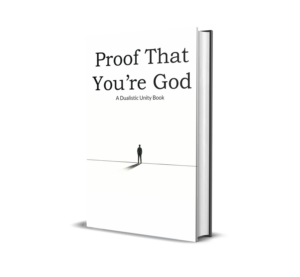
This transition—from structure to openness, from control to responsiveness—is explored more deeply in Proof That You’re God, not as a method for achieving freedom, but as an inquiry into what remains when external containment falls away.