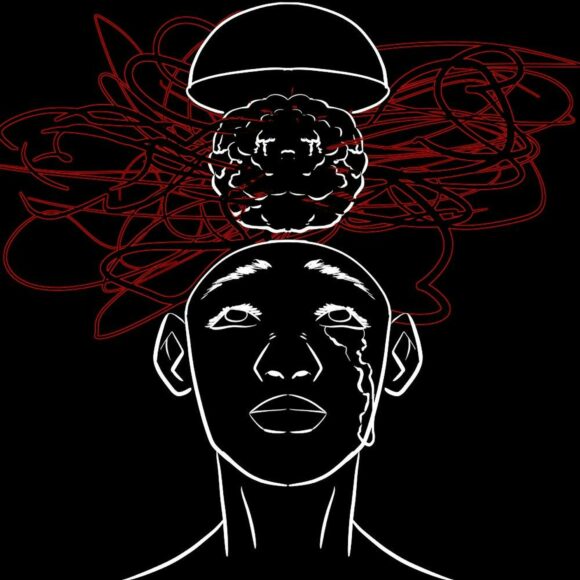

If you’ve ever been called “self-involved,” it probably didn’t feel neutral.
It likely felt like criticism.
Like you were too focused on yourself.
Too caught up in your own thoughts.
Too disconnected from others.
Something you should fix.
But if you’ve actually experienced what it’s like to be deeply self-involved, it probably didn’t feel like arrogance.
It felt more like:
- being stuck in your own head
- constantly thinking about yourself
- unsure how you come across
- trying to get yourself “right”
Not inflated.
Just… alone inside your own experience.
What being self-involved actually means
At its simplest:
Being self-involved means your attention is centered on yourself—your thoughts, your identity, your feelings, and how you’re perceived.
That’s it.
It doesn’t automatically mean you don’t care about others.
It means your experience keeps looping back to you.
And that’s not a mistake.
It’s how your mind builds a sense of:
- who you are
- how you fit into the world
- what your life means
If you’ve ever felt like you’re constantly trying to maintain a version of yourself, that experience is explored more directly in The Self You’re Trying to Hold Together, which looks at how identity becomes something you feel responsible for managing.
As described in the transcript, this process of identification creates a center—a reference point you experience everything from.
What it actually feels like
When self-involvement intensifies, it’s not just a trait—it’s something you live inside.
It can feel like:
- You’re always thinking about yourself
- You replay conversations after they happen
- You’re aware of yourself while you’re doing things
- You struggle to fully relax around others
- Everything feels slightly performative
Even simple moments get layered.
You’re not just talking—you’re thinking about how you sound.
You’re not just acting—you’re watching yourself act.
There’s always a second layer running:
“How am I coming across?”
“Is this who I’m supposed to be?”
“What does this say about me?”
And over time, that becomes heavy.
Why it starts to feel isolating
The more your attention turns inward, the more distance you feel from everything else.
You’re still around people.
But it doesn’t feel direct anymore.
There’s a gap between:
- you and others
- you and your own actions
- you and the moment itself
And that gap can feel like:
- disconnection
- loneliness
- frustration with yourself
- a quiet sense that something isn’t quite right
Not because anything is obviously wrong—
but because everything keeps passing through the filter of “you.”
When it turns into pressure
At some point, self-involvement stops being passive.
It becomes effort.
You’re no longer just aware of yourself—
You’re trying to manage yourself.
- Be more confident
- Be less awkward
- Be more interesting
- Be more “yourself”
And that creates a strange tension:
You’re trying to become someone
…while already being someone.
That tension often comes from treating identity as something solid that needs to be held together, rather than something constantly forming and shifting—something explored more deeply in The Self You’re Trying to Hold Together.
Why it can feel like you’re fighting your own life
This is where it gets exhausting.
Because now:
- your thoughts don’t stop
- your identity doesn’t feel stable
- every decision feels loaded
- nothing feels fully settled
It can feel like you’re:
- always behind
- missing something
- trying to catch up to your own life
Not because life is against you—
but because everything is being processed through a version of yourself that’s trying to define itself.
As the transcript points out, identity is something you maintain through habit and comparison—not something that ever fully locks into place.
What this phase is actually doing
Even if it doesn’t feel like it, something important is happening here.
You’re starting to see:
- how much you think about yourself
- how often you evaluate everything
- how unstable identity actually is
- how exhausting it is to maintain
That awareness matters.
Because it creates a small shift:
You’re not just inside the experience anymore—
you’re starting to notice it.
The moment something begins to change
At some point, something subtle happens.
You start to notice that this experience isn’t unique to you.
Other people:
- feel awkward
- question themselves
- replay conversations
- try to be someone
They’re just less obvious about it.
Or you’re seeing it more clearly.
And that changes something.
Because what felt like:
“my problem”
starts to feel like:
something shared
How this leads to empathy
This is the part most people overlook.
Being deeply self-involved exposes you to:
- insecurity
- confusion
- loneliness
- the effort of trying to hold yourself together
And once you’ve seen that clearly in yourself—
you start recognizing it in others.
Not as an idea.
As something familiar.
Empathy doesn’t come from trying to care more.
It comes from seeing:
“They’re going through something I recognize.”
And in that recognition, the sense of separation softens.
Not because you forced connection—
but because it was never as distant as it felt.
Why trying to “fix” it doesn’t work
If you’ve tried to stop being self-involved, you might’ve noticed something:
It doesn’t really work.
Because it turns into:
- “I shouldn’t be like this”
- “I need to improve”
- “What does this say about me?”
Which is still self-involvement.
Just redirected.
The issue isn’t that your attention is on yourself.
It’s that it feels like something you need to control or resolve.
You don’t eliminate it—you move through it
This isn’t something you fix.
It’s something you see clearly enough that it changes on its own.
As described in the transcript, identity isn’t fixed—it’s something constructed and reinforced through patterns of thought and comparison.
And when that becomes obvious:
The pressure to maintain it begins to loosen.
What changes when you come out of it
You don’t lose your sense of self.
You stop being trapped inside it.
There’s still:
- thought
- identity
- reflection
But it’s lighter.
Less constant.
Less central.
Less pressured.
You can:
- be in a conversation without tracking yourself
- experience something without evaluating it
- respond without rehearsing
And most noticeably—
you feel less alone.
Not because everything changed.
But because you’re no longer isolated inside your own interpretation of everything.
The phase you’re moving through
Self-involvement isn’t a fixed trait.
It’s a phase.
A movement.
You move from:
- being fully absorbed in yourself
- to noticing that absorption
- to questioning it
- to moving more freely beyond it
And that movement doesn’t happen by force.
It happens through seeing.
Final reflection
Being self-involved isn’t a flaw.
It’s the phase where you experience what separation feels like—
so that connection can actually mean something.
You don’t need to escape it.
You just need to see it clearly enough that it stops feeling like who you are.
And what’s left isn’t a better version of you—
it’s simply less distance between you and everything else.
If you want to explore that shift more deeply, Proof That You’re God looks at what remains when identity stops being something you have to hold together—and how that changes your experience of life.