What Marvel, The Boys, and Our Stories About Heroes Reveal
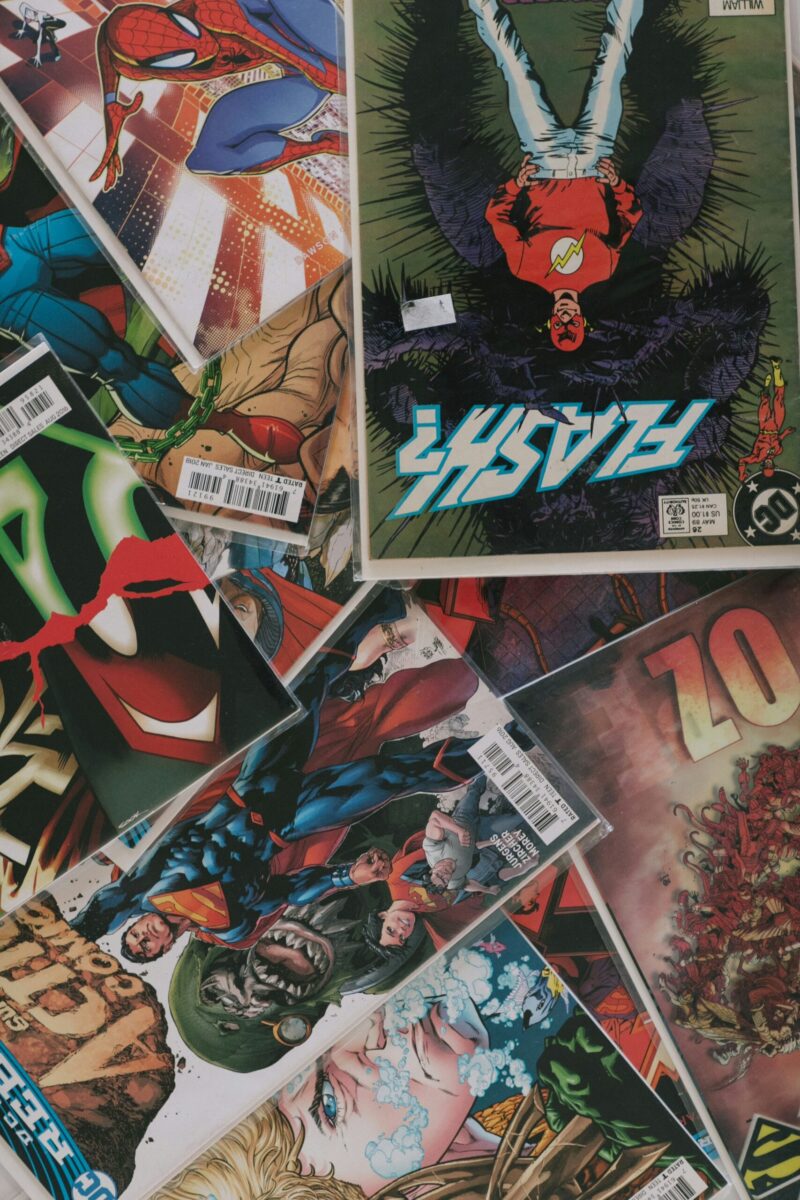
Superheroes have always reflected the hopes and fears of the societies that create them.
During World War II, Captain America famously punched Adolf Hitler on a comic book cover months before the United States officially entered the war. Superman has fought corrupt businessmen, organized crime, dictators, and even the Ku Klux Klan in radio serials. Spider-Man became beloved not because he was the strongest hero, but because beneath the mask he worried about paying rent, disappointing loved ones, and making the right decision when no option felt perfect.
Yet as superhero stories have grown into billion-dollar film franchises, something interesting has happened.
The threats have become larger.
Aliens invade Earth.
Artificial intelligence attempts global extinction.
Multiverse collisions threaten reality itself.
Ancient gods awaken.
The stakes continue growing until the entire universe hangs in the balance.
At the same time, many of the conflicts dominating real headlines—political violence, corruption, genocide, authoritarianism, corporate exploitation, or abuses of power—rarely become the central focus of these fictional heroes.
Why?
The Supervillain Is Easier Than Reality
One reason may be surprisingly simple.
Supervillains make moral decisions easy.
If Thanos wants to eliminate half the universe, audiences know where they stand.
If Ultron wants to exterminate humanity, there is little ethical ambiguity.
These villains create stories with clear beginnings, clear endings, and clear victories.
Real-world problems rarely offer that clarity.
Political violence, corruption, war, systemic discrimination, economic exploitation, or humanitarian crises involve competing narratives, incomplete information, institutions rather than single individuals, and consequences that extend far beyond defeating one obvious enemy.
Reality rarely has a final boss.
Would the Avengers Have Responded?
This raises an interesting thought experiment.
If the Avengers actually existed, what kinds of events would they respond to?
Would they have intervened during the September 11 terrorist attacks if they had been present and able to prevent loss of life?
Would they have attempted to stop violent attacks on democratic institutions, such as the January 6, 2021 assault on the U.S. Capitol?
Would they intervene during humanitarian catastrophes like the ongoing war in Gaza or the civil war in Sudan, where civilians have experienced immense suffering?
Would they oppose government officials or agencies if they believed innocent people were being harmed?
These questions do not have objective answers because the characters are fictional. Different writers would likely imagine different responses.
More importantly, each question immediately introduces another.
Who decides what counts as justice?
Power Does Not Eliminate Humanity
This is where Amazon’s The Boys offers one of the most interesting critiques of the superhero genre.
Rather than assuming extraordinary abilities automatically produce extraordinary morality, the series imagines something else.
What if superheroes remained psychologically human?
People with immense power would still carry childhood trauma.
They would still seek approval.
They would still become jealous.
They would still fear losing status.
They would still experience political bias, greed, insecurity, loneliness, tribal loyalty, and the temptation to rationalize their own behavior.
The superpowers would change.
Human psychology would not.
That possibility feels uncomfortable precisely because it resembles real life.
History shows that intelligence, wealth, political office, military authority, celebrity, or religious leadership do not automatically produce wisdom or compassion. Extraordinary influence often magnifies the qualities that already exist within a person rather than replacing them.
Perhaps superpowers would do the same.
Why Heroes Rarely Fight Their Own Governments
Another pattern appears throughout superhero films.
Many heroes defend their countries.
Far fewer consistently challenge the systems within them.
There are notable exceptions. Marvel’s Captain America: The Winter Soldier centers on corruption within S.H.I.E.L.D., and films like Black Panther and Captain America: Civil War raise questions about government oversight, accountability, and political responsibility. DC has also explored corruption through characters like Batman, who often confronts organized crime and systemic failures in Gotham.
Still, blockbuster films frequently shift toward external threats.
Aliens.
Robots.
Interdimensional conquerors.
World-ending villains.
One reason may be practical.
External enemies unite audiences.
Internal corruption divides them.
A movie about stopping an alien invasion allows viewers across the political spectrum to cheer together.
A movie centered on corrupt legislators, abusive institutions, unethical corporate practices, or contested government actions inevitably raises disagreements about which problems are being portrayed and whether the depiction is fair.
Entertainment companies distributing films globally often have strong commercial incentives to avoid alienating large portions of their audience.
The Villains We Can All Agree On
Consider how often fictional villains embody universally condemned traits.
They seek domination.
They enjoy cruelty.
They desire unlimited power.
They lack empathy.
Real people are rarely written so neatly.
Many individuals who participate in harmful systems sincerely believe they are acting responsibly or protecting something important. Others experience conflicting motivations, moral blind spots, or intense social pressures. This complexity does not excuse harmful actions, but it does make reality harder to simplify into heroes and villains.
Stories become cleaner when evil wears obvious armor.
Reality asks us to examine systems, incentives, institutions, and ourselves.
Would That Story Be Less Entertaining?
It is easy to assume audiences only want spectacular battles.
But history suggests otherwise.
Some of the most acclaimed superhero stories focus less on explosions and more on ethical conflict.
The Dark Knight asks what separates justice from vengeance.
Logan explores aging, regret, and responsibility.
Watchmen questions whether extraordinary power can coexist with democracy.
The Boys examines celebrity culture, corporate influence, propaganda, and the corruption that power can produce.
These stories remain compelling precisely because the greatest conflict is not physical.
It is psychological.
Imagine a superhero who spends as much time exposing corruption as fighting monsters.
Imagine stories where extraordinary abilities are used to investigate financial crimes, uncover systemic abuse, protect whistleblowers, defend vulnerable communities, or reveal hidden networks of exploitation.
The action would look different.
The stakes might feel even higher.
The Hardest Villain to Defeat
Perhaps this explains why these stories are comparatively rare.
Destroying an alien mothership ends the movie.
Confronting corruption does not.
Replacing one unethical leader does not guarantee a better system.
Removing one harmful executive does not eliminate incentives that reward exploitation.
Arresting one dishonest politician does not solve the deeper cultural forces that allowed them to gain power.
The difficulty begins when we realize that many of society’s biggest problems are not created by a single villain.
They emerge from millions of ordinary human decisions interacting over time.
That is a far more difficult story to tell.
It is also far closer to reality.
The Hero Within the System
One possibility is that superhero stories have gradually become less about changing society and more about protecting it from external threats.
That distinction matters.
Protecting a society from invasion asks one kind of courage.
Examining whether parts of that society are unjust asks another.
Neither is easy.
Both require strength.
Yet the second also requires humility—the willingness to question the communities, institutions, and identities we already belong to.
That may be the more difficult superpower.
Perhaps the greatest lesson these stories can offer is not that we should wait for heroes to arrive, but that every society ultimately depends on ordinary people willing to ask uncomfortable questions, challenge harmful behavior, and take responsibility for improving the world they already inhabit.
Superheroes make wonderful stories because they imagine impossible abilities.
Real change has always depended on something far less spectacular.
Human beings choosing integrity over comfort, courage over silence, and curiosity over certainty.
If that idea interests you, we invite you to continue exploring the nature of identity, awareness, responsibility, and human potential in our book, Proof That You’re God. It asks many of the same questions that great superhero stories hint at—but turns the focus toward the most fascinating character of all: ourselves.