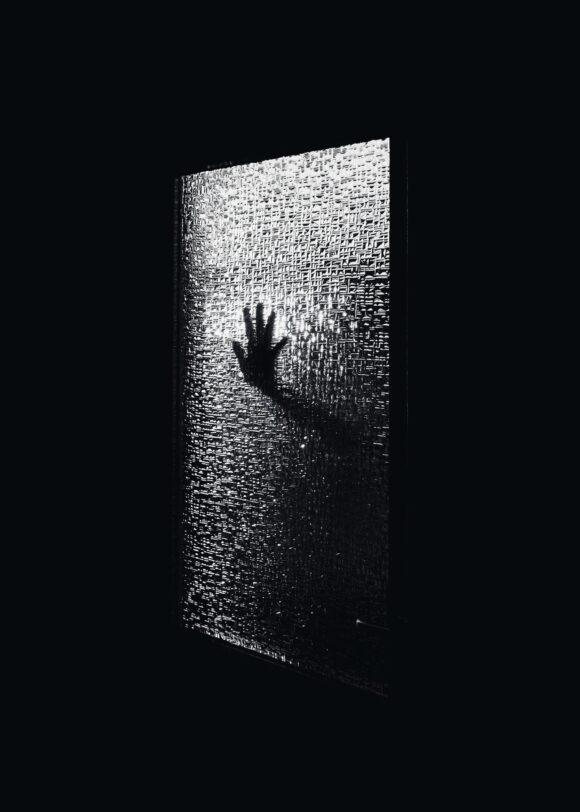

When people talk about “the shadow,” it’s often framed as something buried deep inside—unconscious material, repressed traits, or hidden psychological content waiting to be uncovered.
But for most people, the shadow isn’t hidden at all.
It’s right at the surface—felt immediately, then pushed away just as quickly.
The shadow isn’t what we don’t know.
It’s what we don’t want to feel.
How Feelings Become Shadow
Emotions don’t start as shadow. They become shadow when they’re met with resistance.
Fear becomes shadow when it’s labeled weakness.
Anger becomes shadow when it’s judged as unacceptable.
Grief becomes shadow when it’s rushed past.
Nothing has to be buried for this to happen. All it takes is a subtle, repeated refusal.
A tightening.
A distraction.
A reframing.
Over time, certain feelings stop being allowed full expression. They’re not processed or integrated—they’re avoided. And what’s avoided doesn’t disappear.
It reorganizes.
The Mistake of Looking Deeper Instead of Closer
Many approaches to shadow work assume the problem is depth—that the shadow is hidden somewhere far below conscious awareness and must be excavated.
But more often, the issue isn’t depth. It’s proximity.
The feeling is already here:
- tension in the chest
- agitation in the body
- emotional charge in a conversation
And instead of staying close to it, we move away.
We analyze it.
We explain it.
We spiritualize it.
We try to rise above it.
The shadow doesn’t live in what we can’t access.
It lives in what we won’t stay with.
Why Resistance Creates Splits
When certain emotions are treated as problems, the psyche adapts.
Parts of experience are allowed.
Parts are disallowed.
This creates an internal split:
- the part that’s acceptable
- and the part that isn’t
The disallowed part doesn’t integrate through insight or understanding. It integrates through contact.
And when contact doesn’t happen internally, it tends to happen elsewhere.
How the Shadow Shows Up Instead
What we refuse to feel directly often reappears indirectly.
Unfelt anger shows up as judgment.
Unfelt fear shows up as control.
Unfelt grief shows up as numbness.
The shadow isn’t acting out because it’s malicious. It’s acting out because it’s unmet.
This is why people are often surprised by their own reactions:
- “I don’t know why that bothered me so much.”
- “That wasn’t like me.”
- “I don’t usually feel this way.”
The shadow isn’t foreign.
It’s familiar experience that hasn’t been allowed.
Why Awareness Alone Isn’t Enough
Simply noticing the shadow doesn’t integrate it.
Awareness without willingness can become another form of distance—watching instead of relating, observing instead of feeling.
You can know exactly what you’re avoiding and still avoid it.
Integration doesn’t happen through seeing that something is there.
It happens through staying with how it feels to be there.
This is why clarity can feel uncomfortable rather than relieving, as explored in Why Clarity Often Feels Harder the More We Understand. What’s revealed isn’t new information—it’s experience that no longer has anywhere to hide.
The Difference Between Suppression and Integration
Suppression pushes feelings down.
Integration lets them move through.
The difference isn’t effort.
It’s permission.
Integration doesn’t require:
- fixing the feeling
- explaining its origin
- turning it into insight
It requires allowing the sensation, emotion, or impulse to be present without interruption.
That’s often what feels hardest—because it removes the usual exits.
Why “Good” People Struggle with Shadow
People who see themselves as kind, moral, or self-aware often struggle the most with shadow—not because they’re dishonest, but because certain feelings don’t fit the image they’re trying to live up to.
Anger feels incompatible with kindness.
Selfishness feels incompatible with generosity.
Resentment feels incompatible with maturity.
So these experiences get redirected instead of owned.
The shadow isn’t evidence of failure.
It’s evidence of unlived permission.
Letting the Shadow Be Felt
Feeling the shadow doesn’t mean acting it out.
It means:
- letting anger be felt without justification
- letting fear be felt without control
- letting grief be felt without resolution
This doesn’t make someone less functional. It usually makes them more responsive, less reactive, and more grounded.
What’s felt directly doesn’t need to express itself indirectly.
A Simpler Definition of Shadow Work
Shadow work doesn’t require excavation.
It requires honesty with experience.
Not the kind of honesty that explains or interprets, but the kind that stays present when something uncomfortable arises and doesn’t immediately move away.
When experience is allowed to complete itself, the shadow doesn’t need to hide.
It stops being shadow.
Closing Reflection
The shadow isn’t hidden in the depths of the psyche.
It’s in the moments we tense, distract, reframe, or rush past what’s here.
What we refuse to feel doesn’t disappear.
It waits.
And integration doesn’t come from going deeper—it comes from staying closer.
These themes are explored more personally and experientially in Proof That You’re God—not as a method for self-improvement, but as an inquiry into what unfolds when experience is no longer resisted.