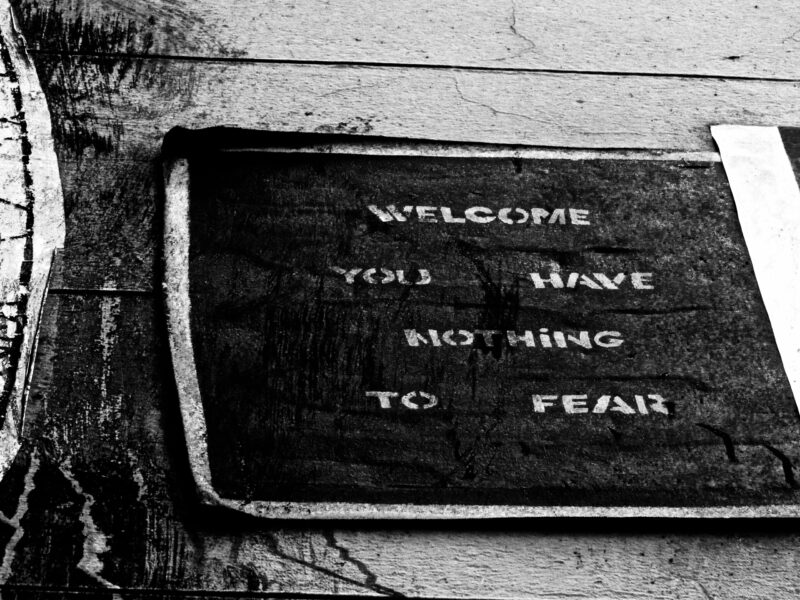
What if you don’t fear change itself—but the loss of control your assumptions once promised?
Life never stops changing. Our bodies age, relationships evolve, careers shift, communities grow and dissolve, and even our beliefs rarely remain exactly as they once were. In fact, the person reading these words isn’t quite the same person who woke up this morning. Every conversation, challenge, and discovery subtly reshapes how we experience ourselves and the world around us.
And yet, despite knowing that change is inevitable, many of us resist it.
We stay in jobs that no longer inspire us, remain in relationships that no longer nurture us, and continue identifying with versions of ourselves we’ve already outgrown. It’s tempting to believe we’re afraid of change, but perhaps that’s not entirely true.
Before asking how to become more comfortable with change, it may be worth asking a different question.
What is it that we’re actually afraid of losing?
We Don’t Fear Every Kind of Change
If change itself were the problem, we would resist every opportunity equally.
But we don’t.
Most people don’t fear falling in love, discovering a hidden talent, receiving good news, or finally achieving a lifelong dream. Those experiences are all significant changes, yet we often welcome them.
What tends to frighten us isn’t change itself. It’s the uncertainty that accompanies it.
We fear not knowing what comes next. We fear the possibility of loss, disappointment, failure, or discovering that life won’t unfold the way we’ve imagined. Change simply exposes what has always been true: the future has never come with guarantees.
Why the Familiar Feels Safe
The human mind naturally looks for patterns. Patterns help us anticipate what might happen next, and that ability has helped our species survive for thousands of years.
Over time, however, we begin associating familiarity with safety.
That’s why someone may remain in an unhealthy relationship because they know what to expect. Another person might stay in a career that no longer fulfills them simply because the uncertainty of leaving feels more overwhelming than the dissatisfaction of staying.
Familiar doesn’t necessarily mean healthy.
It often just means predictable.
Every Change Invites a New Relationship with Yourself
Many of the changes we fear have very little to do with our external circumstances. Instead, they challenge the way we understand ourselves.
If you’ve spent decades identifying as the responsible one in your family, who are you when no one needs your care anymore? If you’ve always thought of yourself as shy, what happens when life invites you into leadership? If your career has defined your identity, what remains after retirement or an unexpected job loss?
Often, the fear isn’t about changing circumstances at all. It’s about not knowing who we’ll be on the other side of them. Change doesn’t simply alter our environment; it asks us to reconsider the stories we’ve been telling about ourselves, and that uncertainty can feel deeply unsettling.
The Mind Prefers a Known Story
One of the mind’s most remarkable abilities is its capacity to create continuity. It organizes memories, experiences, and expectations into a coherent story about who we are. That story provides orientation. It helps us navigate the world and make sense of where we’ve been and where we believe we’re going.
When life changes, however, the story doesn’t always change with it. We often find ourselves wanting the old chapter to continue simply because we already know how it ends. The unknown hasn’t yet become a story, which means it can’t offer the same sense of familiarity.
The unknown asks us to participate instead of predict.
Control Is More Limited Than We’d Like
One reason change feels so unsettling is that it reminds us of something we’ve spent much of our lives trying to forget: we are never completely in control.
We can prepare thoughtfully, make wise decisions, and influence the direction of our lives. We can learn from experience and respond with intention. But none of those things allow us to eliminate uncertainty. They don’t guarantee success, prevent every loss, or stop time from moving forward.
This isn’t a flaw in life.
It’s one of life’s defining characteristics.
Change doesn’t create uncertainty. It simply reveals the uncertainty that has always been there, waiting beneath our assumptions that tomorrow will unfold exactly as we expect.
Growth Rarely Feels Comfortable
Think back to the experiences that have shaped your life most profoundly. Learning to walk, leaving home, falling in love, starting a business, becoming a parent, writing your first book—very few of these moments felt comfortable while they were unfolding.
Growth almost always feels uncertain because it asks us to move beyond what we’ve already known. Looking back, those experiences often appear inevitable, even necessary. Living through them, however, rarely feels that way.
Growth only looks obvious in hindsight.
Trusting Yourself More Than the Outcome
Many of us believe we need certainty before we can move forward. But perhaps what we actually need isn’t certainty at all.
Perhaps we need trust.
Not trust that everything will unfold exactly as we’d like, but trust that whatever unfolds, we’ll continue learning, adapting, and responding. That trust isn’t built by predicting the future. It’s built by recognizing that you’ve already lived through countless uncertain moments before.
Every chapter of your life has required you to step into experiences you couldn’t fully predict. You didn’t navigate them because you knew exactly what would happen. You navigated them because you continued participating as life unfolded, discovering your capacity along the way.
Questions Worth Sitting With
The next time change feels frightening, ask yourself:
- What do I believe this change will take away from me?
- What part of my identity feels threatened?
- Have I confused familiarity with safety?
- Am I protecting something meaningful—or simply something predictable?
- What possibilities become available if I stop waiting for certainty before taking the next step?
These questions aren’t meant to eliminate fear.
They’re invitations to understand what fear is revealing.
Final Thoughts
Perhaps the opposite of change isn’t stability.
It’s stagnation.
Life has never asked us to remain exactly as we are. From our first breath onward, we’ve been changing physically, emotionally, intellectually, and spiritually. Every relationship, challenge, and discovery has reshaped us in ways we could never have predicted.
The fear of change isn’t evidence that you’re weak. More often, it’s evidence that you’ve become attached to a story that once helped you make sense of your life. There is nothing wrong with appreciating that story or recognizing the role it has played.
The question is whether it still reflects the person you’re becoming.
Perhaps courage isn’t reaching a point where change no longer feels uncomfortable. Perhaps courage is recognizing that change has always been one of life’s greatest teachers and choosing to meet it with curiosity rather than demanding certainty before you’re willing to begin.
Continue the Exploration
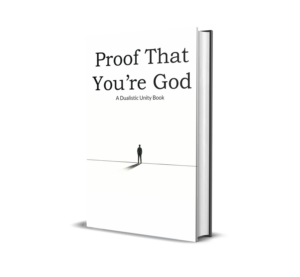
If this article resonated with you, you’ve encountered one of the central themes explored throughout our book, Proof That You’re God.
What if change isn’t happening to you—but through you?
The book explores how awareness, identity, uncertainty, and transformation are deeply connected, revealing that perhaps the greatest freedom isn’t found in resisting change, but in understanding the ever-changing nature of being human itself.