How Persecution, Survival, and Identity Can Shape the Choices of Entire Nations
Few political movements have generated as much admiration, criticism, and misunderstanding as Zionism. To some, it represents the liberation of a people who endured centuries of persecution and ultimately survived one of history’s greatest atrocities. To others, it represents a settler-colonial movement that displaced an existing population in pursuit of a national homeland.
Both descriptions exist in public debate.
Neither, on its own, fully explains why Zionism emerged or why the conflict between Israelis and Palestinians continues to endure.
Another question deserves careful consideration.
Could Zionism itself be understood, at least in part, as a collective trauma response?
This question is not intended to dismiss Jewish history or Palestinian history. It is an attempt to understand how human beings respond when generations of persecution shape the way they see safety, identity, and survival.
Trauma Changes More Than Individuals
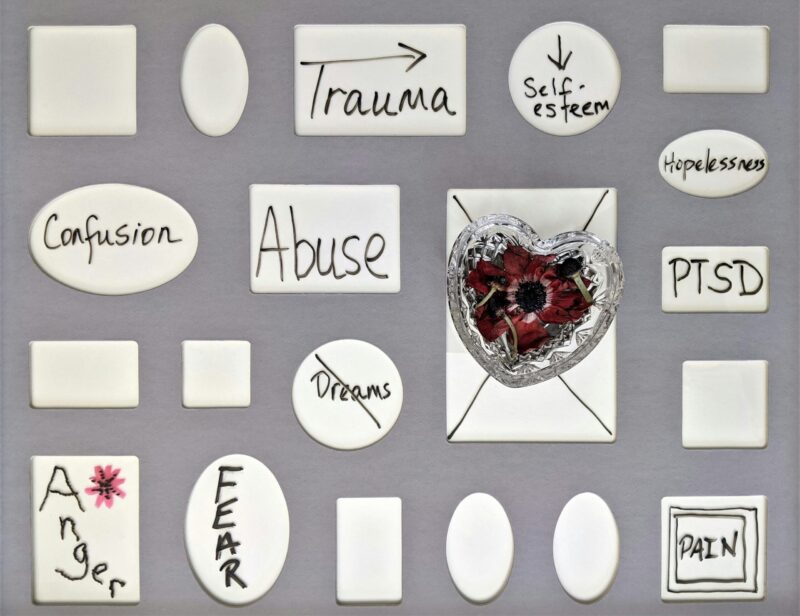
Psychologists have long understood that trauma does not simply affect individuals. It can shape families, communities, and even entire cultures. Collective trauma describes the lasting psychological and social effects experienced by groups after war, genocide, forced displacement, slavery, persecution, or other catastrophic events.
Communities that survive persecution often become deeply committed to ensuring it never happens again.
That desire is profoundly human.
Parents want their children to be safer than they were. Families remember stories of violence. Communities preserve memories of suffering so future generations never forget what happened.
Jewish history contains many such memories.
For centuries, Jewish communities throughout Europe, North Africa, and the Middle East experienced varying degrees of discrimination, exclusion, forced conversion, expulsion, and violence. Pogroms in the Russian Empire during the nineteenth century killed thousands and displaced many more. Antisemitic laws restricted where Jews could live, what professions they could enter, and whether they could participate fully in society.
Then came the Holocaust.
Approximately six million Jews were murdered by Nazi Germany and its collaborators between 1941 and 1945. Entire families disappeared. Entire communities vanished. One of the oldest continuous cultures in Europe was nearly destroyed.
No serious understanding of Zionism can ignore that history.
Zionism Began Before the Holocaust
Although the Holocaust profoundly influenced international support for the creation of Israel, Zionism did not begin there.
Modern political Zionism emerged during the late nineteenth century, most notably through the work of Theodor Herzl. Witnessing growing antisemitism in Europe—including the Dreyfus Affair in France—Herzl argued that Jewish people could never rely entirely upon the goodwill of other nations for their safety. His conclusion was straightforward: if Jews remained minorities everywhere, they would remain vulnerable everywhere. A homeland in which Jews exercised political self-determination offered another path.
Many Jews agreed.
Many others did not.
Religious Jews, socialist Jews, assimilationist Jews, and other Jewish communities disagreed sharply over whether Zionism represented the right response to antisemitism. Zionism was influential, but it was never the only Jewish political vision.
The Holocaust dramatically strengthened support for Zionism among many survivors and governments around the world because it appeared to confirm Herzl’s central fear.
Without a state of their own, Jews had proven vulnerable to extermination.
Palestine Was Not Empty
Understanding Zionism also requires understanding Palestine.
By the late nineteenth century, Palestine was home primarily to Arabic-speaking Muslim and Christian communities alongside longstanding Jewish communities. During the decades that followed, several waves of Jewish immigration—known as aliyah—brought increasing numbers of Jewish settlers to Ottoman and later British-controlled Palestine.
Many immigrants legally purchased land.
Some established entirely new communities.
Others settled in areas where Palestinians already lived and worked.
As Jewish immigration increased, so did tensions over land ownership, political representation, employment, and competing national aspirations.
Both communities increasingly saw the same territory as essential to their future.
By the time Britain issued the Balfour Declaration in 1917 supporting “the establishment in Palestine of a national home for the Jewish people,” Palestinians already constituted the majority of the population living there. The declaration also stated that nothing should prejudice the civil and religious rights of the existing non-Jewish communities. Balancing those commitments ultimately proved impossible.
Can Trauma Create Contradictions?
One of the most difficult questions raised by history is whether people who survive persecution can later participate in systems that cause suffering for others.
History suggests the answer is yes.
This observation is not unique to Jews, Israelis, Palestinians, Europeans, or any other group.
Throughout history, communities shaped by fear have sometimes justified actions they might once have condemned if they believed those actions were necessary for survival.
Recognizing this possibility is not an accusation against an entire people.
It is an observation about human psychology.
The deeper question is whether collective trauma can narrow our moral imagination.
If protecting our own community becomes the highest possible value, what happens when another community stands where we believe our safety depends?
The answer is rarely simple.
The Contradiction Many People See
One of the central criticisms of political Zionism concerns this very question.
Many observers ask how a movement born from centuries of persecution could become associated with the displacement of another population.
Approximately 700,000 Palestinians fled or were expelled during the 1948 Arab-Israeli War, an event Palestinians remember as the Nakba, or “the catastrophe.” Hundreds of Palestinian villages were depopulated or destroyed, and many refugees and their descendants remain unable to return to the homes from which they were displaced.
For critics, this presents a profound moral contradiction.
How can a movement seeking liberation for one people contribute to the dispossession of another?
Supporters of Zionism offer a different interpretation.
They argue that the Jewish people accepted the 1947 United Nations Partition Plan, while Arab leaders rejected it and launched a war following Israel’s declaration of independence. From this perspective, the refugee crisis emerged from a war initiated by neighboring Arab states rather than from a deliberate plan to remove Palestinians as a people.
Historians continue to debate aspects of these events, but few dispute that hundreds of thousands of Palestinians became refugees or that Jewish communities had also experienced centuries of persecution culminating in the Holocaust.
These realities exist simultaneously.
Recognizing one does not require denying the other.
Fear Can Become an Identity
One of the most unsettling lessons of history is that fear often outlives the events that created it.
Trauma teaches vigilance. Communities become highly sensitive to danger because danger was once very real. Over time, however, the instinct to remain vigilant can gradually transform into something larger. Identity itself becomes organized around survival.
Every criticism feels existential.
Every disagreement feels threatening.
Every compromise feels dangerous.
When this happens, protecting identity can become more important than questioning whether fear still accurately reflects reality.
This pattern is not unique to Zionism. It appears throughout human history.
Nationalism.
Religious conflict.
Ethnic violence.
Colonial empires.
Revolutionary movements.
The names change.
The psychology remains remarkably consistent.
Beyond Choosing Sides
It is easy to assume that understanding one people’s suffering requires minimizing another’s. History rarely supports such simple conclusions. Jewish persecution was real.
The Holocaust was real and the Palestinian displacement was real.
Israeli military occupation is real.
Israeli civilians killed in attacks are real.
Palestinian civilians killed in attacks are real.
Recognizing one reality does not erase another.
The challenge is not deciding whose suffering deserves our compassion.
The challenge is refusing to let compassion become selective.
When we begin treating one group’s trauma as justification for another group’s suffering, we risk repeating one of humanity’s oldest patterns: allowing fear to determine whose lives matter most.
Continue the Exploration
The conflict between Israelis and Palestinians is often described as a struggle over land, religion, or politics. Those dimensions are undeniably important, but they may not reach the deepest layer of the conflict. Beneath every border, ideology, and historical grievance lies the human mind searching for safety, belonging, and certainty.
Our book, Proof That You’re God, explores how identity itself shapes the way we perceive ourselves and others. It examines why human beings so naturally divide the world into “us” and “them,” and why those divisions can become more powerful than our shared humanity. If we hope to understand not only this conflict but the countless others that have unfolded throughout history, we may first need to understand the mind that creates separation in the first place.