
We spend much of our lives trying to gain control over something that may never have been ours to possess.
Few ideas feel more reassuring than the belief that we are in control of our lives.
We make plans, set goals, build routines, buy insurance, save money, exercise, study, and carefully consider our decisions. These are all meaningful activities, and they often improve our lives. They influence the direction we’re heading and increase the likelihood of certain outcomes. Yet life has a remarkable way of reminding us that influence and control are not the same thing.
An unexpected diagnosis changes everything. A relationship ends despite years of effort. A natural disaster interrupts carefully laid plans. An opportunity appears that we never could have predicted. Even the happiest moments in life often arrive uninvited. Looking back, many of the experiences that shaped us most were never part of the plan.
The deeper question isn’t whether planning is worthwhile. The deeper question is whether we’ve mistaken preparation for certainty.
We Learn That Effort Produces Results
From childhood, we’re taught an important lesson: our actions have consequences. Practice makes us more skillful. Studying usually improves our grades. Kindness often strengthens relationships. Hard work frequently opens doors that would otherwise remain closed.
These lessons are valuable because they encourage responsibility rather than helplessness. Without them, we might never develop the confidence to participate in life at all.
What often goes unnoticed is how easily the mind extends this principle beyond its limits. If effort influences many outcomes, we quietly begin believing that enough effort should influence every outcome. We assume that if we simply become disciplined enough, intelligent enough, prepared enough, or careful enough, life itself will eventually become predictable.
Reality has never made that promise.
We Confuse Influence with Control
Imagine planting a garden.
You can prepare the soil, choose healthy seeds, water consistently, and remove weeds. Every one of those actions matters. They significantly increase the chances that your garden will flourish.
What you cannot control is the weather.
You cannot prevent an unexpected frost. You cannot command the rain to arrive at exactly the right moment. You cannot negotiate with insects or guarantee that every seed will sprout.
The gardener doesn’t stop gardening because these uncertainties exist. The gardener simply understands the difference between participating in nature and controlling it.
Life works much the same way.
Our choices matter profoundly. They simply don’t exist in isolation. Every decision unfolds within countless conditions that extend far beyond our awareness, let alone our control.
Why Control Feels So Comforting
If control is so limited, why do we cling to it so tightly?
The answer may have very little to do with control itself.
Most people don’t crave control because they enjoy controlling things. They crave control because it appears to offer protection from uncertainty. If we could somehow manage every variable, then nothing unexpected could hurt us. No rejection would surprise us. No illness would interrupt our plans. No loss would leave us unprepared.
Control promises certainty.
Certainty promises safety.
The difficulty begins when we expect life to provide a kind of safety it has never contained.
Every human life unfolds through uncertainty. The unpredictability we fear is also the reason discovery, creativity, love, and transformation remain possible. A completely controlled life would also be a completely predetermined one.
We Even Try to Control Other People
The illusion of control becomes especially visible in relationships.
Consider how much energy people spend trying to manage someone else’s thoughts, emotions, or reactions. We choose our words carefully, avoid difficult conversations, hide parts of ourselves, or become people pleasers because we’re hoping to influence how others see us. Sometimes we criticize, persuade, manipulate, or withdraw, believing that if we behave correctly enough, someone else will eventually become who we want them to be.
This rarely brings the peace we’re looking for.
Relationships become lighter when we recognize that another person’s inner world has never belonged to us. We can communicate honestly, listen deeply, establish healthy boundaries, and act with compassion. We can influence the relationship. We cannot control another person’s understanding, choices, or growth.
The moment we confuse those two things, love quietly becomes management.
The Illusion Reaches Even Further
Another way of looking at this is to examine our own experience.
Pay attention to your next thought.
Did you decide what it would be before it appeared?
Or did you simply notice it after it arrived?
The same question can be asked about emotions. Joy, frustration, anxiety, excitement, and sadness often emerge before we’ve consciously decided to feel them. We can influence how we respond. We can develop healthier habits and greater emotional awareness. Yet the initial movement of experience often appears before the story of “I chose this” catches up.
This isn’t meant to suggest that we’re powerless.
It’s an invitation to become curious about who, exactly, is claiming complete control.
Life Has Always Been Happening
Looking back over your own life reveals something fascinating.
You probably didn’t choose the family you were born into. You didn’t design your personality before you arrived. You didn’t select the culture that shaped your earliest beliefs. You didn’t consciously create every opportunity that later changed your path, nor did you anticipate every challenge that taught you something essential.
Your life has always been unfolding through an ongoing relationship between your participation and countless circumstances beyond your choosing.
Recognizing this doesn’t diminish your role.
It reveals it more accurately.
You are not standing outside reality attempting to manage it. You are one expression of reality participating within it.
Acceptance Is Not Resignation
People often hear conversations like this and conclude that if control is limited, nothing matters.
The opposite is true.
When we stop demanding certainty, our actions become more honest because they are no longer attempts to guarantee outcomes. We care for our health because caring for our body is worthwhile, not because it promises immortality. We love people because love enriches life, not because it guarantees they’ll never leave. We pursue meaningful work because creating matters, not because success can finally make us secure.
Acceptance isn’t giving up.
It’s giving up the impossible task of controlling what has never belonged to us.
The Freedom Hidden Inside Uncertainty
It may be that much of our anxiety comes from trying to solve a problem that doesn’t actually exist.
Life was never asking us to become its manager.
It was inviting us to become its participant.
There is tremendous freedom in recognizing the difference. We still make decisions. We still learn from experience. We still prepare for the future as wisely as we can. But we no longer demand that reality reward our efforts with certainty.
Ironically, when the need for complete control begins to soften, life often feels more alive. Curiosity replaces constant vigilance. Presence replaces endless prediction. Gratitude becomes easier because we’re no longer measuring every moment against the future we imagined it should produce.
The peace we’ve been searching for may never have depended on controlling life.
It may have always depended on trusting ourselves to meet whatever life brings.
Continue the Exploration
If this article resonated with you, our companion Patreon essay, “Who Is Trying to Control Life?”, explores this inquiry from an even deeper perspective. Instead of asking why we crave control, we investigate who within us believes control is necessary, why uncertainty feels so threatening to our identity, and what begins to change when that identity is examined more closely.
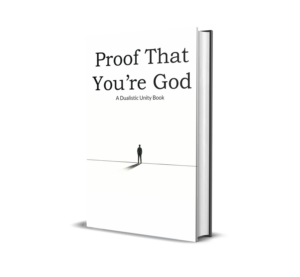
You can also continue this exploration in Proof That You’re God. The book examines awareness, identity, and the illusion of separation, revealing why so much of our struggle comes from trying to control reality rather than understanding our relationship to it. As that illusion begins to dissolve, life doesn’t become more predictable—but it often becomes far more peaceful.