What if who you are isn’t something to discover—but a relationship that’s always changing?
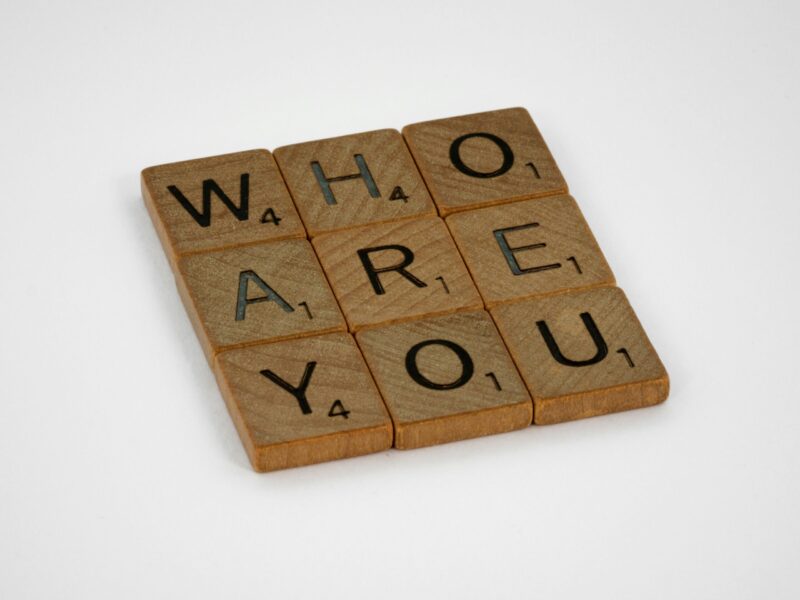
It’s one of the oldest questions human beings have ever asked. Who am I? Not your name, your job, your age, your accomplishments, or your personality test. Who are you, really?
Most of us spend our lives answering that question without realizing it. We describe ourselves through roles. “I’m an artist, an entrepreneur, an extrovert, successful, anxious, a failure, or spiritual.” Slowly, these descriptions stop feeling like experiences. They begin feeling like who we are. But what if identity is far more fluid than we’ve been taught to believe?
We Learn Our Identity Through Relationships
No one is born introducing themselves. Identity develops through relationship. A child learns their name because someone repeatedly calls it. They learn what is “good” or “bad.” What is rewarded. What is discouraged. What is expected. They discover themselves through family, culture, language, friendships, successes and failures.
Identity isn’t created in isolation. It’s shaped through experience.
Identity Is a Story We Continue Telling
Think about how often you describe yourself. “I’m shy.” “I’m confident.” “I’m bad at relationships.” “I’m creative.” “I’m terrible with money.” “I’m always anxious.” Each sentence may have begun as an observation. Over time it becomes a conclusion we settled on. Eventually the conclusion becomes a story. Then we begin living as though the story cannot change.
But stories are powerful precisely because they can be rewritten.
The Difference Between Experience and Identity
Imagine feeling anxious before giving a presentation. That’s an experience. Now imagine saying, “I am an anxious person.” Something subtle has changed. An experience has become an identity. The same thing happens with confidence, with success and with failure.
We often mistake temporary experiences for permanent definitions.
The Problem With Labels
Labels can be useful. They help us communicate, understand ourselves, find communities, and explain experiences. But every label has a hidden danger. It simplifies something that is constantly changing. No single word can contain an entire human life.
The moment a label becomes more important than your direct experience, it begins limiting what you believe is possible.
Who Are You Without Your Roles?
Imagine, for a moment, that every role disappeared. No family role. No career. No relationship status. No achievements. No reputation. No social media. No one to recognize you. Who remains?
This question isn’t asking you to reject your roles. It’s asking whether they’re the whole story. Perhaps identity isn’t something you possess. Perhaps it’s something you participate in.
Why We Defend Our Identity
Have you ever noticed how uncomfortable disagreement can feel? Someone questions your beliefs. They challenge your decisions, they misunderstands your intentions and sometimes it feels personal. Not because the topic matters. Because identity feels threatened.
When an opinion becomes part of who we believe we are, changing our mind can feel like losing ourselves.
That’s why arguments often become battles over identity instead of conversations about ideas.
Identity Is Always Changing
Think about the person you were ten years ago. The things you believed. The fears you carried. The dreams you had. The music you loved. The people who mattered to you. You’ve changed. Not because your previous identity was false. Because life keeps moving. Identity isn’t a destination you eventually discover.
It’s an ongoing relationship between your experiences, your understanding, and the stories you continue telling about both.
The Freedom of Not Knowing Completely
Many people spend years searching for their “true self.” As though one perfect identity exists waiting to be uncovered but life isn’t asking us to find ourselves. It’s inviting us to remain curious.
Curiosity leaves room for growth. Certainty often closes it. When you stop needing a final answer to the question, “Who am I?” you become available to continue discovering.
Questions Worth Sitting With
Instead of asking,“Who am I?”
Try asking:
- Which parts of my identity came from direct experience?
- Which parts came from other people’s expectations?
- What labels do I defend most strongly?
- What experiences have I mistaken for permanent definitions?
- Who might I become if I allowed my identity to keep evolving?
Identity isn’t a puzzle to solve once. It’s a conversation that continues throughout your entire life.
Final Thoughts
Identity isn’t something hidden inside you waiting to be discovered. Nor is it something you build through achievements. It’s a living relationship between awareness, experience, memory, and meaning.
You are not the same person you were yesterday. Nor will you be the same person tomorrow. That isn’t a flaw. It’s one of the most beautiful things about being alive. The question isn’t whether you’ll change. You already are changing. The question is whether you’ll allow your understanding of yourself to change with you.
Perhaps that’s what it truly means to know yourself. Not to arrive at a final definition but to remain present for the conversation with yourself.
Continue the Exploration
Every article in this series has been pointing toward this question.
Why do we care what people think?
Why do we feel like imposters?
Each one explores a different way we construct and defend an idea of who we are.
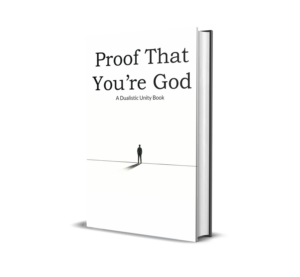
Proof That You’re God continues that exploration by asking an even deeper question: What if identity isn’t something you have to protect—but something you can understand?