How addiction survives by changing form—from substances to certainty
Russell Brand is widely described as a man in recovery.
He is sober.
He is articulate.
He is passionate.
He speaks openly about his past struggles with drugs, chaos, and self-destruction.
From the outside, it looks like a success story.
But if we look more carefully—not at the substances, but at the structure of his transformations—a different picture begins to emerge.
Russell Brand hasn’t recovered.
He has simply moved on to a far more dangerous drug.
Addiction Is Not About What You Take
Addiction is almost never about the substance itself.
Drugs, alcohol, sex, validation, power, ideology, and belief all serve the same function:
they relieve an intolerable sense of lack.
What addiction is actually attached to is:
- certainty
- relief
- intensity
- identity
- meaning
- being right
- being saved
Remove heroin, and that drive doesn’t disappear.
It looks for a cleaner, more socially acceptable delivery system.
Often, it finds one.
Recovery That Stops at the Surface
Russell Brand’s public story is framed as recovery.
And chemically, that’s true.
But recovery that stops at substances often leaves the deeper engine untouched—the need for something absolute to stand on.
When that engine is still running, sobriety doesn’t resolve addiction.
It upgrades it.
Reinvention as the Tell
Brand’s life has been marked by complete, sweeping reinventions:
- Comedian and celebrity
- Recovery advocate
- Spiritual seeker
- Political and cultural “truth” activist
- Wellness extremist (ice baths, breathwork, bodily discipline)
- And now, Christian convert
Each phase arrives with total conviction.
Not:
“This helps me.”
But:
“This is what’s really going on.”
That distinction matters.
Because addiction doesn’t want tools.
It wants final answers.
From Chaos to Control
The move from drugs to discipline is a familiar pattern.
Practices like breathwork, cold exposure, fasting, or rigid routines often appear in post-addiction lives because they offer something intoxicating in their own way:
- control
- mastery
- moral superiority
- relief from inner chaos
They create a sense of being above disorder.
But control is not healing.
It’s management.
And management is fragile.
Why Christianity Is So Potent for Addictive Structures
Christianity offers something substances, wellness, and activism cannot provide on their own:
- absolute meaning
- cosmic certainty
- moral clarity
- external authority
- an unquestionable framework of good and evil
For someone with a long history of inner instability, this is incredibly seductive.
Because it doesn’t just soothe discomfort.
It ends the conversation.
Once something is framed as God’s truth, doubt is no longer curiosity—it’s danger.
This pattern isn’t unique to Russell Brand. We’ve seen the same dynamic play out repeatedly in high-profile conversions, where sudden religious certainty emerges alongside fear, urgency, and apocalyptic framing. As explored more fully in our examination of celebrity Christian conversions and fear, belief often steps in not as awakening, but as psychological armor—offering certainty precisely when uncertainty feels intolerable.
False Certainty Is a Harder Drug Than Heroin
Chemical addiction destroys lives locally.
Ideological addiction destroys lives relationally and collectively.
False certainty:
- divides the world into saved and unsaved
- turns disagreement into threat
- replaces inquiry with obedience
- justifies paranoia as vigilance
- sanctifies fear
When Brand dismisses speculative ideas—such as discussions about AI or mythology—not with skepticism but with eschatological alarm (“that’s the Antichrist”), we’re no longer seeing grounded discernment.
We’re seeing certainty protecting itself.
This mirrors addiction psychology exactly.
The structure is:
This belief keeps me safe. Anything that questions it is dangerous.
That’s not faith.
That’s dependency.
Paranoia Without Chemicals Is Still Paranoia
Substance-induced paranoia isn’t defined by chemicals.
It’s defined by:
- hyper-vigilance
- moral absolutism
- collapsing nuance into threat
- interpreting ambiguity as attack
Those same patterns appear when addiction migrates into belief.
The substance is gone.
The pattern remains.
And because belief is socially reinforced, it often goes unquestioned far longer than drugs ever did.
Identity Is the New Fix
What Brand appears to have traded substances for is identity certainty.
Christian.
Saved.
On the right side.
Chosen.
Protected.
This isn’t healing the wound.
It’s armoring it.
And the armor is heavier now than it’s ever been.
This is the same psychological substitution explored more broadly in the self you’re trying to hold together, where belief and meaning replace direct engagement with experience itself.
Why This Is More Dangerous Than Drugs
Drugs eventually fail.
They break down the body.
They expose the lie.
False certainty can last a lifetime.
It:
- recruits others
- justifies harm
- sanctifies fear
- resists correction
- and feels virtuous while doing so
A person on heroin knows they’re struggling.
A person addicted to certainty thinks they’re saved.
This Isn’t About Russell Brand
Russell Brand is not unique.
He’s visible.
Millions of people follow the same arc quietly:
- addiction
- recovery
- reinvention
- belief
- certainty
And each step feels like progress.
Until it hardens.
This article isn’t a diagnosis.
It’s a warning.
What Real Recovery Would Require
Real recovery isn’t about finding the right thing to believe.
It’s about seeing the need to be right at all.
It requires:
- staying with uncertainty
- allowing not-knowing
- resisting final answers
- refusing identity built on belief
- letting the sense of lack be felt without covering it
That is far more uncomfortable than sobriety.
And far rarer.
The Addiction That Pretends to Be Salvation
Christianity isn’t the problem here.
Nor is spirituality.
The problem is using belief to anesthetize the same wound drugs once did.
When certainty replaces inquiry, addiction hasn’t ended.
It’s just found a cleaner needle.
The Uncomfortable Truth
Russell Brand didn’t beat addiction.
He refined it.
And unless the underlying hunger for certainty is seen directly, it will keep finding new hosts—each one more convincing than the last.
Substances were obvious.
False certainty is praised.
Which is exactly why it’s so dangerous.
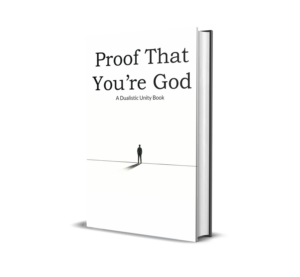
If this reflection resonates, Proof That You’re God explores this territory from the inside out—not by offering a new belief to replace the old ones, but by dismantling the need for belief to hold life together in the first place.