
What if feeling like a fraud has less to do with who you are and more to do with who you think you’re supposed to be?
You finally achieve something you’ve worked toward for years. You get the promotion. Launch the business. Publish the book. Earn the degree. Receive recognition. From the outside, it looks like success. Inside, another thought quietly appears.
“Eventually they’re going to realize I don’t belong here.”
“I’m not as capable as everyone thinks.”
“I’m just lucky.”
“Soon they’ll find out I’m a fraud.”
This experience is often called imposter syndrome.
It’s surprisingly common.
Friends feel it.
Artists feel it.
Scientists feel it.
Executives feel it.
Authors feel it.
Even people admired for their expertise often carry the quiet fear that they’ve somehow fooled everyone. But before asking how to overcome imposter syndrome, perhaps we should ask a different question.
Who is the “real” person you’re comparing yourself to?
The Invisible Standard
Most of us never wake up feeling like an imposter for no reason. The feeling usually appears when we imagine the kind of person we believe we should already be. The perfect parent, entrepreneur, leader, friend, expert, or spiritual person.
Then we compare our actual experience to that imagined version. The comparison almost always ends the same way.
“I’m not there yet.”
But where exactly is “there”?
No One Feels Like the Expert They Appear to Be
Here’s something we rarely talk about. Everyone experiences life from the inside. You experience your uncertainty. Your hesitation. Your mistakes. Your fears.
Everyone else experiences your actions. Your reactions. Your accomplishments. Your public self.
You compare your inner experience to someone else’s outer appearance. It’s an impossible comparison. The person you admire may be wondering whether they’re an imposter too.
We Mistake Learning for Fraud
Every meaningful role begins before we feel ready. No one starts as an experienced parent. An accomplished writer. A skilled therapist. A confident speaker. An effective leader.
Competence isn’t a prerequisite for participation. It’s the result of participation. Yet many of us believe we should already feel like experts before we’re allowed to begin. When we don’t, we conclude something must be wrong.
What is nothing is wrong? And you’re simply learning.
The Search for a Moment That Never Comes
Many people imagine there’s a day when confidence finally arrives. A moment when you wake up and think, “Now I deserve to be here.”
But ask people who’ve spent decades mastering their craft. Many will tell you they still question themselves. Not because they’re frauds. Because learning never ends. The absence of certainty isn’t evidence of incompetence.
It’s evidence that you’re still growing.
You Cannot Feel Like Someone You Haven’t Become Yet
This is one of the quiet traps beneath imposter syndrome. We expect ourselves to feel like the person we’re still becoming. Imagine planting a tree and becoming frustrated because it doesn’t yet provide shade. Growth has its own rhythm. The discomfort of learning isn’t proof that you’re failing. It’s proof that you’re participating.
The Real Fear
Beneath the fear of being “found out” is often a deeper fear.
“What if I’m not enough?”
“What if I disappoint people?”
“What if success raises expectations I can’t meet?”
Notice how quickly achievement becomes another opportunity to measure your worth. Success doesn’t create the fear. It reveals it.
From Performance to Participation
Life becomes exhausting when every conversation, project, and opportunity feels like an audition. As though you’re constantly trying to earn permission to remain where you already are. What if your work wasn’t a performance? What if it was participation?
Participation allows mistakes. Questions. Growth. Curiosity.
Performance demands perfection. One creates learning. The other creates fear.
Questions Worth Sitting With
The next time you feel like an imposter, ask yourself:
- Who am I comparing myself to?
- What impossible standard am I expecting myself to meet?
- Am I comparing my private uncertainty to someone else’s public confidence?
- What would change if learning, rather than perfection, became my goal?
- Who told me I had to feel like an expert before I was allowed to begin?
These questions won’t eliminate uncertainty.
They may, however, help you see it differently.
Final Thoughts
Feeling like an imposter doesn’t mean you’re pretending. It means you’ve mistaken growth for inadequacy. Every meaningful life requires us to step into situations we haven’t yet mastered.
That’s not fraud.
That’s learning.
You don’t become authentic by reaching a point where you never doubt yourself. You become authentic by continuing to participate even while uncertainty remains. Maybe the goal was never to stop feeling like an imposter. Maybe the goal is to stop expecting certainty before allowing yourself to live.
Continue the Exploration
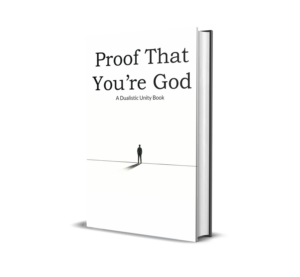
If this article resonated with you, you’ve encountered another expression of one of the central questions explored throughout Proof That You’re God: Who are you trying to become, and who told you that you weren’t already enough to begin?
The book explores how identity, comparison, fear, approval, uncertainty, and awareness are deeply connected—not as problems to solve, but as invitations to better understand the experience of being human.