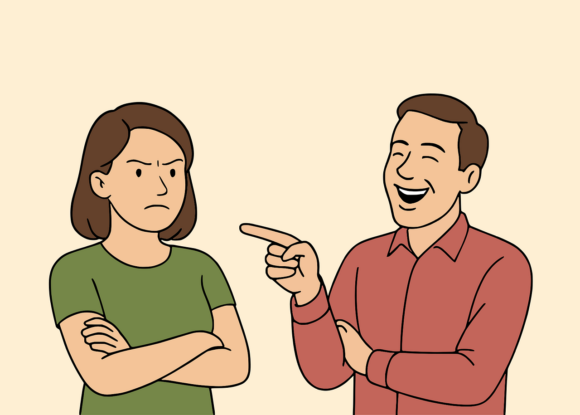
Every so often, someone leaves a comment accusing us of using AI to write.
Sometimes it’s framed as suspicion.
Sometimes as dismissal.
Sometimes as a warning—as if something illegitimate has been uncovered.
What’s interesting isn’t whether the accusation is accurate in the way it’s imagined. What’s interesting is why it matters so much to some people in the first place.
Not because tools haven’t always shaped expression.
Not because writing has ever been a purely isolated act.
But because something deeper gets exposed when creation becomes easier, faster, or less guarded by friction.
This isn’t really a conversation about AI.
It’s a conversation about identity, value, and the quiet ways authorship becomes personal.
The Moment Reading Stops
There is a particular kind of spiral that happens when someone decides an article must have been written by AI.
An em dash appears.
The sentences flow smoothly.
The structure feels coherent.
And suddenly, the reading stops.
The content is no longer engaged on its own terms. The argument is no longer followed. The insight is no longer tested against lived experience. Instead, attention collapses inward toward the imagined process behind the words.
Was this written by a human?
How long did it take?
Was it earned?
As if meaning is only valid when it arrives through sufficient struggle.
What’s striking is how quickly the focus shifts away from what’s being said and toward how it was produced. The article becomes secondary. The process becomes the point. And judgment replaces engagement.
Tools Have Always Been Part of Expression
Very few people move directly from raw thought to published expression without mediation.
We pause.
We revise.
We rearrange.
We clarify.
We use outlines, feedback, editing, spell check, grammar correction, style guides, past writing, and outside input. None of this has ever been considered fraudulent. It’s simply part of shaping something communicable out of something internal.
AI doesn’t fundamentally change that reality.
What it changes is speed, access, and polish.
Someone can now write from genuine enthusiasm or insight and then refine that expression in minutes instead of hours or days. That refinement doesn’t generate the insight—it allows the insight to land more clearly, reach more people, and survive the friction of attention.
And yet, for some readers, clarity itself becomes suspicious.
When the Tool Becomes the Target
This pattern isn’t new, and it isn’t unique to writing.
Painters once argued over whether new pigments were legitimate. Oil paints were criticized for making blending too easy. Synthetic colors were dismissed as inauthentic compared to natural minerals ground by hand. Improvements in canvas preparation and brush manufacturing were accused of reducing the “discipline” required to paint well.
None of those tools painted anything on their own.
They simply changed what was possible.
The same resistance appeared in music. Electric guitars were dismissed as noisy shortcuts compared to acoustic instruments. Synthesizers were labeled artificial. Digital recording was treated as sterile. Even amplification itself was once considered a betrayal of “real” musicianship.
And yet, no one listens to a piece of music today and asks how difficult the instrument was to play before deciding whether it moved them.
The value was never in the resistance of the medium.
It was in what was expressed through it.
Over time, each of these tools stopped being controversial—not because they were proven pure, but because the identity structures that opposed them quietly dissolved. The hierarchy shifted. The gatekeeping lost relevance. What remained was expression itself.
Writing is no different.
When Creation Threatens Identity
The discomfort around AI-assisted work isn’t really about authorship.
It’s about identity.
For a long time, creativity has been entangled with effort. Time spent. Struggle endured. Barriers overcome. These weren’t just logistical realities—they became evidence of worth.
To create was not just to share something.
It was to be something.
A writer.
An artist.
A thinker.
When tools reduce friction, they also reduce the exclusivity that once protected those identities. And when identity is built on scarcity, accessibility feels like erosion.
So the reaction isn’t curiosity—it’s defense.
If creation becomes easier, what happens to the value I derived from how hard it was for me?
The Creator Identity Trap
There is a subtle but important difference between:
- Creating something
- Being a creator
The first is an act.
The second is a self-image.
When someone is invested in being a creator, the process matters more than the outcome. Difficulty becomes meaningful. Effort becomes proof. And anything that shortens the path begins to feel illegitimate—not because it produces worse work, but because it threatens the narrative that held the identity together.
This is why some criticism of AI-assisted writing carries a moral tone. It’s not just about preference or taste. It’s about preserving a hierarchy in which effort equals worth and struggle equals legitimacy.
And the irony is that this identity often overshadows the very thing creation was meant to do in the first place: communicate something meaningful.
When Reading Becomes Optional
Once suspicion takes over, reading becomes secondary.
The article isn’t met.
The point isn’t considered.
The argument isn’t followed to its conclusion.
Instead, the reader becomes an investigator, searching for signs of illegitimacy. Not because the content is weak, but because acknowledging its value would require questioning the criteria by which value has been assigned.
It would be far more productive to meet what’s being said on its own terms.
Because you never actually know how something came to be.
An article could be written in five minutes out of genuine clarity and then lightly edited for readability. Another could take weeks and say very little. Process does not guarantee depth. Struggle does not guarantee insight.
Ease does not negate sincerity.
What This Resistance Is Really Protecting
At its core, this reaction is about holding something together.
A sense of self.
A sense of earned value.
A narrative about effort, authorship, and legitimacy.
This same pattern shows up far beyond writing or AI. It appears whenever a new tool disrupts a hierarchy built on scarcity—whether that hierarchy is economic, creative, or intellectual.
The resistance isn’t irrational. It’s human.
But it does reveal how easily identity becomes entangled with form, process, and appearance—rather than substance.
This dynamic is explored more broadly in Why the Self You’re Trying to Hold Together, where value, effort, and identity quietly fuse into something that feels personal—even when it isn’t.
Expression Without Self-Defense
There is another way to relate to creation.
One where sharing doesn’t mean proving.
One where tools don’t threaten worth.
One where expression isn’t a referendum on identity.
In that orientation, the question isn’t “Was this made the right way?”
It’s “Is there anything here worth engaging?”
Tools come and go. Pigments, instruments, and mediums evolve. What remains is the relationship between expression and meaning—and whether we’re willing to encounter what’s offered without needing it to validate or threaten who we think we are.
Closing Reflection
If something resonates, it resonates.
If it doesn’t, it doesn’t.
Reducing expression to its imagined origins says more about the reader than the work itself. It reveals where value has been attached, where identity has calcified, and where ease begins to feel like loss.
You don’t have to like how something was made to meet what it says.
And sometimes, the insistence on knowing the process is simply a way to avoid encountering the content at all.
Explore Further
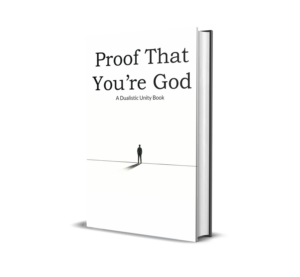
These themes—identity, authorship, and the subtle ways value becomes personal—are explored more deeply in Proof That You’re God. The inquiry isn’t about defending who we are, but noticing how we keep trying to.