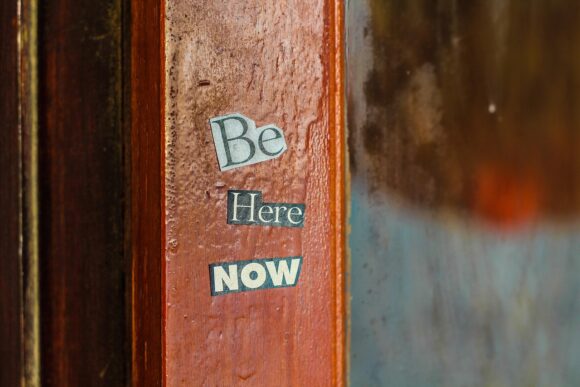

“Live in the present moment.”
Few phrases are quoted more often in spiritual spaces—and few are misunderstood as consistently.
For many people, living in the present gets translated into something like:
- Don’t think about the past
- Don’t plan for the future
- Don’t reflect
- Don’t anticipate
- Don’t imagine
Just be here. Just now. Just this moment.
And when that proves impossible—as it inevitably does—people assume they’re failing at presence.
But this misunderstanding isn’t just inaccurate.
It actively distorts how attention, memory, and meaning actually work.
Living today does not mean excluding the past and future.
It means relating to them differently.
To see why this matters, it helps to understand why clarity often feels harder the more we try to force it—a pattern explored more deeply in why clarity often feels harder the more we understand.
The Present Moment Is Not a Narrow Slice of Time
The biggest misconception is assuming the present moment is a razor-thin sliver between yesterday and tomorrow.
It isn’t.
The present moment is where all experience happens—including:
- remembering
- anticipating
- planning
- imagining
- reflecting
You don’t remember the past in the past.
You remember it now.
You don’t anticipate the future in the future.
You anticipate it now.
Thoughts about yesterday and tomorrow don’t pull you out of the present moment—they appear within it.
The problem isn’t thinking about the past or future.
It’s mistaking thought for reality.
Presence Is Not Mental Silence
Another common misunderstanding is equating presence with a quiet or empty mind.
So people try to:
- stop thinking
- suppress planning
- avoid reflection
- eliminate imagination
This creates tension, not presence.
Thinking is not the enemy of now.
Unconscious identification with thinking is.
A memory can arise without pulling you away from presence.
A plan can form without hijacking attention.
A future scenario can be considered without becoming a source of anxiety.
Presence isn’t the absence of thought—it’s awareness of thought as thought.
Why the Past and Future Exist Psychologically
The mind evolved to use memory and anticipation for orientation.
Memory helps answer:
- What have I learned?
- What patterns matter?
- What should I avoid or repeat?
Anticipation helps answer:
- What needs attention?
- What requires preparation?
- What has priority?
These functions aren’t mistakes.
They’re tools.
The issue begins when memory becomes rumination and anticipation becomes worry.
Not because they refer to past or future—but because they lose connection to what’s actually happening now.
The Real Distinction: Orientation vs. Escape
Here’s the key distinction most teachings miss:
Are the past and future being used to orient the present—or to escape it?
- Orientation:
- remembering to inform wiser choices
- planning to support what matters
- anticipating with flexibility
- Escape:
- replaying to avoid feeling
- fantasizing to avoid dissatisfaction
- worrying to avoid uncertainty
Both happen in the present moment.
But only one keeps you in contact with reality.
When “Be Here Now” Becomes Avoidance
Ironically, the command to “just be present” can become a form of bypassing.
People use it to:
- avoid grief (“don’t dwell on the past”)
- suppress fear (“the future doesn’t exist”)
- dismiss responsibility (“everything is perfect now”)
- bypass planning (“that’s just ego”)
This isn’t presence.
It’s conceptual purity masquerading as awareness.
Real presence doesn’t erase time—it integrates it.
Living Today Means Integrating Time, Not Denying It
To live today means:
- letting the past inform without defining
- letting the future orient without controlling
- letting attention rest where action is possible
Action only happens now.
Feeling only happens now.
Choice only happens now.
But that doesn’t require pretending yesterday and tomorrow don’t exist.
It requires remembering where they appear.
Why Suppressing Time Creates Disconnection
When people try to eliminate thoughts of past and future, a few things often happen:
- decision-making deteriorates
- motivation collapses
- responsibility feels vague
- meaning thins out
Why?
Because meaning often emerges through context.
Context requires memory and projection.
Stripping those away doesn’t create wisdom—it creates disorientation.
The Present Moment Already Includes Context
You don’t need to add anything to be present.
Right now may include:
- concern about a conversation later
- reflection on something said earlier
- anticipation of a change
- memory of a mistake
- hope for resolution
All of that is happening here.
Presence isn’t about narrowing experience.
It’s about not leaving it.
The Problem Isn’t Time — It’s Identification
The real issue isn’t that people think about the past and future.
It’s that they:
- believe every thought
- take every scenario literally
- confuse imagination with obligation
- confuse memory with identity
Awareness loosens this by revealing:
“This is a thought about then or later, appearing now.”
That recognition changes everything.
Using the Past Without Becoming It
The past becomes problematic when it’s used to define identity:
- “This is who I am because of what happened.”
- “I’ll always be this way.”
- “I missed my chance.”
But the past can also be used skillfully:
- “That didn’t work.”
- “That mattered.”
- “That taught me something.”
The difference isn’t time—it’s relationship.
Using the Future Without Being Consumed by It
Similarly, the future becomes overwhelming when it’s treated as a threat or demand:
- “I must get this right.”
- “Everything depends on this.”
- “I won’t be okay if…”
But anticipation can also be clean:
- setting priorities
- preparing thoughtfully
- allowing flexibility
The future only becomes oppressive when it’s confused with certainty.
Presence Is What Allows Time to Be Used Well
Without presence:
- memory turns into rumination
- planning turns into anxiety
- imagination turns into escape
With presence:
- memory becomes information
- planning becomes care
- imagination becomes creativity
Presence doesn’t eliminate time—it stabilizes your relationship to it.
Why This Matters Practically
Misunderstanding presence leads people to:
- disengage from responsibility
- shame themselves for thinking
- mistrust planning
- suppress reflection
- equate awareness with passivity
Understanding presence correctly allows people to:
- act responsibly
- plan realistically
- feel fully
- reflect honestly
- remain grounded
This is not a spiritual downgrade.
It’s maturity.
Living Today Is About Priority, Not Erasure
To live today means:
- knowing what matters now
- responding where response is possible
- allowing memory and anticipation to serve rather than dominate
The past and future don’t disappear when lived well.
They become supportive instead of intrusive.
Presence Is Not Fragile
One of the most harmful myths is that presence is easily broken by thought.
It isn’t.
Presence is what notices thought.
You don’t leave now because a memory appears.
You leave now when you stop noticing what’s actually happening.
The Quiet Relief of a Wider Present
When this misunderstanding relaxes, people often feel relief.
They no longer have to:
- police their minds
- suppress thought
- perform stillness
- pretend timelessness
They can simply be human—thinking, remembering, anticipating—without losing contact.
Closing Reflection
Living in the present moment does not mean living without memory or anticipation.
It means recognizing that memory and anticipation happen here, and letting them inform rather than dominate.
The present moment is not small.
It’s wide enough to include your whole life—past lessons, future considerations, and the choice that can only be made now.
If this exploration resonates and you’d like to continue clarifying awareness without reducing it to slogans or self-denial, Proof That You’re God invites that inquiry—not by asking you to stop thinking, but by revealing what’s already present when thinking is no longer confused with reality.