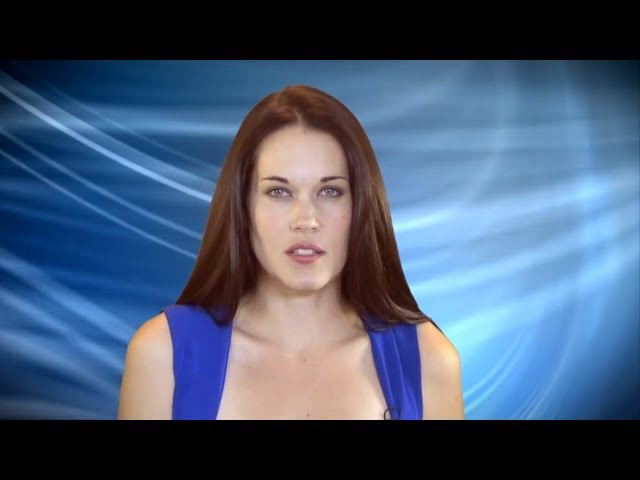
There is a reason so many people leave Teal Swan quietly.
Not in anger.
Not with certainty.
But with confusion, grief, and a dawning recognition that what felt like healing never actually made them clearer, stronger, or more capable.
The work didn’t become harmful over time. It felt relieving while it was doing harm — by offering emotional sedation instead of clarity, explanation instead of intelligence, and false certainty instead of strength. It simply took time for the consequences to be felt.
This isn’t because Teal Swan hides what she believes. She is quite explicit about her worldview, her methods, and—most importantly—about what she thinks healing requires.
The problem is that her definition of healing is not neutral or benign. It carries real consequences when applied to real people. It systematically undermines discernment, replaces strength with emotional relief, and trains people to distrust their own intelligence in favor of her interpretive framework.
What she presents as healing is not the development of clarity, resilience, or grounded agency. It is the normalization of instability, the elevation of emotional intensity to truth, and the erosion of boundaries under the banner of growth.
And that definition does not arise in a vacuum. It reflects a worldview shaped by unresolved fragmentation — one that mistakes explanation for integration, emotional catharsis for maturity, and dis-identification for freedom. When this worldview is imposed on others, it doesn’t heal them. It recruits them into the same unfinished psychological terrain.
This is the same identity-level trap we’ve explored elsewhere — how the self, when used as an explanatory structure instead of a living process, quietly becomes something we try to hold together rather than something we understand.
Pain must be explained before it can end
At the center of Teal Swan’s teaching is a rigid premise: psychological pain always has a specific origin, and healing is impossible unless that origin is found.
She states this plainly. There is always a “when” and a “why.” And more often than not, that origin is located in early childhood — before context, before agency, before adult discernment.
This framing immediately gives pain meaning. Suffering is no longer ambiguous or unresolved. It becomes evidence. Something happened. Something broke. And if you can just uncover it, you can finally be free.
But this also imposes a rule: pain that persists must not yet be fully understood.
When relief doesn’t arrive, the conclusion is never that life is complex, ongoing, or resistant to tidy resolution. The conclusion is that the root hasn’t been excavated deeply enough.
Healing becomes endless excavation. Insight becomes compulsion. And distress becomes proof that more work is required.
Memory without reality checks
One of the most destabilizing moves in Swan’s framework is her explicit rejection of truth as a meaningful category in memory.
She instructs people to stop worrying about whether memories are true or false and instead to think in terms of validity. If a memory arises — literal, symbolic, distorted, or constructed — it is treated as meaningful and authoritative.
This feels compassionate on the surface. It reassures people who fear getting it wrong. It validates emotional experience.
But it also removes any external anchor.
If all memories are valid, none can be questioned. Interpretation becomes sealed. Meaning floats free from reality. The inner narrative becomes sovereign, often shaped by the teacher’s explanatory lens.
Over time, this doesn’t just rewrite the past — it erodes a person’s ability to distinguish insight from imagination, perception from projection. Many who leave later describe the same aftermath: confusion about what actually happened, fractured relationships, and deep shame for ever questioning the story.
When emotions are treated as truth
Throughout her work, emotions are framed not as information, but as revelation. They are treated as messengers of personal truth.
Feeling becomes knowing.
This collapses crucial distinctions:
- between emotion and interpretation
- between reaction and understanding
- between intuition and projection
When emotional experience is elevated to epistemic authority, discernment disappears. Inner states override feedback, consequence, and relationship. If something feels true, it is true.
This is not emotional intelligence. It is emotional absolutism — and it reliably produces instability.
Resistance: the explanation that cannot fail
Perhaps the most structurally important concept in Teal Swan’s teaching is resistance.
If someone wants something and doesn’t have it, resistance is the explanation. If healing hasn’t occurred, resistance is present. If the process feels destabilizing or overwhelming, resistance is being activated.
Doubt is resistance.
Hesitation is resistance.
Discomfort is resistance.
This creates a closed system.
If the work produces relief, it is validated.
If it produces harm, the person is blamed.
The framework never absorbs responsibility. The individual always does.
This is how self-trust erodes. People stop listening to their own intelligence because every internal alarm is reframed as something to overcome rather than something to heed.
Identity dissolution without grounding
Many of Swan’s techniques require dis-identification from the self. Beliefs, history, perspective — even personality — are framed as ego. Ego is framed as obstruction.
Practices like The Octopus Technique go further, instructing people to imaginatively leave their identity behind entirely in order to “become” someone else and access their truth.
This is presented as empathy.
In reality, it replaces relationship with interpretation.
There is no dialogue. No verification. No consent. The practitioner is told that everything they need to know about the other person — and how to act toward them — will be revealed internally.
Words become suspect. Communication becomes secondary. Intuition becomes superior.
Many people later realize they stopped listening to others and started trusting what they felt about them instead.
Relationships rarely survive that.
Spiritualizing impulse, pathologizing restraint
“Inspired action” is treated as spiritually authoritative and urgent. People are encouraged to act immediately on energized urges, even when those urges disrupt sleep, stability, or existing commitments.
Delay is framed as resistance.
Reflection is framed as blockage.
Consequences are reframed as lessons.
This collapses the distinction between intuition and impulse.
Restraint becomes fear.
Grounding becomes limitation.
Stability becomes something to transcend.
Over time, people don’t become freer. They become less regulated, less integrated, and more dependent on interpretive frameworks to justify chaos.
The predictable fallout
These teachings do not produce random outcomes. They produce consistent ones:
- Erosion of self-trust — doubt is no longer distinguishable from resistance
- Chronic self-blame — lack of results is always internalized
- Emotional flooding — excavation without integration
- Relational collapse — interpretation replaces communication
- Identity destabilization — self-dissolution without reintegration
None of this is accidental. It is the direct result of a system that prioritizes relief, false certainty, and explanation over intelligence, discernment, and grounded agency.
A familiar pattern, repeating
Teal Swan is not an anomaly. She is an iteration.
The same structure appears again and again in modern spirituality — different language, different aesthetics, same mechanics. It’s the same pattern we’ve examined in other popular teachers, including in our exploration of Aaron Abke and the broader normalization of spiritual snake oil.
In every case, the appeal is the same:
- pain is given meaning
- confusion is replaced with false certainty
- relief is mistaken for growth
These systems feel powerful because they work in the short term. They soothe distress. They organize experience. They provide explanation.
But relief is not the same as strength.
And feeling better is not the same as becoming more capable, discerning, or honest.
After the spell breaks
When the spell breaks, people don’t arrive at clarity.
They arrive back here.
Back in this moment.
Back in uncertainty.
Back in the raw, unbuffered experience that false certainty was meant to protect them from.
After investing years in Teal Swan’s work — or any similar certainty-based spiritual system — people don’t leave with answers. They leave without them. The explanations that once organized reality no longer hold. The interpretive lens that once made everything make sense stops working.
What collapses isn’t certainty itself.
What collapses is the illusion that certainty was ever available.
What remains is experience.
And that can feel terrifying — not because something has gone wrong, but because the very thing they were trying to escape has returned: not knowing.
At this point, there is a choice.
Most people feel the impulse to run. To replace one framework with another. To find a new teacher, a new explanation, a new system that will once again make the uncertainty go away.
But that impulse is the same one that led them into the trap in the first place.
The problem was never uncertainty.
The problem was the promise of false certainty.
What systems like Teal Swan’s offer is reassurance — interpretations that feel solid, explanations that feel resolving, emotional relief that feels like safety. False certainty doesn’t eliminate uncertainty; it anesthetizes awareness of it.
Faith is something else entirely.
Not faith as belief.
Not faith as answers.
But faith as the willingness to remain present without explanation.
Belief says: I know what’s happening.
Faith says: I don’t — and I’m still here.
Belief tries to secure the future.
Faith stays with the present.
False certainty promises relief.
Faith develops capacity.
What Teal Swan’s system trains people away from is precisely this capacity. Instead of strengthening tolerance for uncertainty, it supplies explanations. Instead of cultivating attention, it provides meaning. Instead of building resilience, it offers emotional sedation.
So when the system collapses, people feel as though they’ve lost something essential — when in reality, they’ve been returned to something fundamental.
This moment.
This experience.
This not-knowing.
Nothing needs to be solved here.
Nothing needs to be explained.
Nothing needs to be replaced.
The real work begins when a person stops asking “What does this mean?” and starts asking “Can I stay with what’s actually happening?”
Not with answers.
Not with false certainty.
But with attention.
That is faith.
And it doesn’t promise relief.
It offers something more demanding — and more real.
Presence.
Closing
If this resonates, Proof That You’re God explores these same traps — identity, false certainty, relief-seeking, and the hunger for explanation — without asking you to replace one belief system with another.