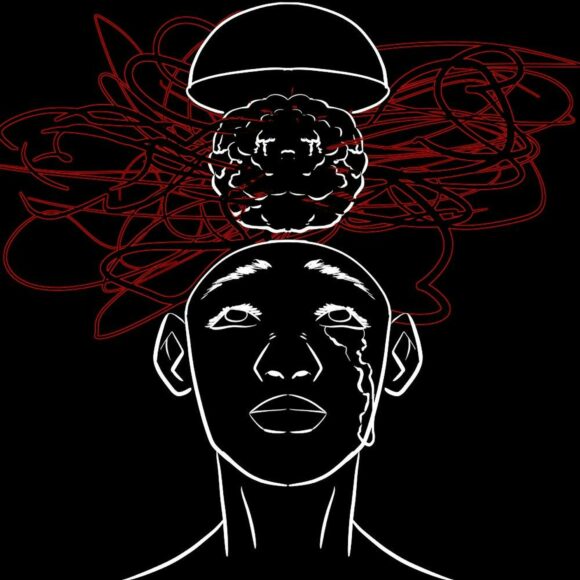

It doesn’t feel like you’re fully here.
You’re still doing things.
Talking.
Responding.
Moving through your day.
But something feels slightly off.
Like there’s a layer between you and what’s happening.
You’re not just living—
You’re noticing yourself living.
Watching what you say as you say it.
Tracking how you come across.
Observing your own reactions in real time.
Almost like:
you’re both the person in the moment… and the one observing it from a distance.
And the more you notice it—
the harder it is to ignore.
What this experience actually is
At first, it can feel unsettling.
You might wonder:
- “Why does this feel so strange?”
- “Why can’t I just be present?”
- “What’s wrong with me?”
But this experience isn’t random.
It’s not a failure.
It’s what happens when awareness turns back on itself.
Instead of simply experiencing life, attention starts including:
- your thoughts
- your behavior
- your identity
You’re no longer just in the moment—
You’re aware of yourself in the moment.
And that creates a split.
Not a real one—
but one that feels very real.
Why it feels like you’re split in two
When this happens, it can feel like there are two versions of you:
- the one acting
- the one watching
But that “split” isn’t actually two separate selves.
It’s one continuous experience that now includes:
- action
- and observation of that action
That added layer changes how everything feels.
Because now, nothing is just happening.
Everything is being:
- noticed
- interpreted
- quietly evaluated
And that creates distance.
How self-awareness turns into self-surveillance
There’s nothing wrong with being aware of yourself.
In fact, that’s part of how you:
- learn
- adapt
- relate to others
But when that awareness becomes constant—
it shifts.
Instead of helping you move through experience…
it starts monitoring it.
You’re no longer just aware.
You’re watching yourself.
Tracking:
- how you sound
- how you look
- how you’re being perceived
This is where awareness becomes something closer to self-surveillance.
And that’s when it starts to feel heavy.
Why it’s hard to “just stop”
You might try to:
- relax
- be present
- stop thinking about yourself
But that often turns into:
“Am I being present now?”
“Am I doing this right?”
Which is still the same loop.
Because the moment you try to stop watching yourself—
you’re still watching yourself.
That’s why this doesn’t resolve through effort.
Why this often comes with overthinking and anxiety
When you’re constantly aware of yourself, everything becomes more complex.
Simple actions feel layered.
Conversations feel monitored.
Decisions feel heavier.
Because instead of just responding—
you’re also:
- analyzing
- anticipating
- adjusting
This is why it often overlaps with:
- overthinking
- social anxiety
- feeling disconnected
Not because something is broken—
but because your attention is split between:
- experience
- and interpretation of that experience
Why it can feel like you’re not fully real
At its most intense, this can even feel like:
- you’re not fully “in” your life
- things feel slightly distant or unreal
- you’re observing instead of participating
Not in a dramatic way—
but in a quiet, persistent way.
This happens because your attention isn’t fully grounded in what’s happening.
It’s partially pulled into:
the idea of yourself experiencing it
And that subtle shift changes everything.
What’s actually happening beneath it
Even though it feels like a problem—
something important is happening.
You’re starting to see:
- how much attention is usually centered on “you”
- how often experience is filtered through identity
- how quickly thought turns experience into something personal
That recognition is subtle—
but it matters.
Because for the first time, you’re not just inside the pattern.
You’re noticing it.
The connection to identity
This experience is closely tied to how identity functions.
Identity isn’t something fixed.
It’s something that’s constantly being:
- referenced
- maintained
- interpreted
And when attention locks onto that process—
you start experiencing the effort of being “someone.”
If you’ve ever felt like you’re constantly trying to maintain a version of yourself, that dynamic is explored more deeply in The Self You’re Trying to Hold Together.
Why it feels isolating
When you’re watching yourself this closely, everything becomes indirect.
Even being around others can feel distant.
Because instead of simply engaging—
you’re also:
- thinking about yourself engaging
- evaluating how it’s going
- adjusting in real time
That extra layer creates a kind of separation.
Not from reality—
but from immediacy.
What begins to shift
At some point, something small changes.
You start noticing:
- not just your thoughts
- but the fact that they’re happening
You begin to see:
- the monitoring
- the evaluating
- the constant referencing
And that changes your relationship to it.
Because now:
it’s not just what’s happening
it’s something you’re aware of happening
Why this doesn’t last forever
This state can feel permanent when you’re in it.
But it isn’t.
Because it’s not a fixed condition.
It’s a phase of seeing.
You’re becoming aware of something that was already happening—
just unnoticed.
And as that becomes clearer—
the intensity begins to soften.
Not because you forced it to stop—
but because it’s no longer being taken as completely real.
You don’t need to fix it
Trying to fix this often makes it worse.
Because fixing implies:
- something is wrong
- something needs to change
- you need to become different
Which brings attention right back to yourself.
Instead, what shifts things is simply seeing:
- the watching
- the monitoring
- the effort
for what it is.
What it’s pointing to
Strangely, this experience isn’t just about disconnection.
It’s showing you:
- how experience gets filtered through identity
- how attention creates a sense of separation
- how easily thought becomes the center of everything
And as that becomes clearer—
there’s less need to stay inside it.
What it feels like when it loosens
You don’t disappear.
Your thoughts don’t vanish.
But something changes.
There’s less:
- monitoring
- evaluating
- second-guessing
Moments feel more direct again.
You’re:
- talking without tracking
- acting without observing
- experiencing without constantly referencing yourself
And with that—
a sense of simplicity returns.
Final reflection
Feeling like you’re watching yourself live isn’t a flaw.
It’s what happens when awareness becomes aware of the way identity is being maintained.
It can feel strange.
Even isolating.
But it’s also part of seeing something more clearly than before.
You don’t need to force yourself back into the moment.
You don’t need to stop the experience.
As it becomes clearer what’s actually happening—
the distance begins to dissolve on its own.
If you want to explore this more deeply, Proof That You’re God looks at what remains when the effort to hold an identity together begins to loosen—and how that changes your experience of being here.