Spiritual movements don’t grow because they offer truth.
They grow because false certainty offers relief.
Not clarity. False certainty.
If certainty were actually available—if reality could be finalized, solved, or fully explained—there would be no metaphysical mystery, no spiritual inquiry, no reason to explore consciousness at all. The very existence of spirituality points to something essential that remains open, unresolved, and beyond conceptual closure.
What our ego reaches for isn’t truth—it’s relief from not knowing.
But here’s the paradox: ego still wants the benefits of not knowing. It wants the vitality, attention, creativity, empathy, and authenticity that only openness and uncertainty make possible—without actually remaining open or uncertain.
So it looks for a workaround.
False certainty offers that compromise. It provides a sense of grounding and control while borrowing the language of mystery, presence, and awareness. It allows someone to feel inspired, purposeful, and “awake,” while quietly insulating them from the vulnerability of not knowing.
That is where spirituality begins to distort.
Today, this distortion is not confined to ancient religions or rigid institutions. It appears just as vividly in modern spiritual movements—especially those that promise awakening while structurally reinforcing hierarchy, self-judgment, and dependence on the teacher.
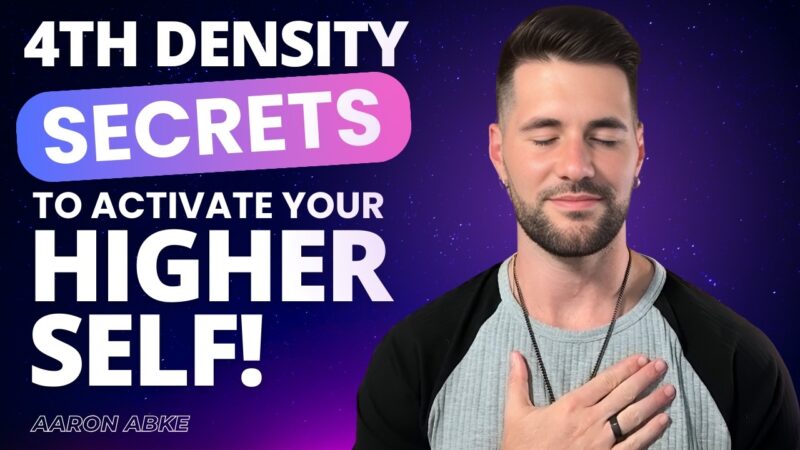
One of the clearest contemporary examples of this pattern is Aaron Abke.
This article is not concerned with whether Abke is sincere.
It is concerned with contradiction.
And it is a warning about what happens when spirituality replaces lived clarity with false certainty and authority.
To understand why this pattern is so compelling—and so damaging—we need to understand how ego hides inside spirituality itself, a dynamic explored more broadly in the self you’re trying to hold together.
What “Spiritual Snake Oil” Actually Means
By spiritual snake oil, I do not mean deliberate fraud or conscious manipulation.
I mean something far more common and far more destructive:
Spiritual teachings that promise awakening while structurally keeping seekers below the teacher.
This kind of spirituality:
- exploits vulnerability rather than resolving it
- reframes confusion as personal failure
- turns self-judgment into “spiritual growth”
- and often leaves people disillusioned not just with a teacher, but with spirituality itself
This kind of spirituality doesn’t awaken people—it violates their trust.
And what makes it especially dangerous is that it is usually not intentional.
A Pattern Older Than Modern Influencers
This pattern has existed for centuries.
It appears whenever spirituality hardens into structure:
- priests turning mystery into doctrine
- gurus turning insight into hierarchy
- mystics turning presence into authority
The distortion almost always begins the same way: with uncertainty.
Uncertainty is destabilizing. Not knowing who you are, what reality is, or what gives life meaning can feel unbearable. Some respond to that discomfort with humility and inquiry. Others respond by building systems that feel stable.
This is where false certainty enters.
False certainty doesn’t eliminate mystery—it manages it. It replaces not knowing with explanations, levels, and destinations. Not because those structures are true in any final sense, but because they offer psychological relief while preserving the feeling of aliveness that uncertainty provides.
This is why these systems often feel “high-vibration.” They borrow the energy of openness while quietly closing the loop of inquiry.
And once false certainty is in place, hierarchy follows naturally.
If there are answers, someone must have them.
If there is a destination, someone must be closer.
If consciousness has levels, someone must be above.
At that point, spirituality stops being a dialogue with mystery and becomes a managed system designed to soothe discomfort rather than deepen understanding.
This is not malice.
It is fear wearing the costume of knowing.
Aaron Abke’s Critique of Religion—and the Irony It Reveals
Aaron Abke frequently criticizes Christianity—particularly the Apostle Paul—for distorting Jesus’ message. In his framing, Paul transformed lived spiritual insight into theology, doctrine, and institutional authority, placing people below truth rather than in direct relationship with it.
Whether or not one agrees with that historical interpretation, the structure of the critique is clear:
- Paul positioned himself as an interpreter of ultimate truth
- Direct experience gave way to belief
- Authority replaced inquiry
- Hierarchy replaced immediacy
That critique resonates with many people for good reason.
But here is the contradiction that cannot be ignored.
The Same Structure, Rebuilt With New Language
Despite criticizing religious hierarchy, Abke’s own teachings reproduce the same structure using metaphysical language.
Across his platforms, he presents himself as a paradigm-shifting spiritual teacher guiding humanity toward 4th Density Consciousness, collective ascension, and an enlightened civilization. He offers tools, practices, academies, and paths designed to help seekers progress toward that future state.
Look carefully at what this creates:
- Humanity is positioned as “not there yet”
- Consciousness is divided into levels
- Enlightenment becomes a destination
- Progress becomes measurable
- And the teacher stands closer to the goal
This is not inquiry.
It is orientation.
Different vocabulary.
Same ladder.
And wherever there is a ladder, there is hierarchy—someone above, someone below, and a reason to keep climbing.
Why Awareness Does Not Need Ladders
One of the simplest ways to discern whether a teaching is oriented toward clarity or authority is to ask a single question:
Does this teaching dissolve hierarchy—or does it depend on it?
Real awareness has a strange effect. It undermines its own importance. It softens certainty. It destabilizes the idea of being “ahead” or “behind.” It does not need to announce itself as higher.
Hierarchy, by contrast, requires constant maintenance:
- levels to define
- progress to measure
- destinations to promise
- and teachers who know where you are relative to where you should be
That is not awakening.
That is management.
This is the essence of toxic spirituality—not because it is cruel, but because it quietly reinforces the very self-orientation it claims to transcend. The broader distinction between toxic and real spirituality is explored in depth in Toxic Spirituality vs Real Spirituality: What’s the Difference?
Borrowed Language and the Illusion of Depth
A natural question arises:
If someone has had a genuine spiritual recognition, why do they need so much inherited metaphysical language to explain it?
Density models. Ascension paths. Spiritual intelligence metrics. Enlightenment narratives.
These are not fresh insights. They are pre-existing frameworks already loaded with hierarchy, destiny, and authority—adopted wholesale.
This does not mean they are consciously deceptive. But it does suggest something important:
When language accumulates instead of simplifying, it often signals identity stabilization rather than clarity.
Recognition tends to loosen language.
Authority tends to rely on it.
And when a teacher’s role depends on being perceived as more awake, more advanced, or more evolved, questioning the structure itself becomes increasingly difficult—because doing so would undermine the role.
Where Spiritual Inquiry Either Opens—or Stagnates
This is the line where spiritual inquiry either continues beyond spirituality—or quietly collapses into spiritual identity.
At some point, the desire to “help” others stops being about clarity and starts being about the helper. We want to guide, to teach, to uplift—but beneath that often sits something far more seductive: the feeling of being the one who knows, the one who sees, the one who has something others don’t yet have.
That feeling is incredibly hard to question, because it feels good.
It feels loving.
It feels well-intentioned.
It feels “high vibration.”
And because it is wrapped in the language of service, it can hide from scrutiny almost indefinitely.
But this is precisely where distortion enters.
True helping does not recruit followers.
It does not require authority.
It does not keep others below you in order to validate what you’ve seen.
Because if you are honest, you do not actually want to be helped by being told who to follow either.
You do not want freedom that depends on allegiance.
You do not want presence that requires permission.
You do not want authenticity mediated by someone else’s awakening.
And whatever we mean by freedom, presence, authenticity—or God—it cannot be something you arrive at by standing behind someone else.
The Guru Pattern (Even Without the Title)
A guru is not defined by robes or claims.
A guru is defined by relationship.
When a teaching:
- positions insight in the teacher
- places progress in the future
- reframes doubt as lower consciousness
- and requires continued dependence
…the guru dynamic is already in place.
This is not unique to Aaron Abke. The same pattern appears in other high-profile spiritual teachers—Teal Swan being a well-known example—where language of healing and awakening coexists with rigid hierarchy and subtle self-judgment.
The names change.
The structure does not.
Why the Harm Is So Lasting
When spiritual authority collapses, the damage is not intellectual—it is relational.
People do not just leave a teacher.
They often leave spirituality altogether.
They conclude:
- “I tried awakening—it was bullshit.”
- “Spirituality is just ego with incense.”
- “Everyone who talks like this is manipulating.”
Often, that reaction is understandable.
What they encountered was not clarity.
It was hierarchy masquerading as enlightenment.
This is the true cost of spiritual snake oil: it poisons the well. It teaches people not only to distrust teachers, but to distrust inquiry itself.
A Final Warning
So here is the warning—not as condemnation, but as discernment:
Be cautious of spiritual teachers whose teachings require you to remain below them.
If clarity is real, it will not need to keep you oriented toward a future state.
If awareness is present, it will eventually examine the role of “teacher” itself.
And if helping is genuine, it will not require followers.
Spiritual authority rarely begins as deception.
It begins as ego’s attempt to escape uncertainty—while still wanting the vitality of not knowing—and ends by teaching others to distrust themselves.
If this exploration resonates, Proof That You’re God was written as an invitation to examine these patterns directly—not by offering a better ladder, but by questioning why we keep building them in the first place.