
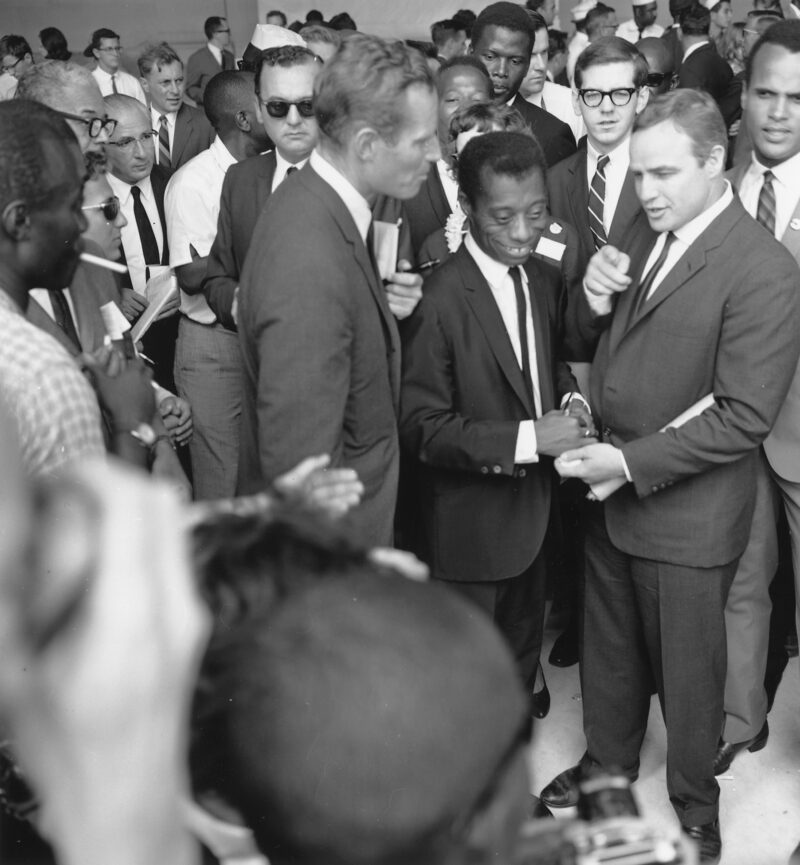
He Was Exposing a Lie America Still Needs
James Baldwin was once asked a question that has never really gone away.
A white interviewer told him that while reading his work, he sensed prejudice—perhaps even hatred—toward white people. Was that what Baldwin intended?
Baldwin’s response was calm. Almost gentle.
He said he didn’t think it was hatred at all. He explained that whenever a Black person tells the truth about their lived reality in America, to people who believe themselves to be “white”—because whiteness is not a biological fact but a state of mind—a collision occurs.
And when that collision exposes the American story as incomplete, distorted, or false, the person speaking is accused of hatred.
Not because they hate anyone.
But because they refused to protect a fantasy.
When Truth Feels Like an Attack, Identity Is Doing the Listening
One of Baldwin’s great insights was this:
people do not experience truth neutrally when their identity is entangled with denial.
When Baldwin spoke about America, he was not speaking about individual white people. He was speaking about power, history, and moral responsibility. But when identity is fused to innocence—when the self depends on being “one of the good ones”—that distinction collapses.
If your sense of who you are relies on believing:
- the system is fundamentally fair
- history has already been resolved
- suffering was accidental rather than structural
- progress erased accountability
Then testimony becomes destabilizing.
Not because it causes harm—but because it removes insulation.
Baldwin understood that many people don’t hear truth as information.
They hear it as a threat to who they think they are.
Baldwin Refused Emotional Servitude
One of the most revealing moments in that interview comes when Baldwin says something easily overlooked:
He didn’t have enough time to have a white person locked inside his skull.
That sentence carries enormous weight.
Baldwin was not interested in managing white comfort. He was not writing to soothe, reassure, or redeem anyone’s self-image. He was writing to tell the truth.
And truth requires space.
You cannot speak freely if your inner life is occupied by someone else’s defensiveness. You cannot see clearly if your awareness is constantly preoccupied with how it will be received.
This refusal—to subordinate truth to comfort—is what still unsettles people today.
Not because Baldwin was angry.
Not because he was extreme.
But because he declined emotional captivity.
Whiteness as a State of Mind
Baldwin’s use of the word “white” was never biological.
It was psychological.
A way of naming a state of mind built on:
- selective memory
- moral exemption
- the belief that harm only counts if it’s intentional
- the assumption that being named is the same as being attacked
This is why so many readers feel accused by Baldwin without being accused at all.
He was not saying, you are evil.
He was saying, this structure depends on denial.
And denial, when named, feels personal.
Why Baldwin Still Frightens People Who Are Not in Danger
The danger Baldwin pointed to was never Black Americans.
The danger was always the story America tells itself.
That it is innocent.
That it is exceptional.
That violence is an aberration rather than a foundation.
People who feel threatened by Baldwin’s work often respond by saying they are being blamed for things they personally didn’t do.
But Baldwin was never asking for guilt.
He was asking for honesty.
And honesty is destabilizing when identity is built on moral certainty rather than moral responsibility.
This same dynamic—where identity collapses under scrutiny and reacts defensively instead of listening—is explored more broadly in The self you’re trying to hold together, which examines how psychological narratives harden when they feel endangered:
https://dualisticunity.com/the-self-youre-trying-to-hold-together/
When Testimony Is Misread as Hatred
The pattern Baldwin named hasn’t changed.
When marginalized people speak plainly about their lived experience, they are still told:
- they’re being divisive
- they’re obsessed with the past
- they’re making things worse
- they’re motivated by resentment
What’s actually happening is simpler.
Testimony interrupts performance.
It ends the story where everyone is already good, already healed, already absolved. It disrupts the illusion that no one is responsible because no one meant harm.
And when performance is interrupted, discomfort gets mislabeled as danger.
The Lie That Still Needs Protecting
Baldwin understood something many still resist:
If your sense of goodness depends on silence, it is not goodness.
If your peace depends on someone else not speaking, it is not peace.
If your identity collapses when reality is named, it was never stable.
This insight echoes a core theme in Proof That You’re God:
that identity clings to certainty for safety, and that awareness dissolves the need for that certainty—not by attacking it, but by seeing through it.
Baldwin wasn’t trying to overthrow anyone.
He was asking America to grow up.
And maturity—personal or collective—always feels like loss before it feels like freedom.
Baldwin’s Message Was Never Hate
It was this:
Stop confusing being named with being attacked.
Stop mistaking discomfort for danger.
Stop asking truth to protect your self-image.
And most of all—
Stop demanding that the people harmed by a system reassure the people who benefit from it.
James Baldwin didn’t hate white people.
He simply refused to lie for them.
And that refusal still echoes—because the myth still needs protecting.
Closing Invitation
If this reflection resonates, Proof That You’re God explores these same dynamics at a deeper psychological level—how identity, certainty, and self-protection shape what we can hear, what we resist, and what finally becomes visible when awareness no longer defends itself.
Baldwin understood that clarity isn’t cruel.
It’s just uncompromising.
And sometimes, that’s the most loving thing there is.