
Feeling lost isn’t always a sign that you’ve taken the wrong path. Sometimes it’s a sign that the path you’ve been following no longer reflects who you’re becoming.
Almost everyone feels lost at some point in life.
For some, it happens after graduating from school, when the structure they’ve always known suddenly disappears. Others experience it after a relationship ends, a career changes, a loved one dies, or a lifelong goal is finally achieved. Sometimes there isn’t even a dramatic event to explain it. Life simply begins to feel unfamiliar, and the direction that once seemed obvious quietly fades from view.
Feeling lost can be deeply unsettling because it challenges one of our strongest desires: the desire to know where we’re going.
Before asking how to find yourself again, it may be worth asking a different question.
What if feeling lost isn’t the problem—but the invitation?
We Mistake Familiarity for Direction
It’s easy to assume that feeling certain means we’re moving in the right direction.
Much of our lives are built around familiar routines, identities, and expectations. We become accustomed to knowing what tomorrow will look like, who we’re supposed to be, and what we’re working toward. That familiarity creates the comforting feeling that everything makes sense.
Then something changes.
A job changes. A relationship ends. Your beliefs begin to evolve. The future no longer looks the way you imagined it would. In those moments, it doesn’t always feel like life has changed.
It feels like you’ve lost yourself.
The deeper question is whether you’ve actually become lost—or whether the map you’ve been using no longer matches the territory you’re standing in.
The Person Who Began the Journey No Longer Exists
Think back to who you were ten years ago. The experiences you’ve lived through have changed the way you see yourself and the world. Conversations have challenged your assumptions. Successes have expanded your confidence. Failures have humbled you. Love has softened you. Loss has reshaped you.
The person who made yesterday’s plans is not exactly the same person reading these words today.
Yet many of us expect our lives to continue following decisions made by versions of ourselves that no longer exist. We cling to old ambitions, inherited expectations, and identities that once felt meaningful simply because they’re familiar.
Feeling lost often begins when our lives continue moving while our self-image remains frozen in the past.
The Mind Wants a Clear Story
One of the remarkable abilities of the human mind is its capacity to create continuity. It organizes memories, relationships, experiences, and expectations into a story that explains who we are and where we’re going. That story helps us navigate uncertainty by giving our lives a sense of direction.
The difficulty begins when life changes faster than the story does.
We find ourselves trying to fit new experiences into an old understanding of ourselves. Instead of allowing the story to evolve, we often assume something has gone wrong. Feeling lost is frequently the experience of standing between two stories. The old one no longer feels true.
The new one hasn’t fully emerged.
We Often Look for Answers Instead of Attention
When people feel lost, the first instinct is usually to search for answers.
What’s my purpose?
What should I do next?
What’s the right decision?
Those questions seem reasonable, but they often assume that clarity exists somewhere outside the experience we’re already living. Notice what happens when every moment becomes a search for the next answer. The present quietly turns into a waiting room. Life becomes something we’re trying to solve instead of something we’re participating in.
Clarity rarely appears because we thought about it long enough.
More often, it develops while we’re fully engaged with the life unfolding in front of us.
Feeling Lost Can Be a Sign of Growth
Consider how often growth begins with uncertainty. Learning to walk meant leaving the certainty of crawling. Leaving home meant entering a future you couldn’t fully imagine. Beginning a new relationship required letting go of the comfort of being alone. Every meaningful transition asks us to step beyond what we’ve already known. During those moments, feeling lost isn’t evidence that we’re failing.
It’s evidence that we’re moving beyond the limits of an identity that once helped us navigate life.
Growth rarely feels like certainty while it’s happening.
It usually feels like confusion.
Only later do we recognize it as transformation.
Stop Looking for the Perfect Direction
Many of us believe we need to discover the perfect path before taking another step.
The difficulty begins when waiting for certainty becomes another way of avoiding uncertainty.
Life has never unfolded that way.
You didn’t know exactly who you’d become when you started school, accepted your first job, fell in love, moved to a new city, or began any of the experiences that shaped your life most profoundly. You discovered who you were becoming by participating in those experiences, not by predicting them beforehand. Direction often emerges through movement. Stillness has its place, but endless hesitation rarely creates clarity.
Being Lost Is Different from Being Stuck
Feeling lost and feeling stuck are often confused, but they’re not the same experience. Being stuck usually means repeating the same patterns while hoping something changes. Feeling lost often means the old patterns have stopped working altogether.
One resists movement.
The other invites it.
The uncertainty you feel today may not be evidence that you’ve wandered away from your life. It may be evidence that your life is asking more of you than your previous understanding could provide.
Questions Worth Sitting With
The next time you find yourself feeling lost, ask yourself:
- What assumptions about my life no longer feel true?
- Which version of myself am I still trying to protect?
- Am I waiting for certainty before allowing myself to move?
- What parts of my life already feel quietly meaningful?
- If I stopped trying to find myself, how would I participate differently in today?
These questions aren’t designed to eliminate uncertainty.
They’re invitations to become more curious about what uncertainty is revealing.
Final Thoughts
Feeling lost can feel deeply uncomfortable because it interrupts the story we’ve been telling about our lives. Yet every meaningful chapter begins with a period where we don’t fully understand where it’s leading.
Looking back, many of the experiences that shaped you most probably felt uncertain while you were living through them. At the time, they may have looked like detours, failures, or endings. Only later did you recognize them as turning points.
Life doesn’t always provide a map before inviting us to move. Sometimes it asks us to take the next honest step before revealing what comes after it. Feeling lost isn’t always evidence that you’ve wandered away from your life. It can also be evidence that you’re standing at the edge of a deeper understanding of yourself.
The destination may not be waiting somewhere out there.
It may be unfolding through every step you’re willing to take.
Continue the Exploration
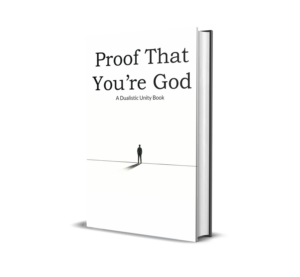
If this article resonated with you, you’ve encountered one of the central themes explored throughout Proof That You’re God. Feeling lost often isn’t the absence of direction—it’s the experience of outgrowing an old understanding of yourself while a new one is still taking shape. Rather than offering another map to follow, the book explores awareness, identity, fear, uncertainty, and meaning to help reveal the assumptions that make us believe we’ve lost our way. As those assumptions begin to soften, a different possibility emerges.
You may discover that life has never stopped guiding you—it has simply been asking you to pay closer attention.