
What the Research Actually Says
The idea that women only want men who are tall, wealthy, and exceptionally attractive has become one of the defining claims of the online “red pill” movement. It appears in podcasts, YouTube videos, social media clips, and countless discussions about modern dating. The conclusion often sounds absolute: only the top 10 percent of men attract women, while everyone else is effectively invisible.
It is an emotionally powerful story because it offers a simple explanation for a painful experience. Rejection hurts. Loneliness hurts. Watching someone else succeed while you struggle can feel deeply personal. When a narrative promises to explain all of that with one clear answer, it can feel like relief.
The problem is that reality is considerably more complicated than the slogan.
The available scientific evidence does not support the claim that only a tiny percentage of men form relationships or that women universally pursue the same narrow group of “high-value” males. Human attraction is influenced by physical appearance, certainly, but also by personality, familiarity, shared values, kindness, humor, emotional stability, intelligence, life circumstances, timing, culture, and opportunity. The more researchers study relationships, the more difficult it becomes to reduce attraction to a single formula.
Where Does the “Top 10 Percent” Idea Come From?
One reason this belief became so widespread is because of studies of online dating platforms. Dating apps create enormous datasets that researchers can analyze, and some findings appear to support the claim at first glance.
One of the most frequently cited examples comes from OkCupid’s early blog analyses. Women rated a relatively small percentage of men’s profile photos as above average in attractiveness. Red pill communities often stop the conversation there.
What receives far less attention is what happened next.
Although women rated men’s photos more critically than men rated women’s photos, women still sent messages across a much broader range of attractiveness. The company itself noted that women’s messaging behavior was far less selective than their ratings suggested. In other words, finding someone highly attractive did not mean they only pursued those people.
This distinction matters because rating a photograph and choosing a partner are not the same psychological process.
Dating apps measure rapid judgments made from limited information. Relationships develop through conversation, repeated interaction, trust, shared experiences, and emotional connection. Those are very different environments.
Dating Apps Are Not the Same as Real Life
One difficulty with using dating apps to explain all human relationships is that they are designed differently from everyday social life.
Most apps encourage users to make decisions within seconds using only a handful of photographs and a short biography. That naturally increases the importance of visible characteristics like facial attractiveness or height because little else is available.
Researchers studying online dating have consistently found that both men and women become more appearance-focused in environments where appearance is almost the only information presented.
Outside dating apps, people meet through work, school, hobbies, friends, family, volunteering, religious communities, neighborhoods, and countless ordinary interactions. In those situations, personality becomes visible long before romance begins.
Large longitudinal studies have repeatedly shown that many couples become more physically attractive to one another after emotional intimacy develops. Familiarity, trust, humor, kindness, and reliability all change the way people perceive attractiveness over time.
Do Women Prefer Taller Men?
Research does show that many women express a preference for men who are somewhat taller than they are.
This is one of the most replicated findings in evolutionary psychology and relationship research.
However, preference is not the same as requirement.
Most women do not insist on an exact height, nor do height preferences prevent millions of shorter men from marrying and forming long-term relationships. Census data across many countries clearly demonstrates that men across a wide range of heights marry, have families, and report satisfying relationships.
Height may influence first impressions for some people, but it is only one variable among many.
The same is true in reverse. Many men express preferences for certain physical characteristics in women while still forming relationships with partners who differ considerably from those ideals.
Human beings routinely adapt their preferences when they meet real people.
Does Money Matter?
Financial stability does influence partner selection.
Researchers have consistently found that both men and women generally value responsibility, ambition, and the ability to contribute to a stable life together. Historically, women have reported placing somewhat greater importance on financial stability than men, although this difference has narrowed considerably as women have gained greater economic independence.
Notice the wording carefully.
Financial stability is not the same thing as extreme wealth.
Most women do not marry millionaires because almost nobody has access to millionaires. Most marriages occur between people with relatively similar educational backgrounds, incomes, lifestyles, and social circles. Sociologists refer to this pattern as assortative mating.
People usually partner with people whose lives overlap with their own.
That pattern is remarkably ordinary, not evidence that a tiny elite monopolizes relationships.
Does Physical Attractiveness Matter?
Of course it does. Physical attraction matters to everyone.
Men report caring about appearance.
Women report caring about appearance.
This should not surprise anyone.
The mistake begins when appearance is treated as the only meaningful variable.
Research consistently finds that traits such as warmth, emotional stability, dependability, intelligence, generosity, humor, and kindness strongly predict long-term relationship satisfaction. These qualities become increasingly important after the initial attraction stage.
Another way of looking at this is to ask a different question.
If appearance alone determined relationships, why do so many exceptionally attractive couples divorce? Why do people repeatedly leave physically attractive partners because of dishonesty, selfishness, cruelty, addiction, emotional immaturity, or incompatibility?
Physical attraction may begin a relationship.
It rarely sustains one by itself.
The “Top 10 Percent” Claim Doesn’t Match Population Data
One of the strongest arguments against the idea that only a tiny percentage of men succeed romantically is remarkably simple.
Look at the population.
Across countries, most adults eventually enter long-term relationships or marry at some point in their lives. Although marriage rates have declined and people are marrying later than previous generations, the overwhelming majority of people still experience romantic relationships during adulthood.
If only the top 10 percent of men attracted women, this simply could not happen.
There are not enough men in that category to explain the relationships that actually exist.
Certainly, some individuals have far more dating opportunities than others. Attractive people often receive more initial interest. Wealth and status can increase visibility. Confidence can improve social success.
None of this means everyone else is excluded.
Human relationships are far too diverse for that conclusion.
Why This Story Feels So Convincing
The deeper question is not simply whether the claim is true. It is why so many people believe it.
Our minds naturally search for explanations when life hurts.
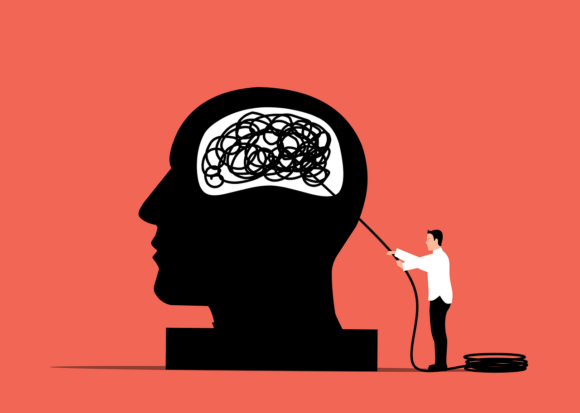
If someone experiences repeated rejection, social anxiety, loneliness, or isolation, finding one external cause can temporarily reduce uncertainty. Instead of asking dozens of difficult questions about communication, emotional health, confidence, opportunity, compatibility, or social skills, the mind can settle on one answer.
“I’m simply not tall enough.”
“I’m not rich enough.”
“I’m not attractive enough.”
These explanations feel complete because they remove ambiguity. Unfortunately, they also remove agency.
If attraction is determined entirely by genetics or wealth, there is little reason to grow emotionally, improve communication, expand social circles, develop confidence, cultivate friendships, or become a more compassionate partner.
The story becomes self-verified. Every rejection confirms it. Every successful couple who contradicts it is ignored. Psychologists call this confirmation bias: our tendency to notice evidence supporting our beliefs while overlooking evidence that challenges them.
The Hidden Cost of Ranking Human Beings
One possibility is that the greatest harm caused by these beliefs has little to do with dating itself. It changes the way we see one another. When people become “high value” or “low value,” relationships slowly transform into marketplaces. Every conversation becomes a negotiation. Every interaction becomes a competition. Every person becomes something to acquire or something to outperform.
Love becomes status.
Connection becomes strategy.
Another human being becomes an objective rather than a full person. This mindset often produces the very loneliness it claims to explain. People are remarkably sensitive to being evaluated rather than understood.
Seeing People Instead of Categories
Notice what happens when we stop asking who belongs in the top 10 percent and begin asking different questions.
Who listens well?
Who is emotionally available?
Who takes responsibility for their mistakes?
Who creates safety instead of risk?
Who can laugh at themselves?
Who grows through difficulty instead of blaming the world?
These qualities rarely go viral online because they cannot be measured as easily as height or income. Yet decades of relationship research consistently suggests they are among the strongest predictors of lasting partnerships.
Human beings are not spreadsheets. They are living relationships.
Continue the Exploration
Conversations about dating often become battles over statistics, gender, or ideology. Beneath those debates lies a deeper question about identity itself. Why do we measure our worth against other people? Why do we believe our value can be reduced to numbers, rankings, or external approval? Why does rejection sometimes feel like evidence that we are fundamentally lacking?
These questions reach far beyond dating. They touch the way we see ourselves, one another, and the stories we inherit about success, love, and belonging.
If this article resonated with you, consider reading Proof That You’re God. The book explores how identity, fear, comparison, and the search for certainty shape nearly every aspect of human experience. Understanding those patterns does not guarantee a perfect relationship, but it can change the relationship you have with yourself—and that may be where every meaningful connection truly begins.