Most people don’t enter the dating world expecting it to feel draining.
They’re not looking for chaos, emotional exhaustion, or another round of disappointment. They’re looking for connection — something genuine, stable, and alive. A relationship that doesn’t slowly turn into confusion, anxiety, or quiet resentment.
And yet, for many people, dating feels exactly like that.
It becomes tense.
Performative.
Full of hope followed by collapse.
Even people who are thoughtful, emotionally intelligent, and genuinely well-intentioned often find themselves repeating the same patterns: getting attached too quickly, feeling anxious about outcomes, projecting potential onto strangers, or ending up in dynamics that feel intense but ultimately unsatisfying.
What’s especially frustrating is that this often happens because people are trying to do dating “right.”
They reflect.
They self-analyze.
They set intentions.
They try to be honest, open, and self-aware.
So why does dating still feel toxic — even for people who are doing the work?
The answer isn’t that people are broken, avoidant, or incapable of intimacy. It’s that dating is quietly being driven by something almost no one recognizes as the problem.
This article explores what actually makes dating feel non-toxic — not through better strategy or sharper discernment, but through a shift that changes the ground relationships form on in the first place. This sits within a broader pattern we explore in our work on why relationships so often feel hard.
What People Usually Mean by “Toxic Dating”
When people talk about toxic dating, they’re usually pointing to familiar patterns:
- intense chemistry followed by sudden withdrawal
- emotional dependency that forms too quickly
- power imbalances and anxiety loops
- mixed signals, hot-and-cold behavior
- feeling responsible for someone else’s emotional state
- relationships that feel consuming rather than supportive
These patterns are often explained in terms of psychology: attachment styles, trauma responses, red flags, emotional unavailability.
Those lenses can be helpful — but they rarely touch the deeper mechanism that makes these patterns so widespread, especially in modern dating environments.
What most people experience as “toxicity” isn’t caused by bad people.
It’s caused by pressure.
The Pressure Beneath Modern Dating
Modern dating carries an unspoken weight that previous generations rarely faced in the same way.
Choice is endless.
Time feels scarce.
Uncertainty feels personal.
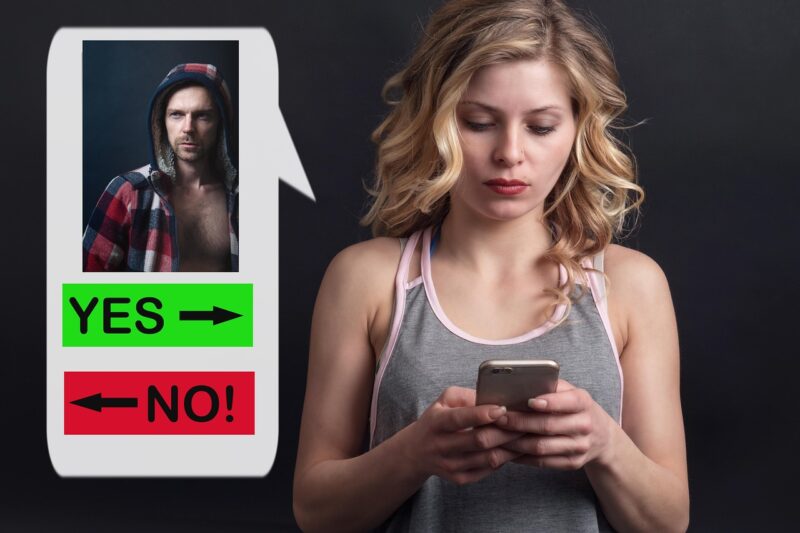
Dating apps compress identity into images and short descriptions. They encourage fast evaluation and rapid emotional projection. Before two people have even met, stories are already forming: This could be it. This might be my chance. I don’t want to mess this up.
Underneath all of that is a quiet, persistent assumption:
There is a right person — and finding them will finally make things feel okay.
That assumption creates urgency.
Urgency creates anxiety.
And anxiety quietly distorts how people relate.
Dating stops being about meeting someone. It becomes about resolving something.
When Dating Becomes a Solution
Wanting partnership is natural. There’s nothing wrong with longing for intimacy, companionship, or shared life.
The problem isn’t desire.
The problem is when a relationship is unconsciously asked to solve something — loneliness, uncertainty, lack of direction, self-doubt, or a sense of incompleteness.
When that happens, dating is no longer an exploration.
It becomes a search for relief.
And relief always comes with pressure.
That pressure shows up as:
- needing things to work
- needing signs of reassurance
- needing clarity quickly
- needing to know where this is going
Even when it’s subtle, that pressure changes everything.
How Projection Enters the Picture
When there’s pressure to find the right person, the mind doesn’t wait patiently for reality.
It fills in gaps.
You imagine potential.
You interpret chemistry as compatibility.
You smooth over uncertainty.
You attach meaning to small gestures.
This isn’t dishonesty — it’s hope mixed with fear.
Dating apps make this even easier. Profiles are simplified snapshots designed to signal safety, attractiveness, and compatibility at a glance. Before real contact happens, images are already forming.
And crucially, this is rarely one-sided.
Often, both people are doing it.
They aren’t meeting each other as they are.
They’re meeting each other as what the other represents.
When Two Unrecognized Needs Meet
When two people come together while each is quietly hoping the other will provide:
- security
- validation
- certainty
- a sense of being chosen
- relief from fear or incompleteness
the connection can feel powerful at first.
There may be chemistry.
Excitement.
A sense of finally finding something.
But that intensity isn’t stability — it’s mutual need.
Over time, something starts to strain.
Because each person is subtly asking the relationship to carry weight it can’t sustainably hold. The relationship becomes responsible for making things feel okay.
This is where patterns people later call “codependent” or “toxic” begin.
Not because either person is manipulative or broken — but because the relationship itself has been given an impossible job.
Why This Becomes an Endless Loop
When a relationship forms to relieve fear, it can never actually finish its work.
It may soothe temporarily.
It may distract.
It may feel promising.
But fear doesn’t dissolve through fulfillment — it adapts.
So the relationship needs more reassurance.
More confirmation.
More certainty that it’s working.
And when that certainty inevitably falls short, disappointment appears.
People then assume:
- they chose the wrong person
- they ignored red flags
- they didn’t try hard enough
- they need to search again — but smarter this time
The loop continues.
Not because dating is broken — but because it’s being driven by an unrecognized need.
Why “Just Choosing Better” Doesn’t Solve It
At this point, most advice tells people to refine their strategy.
Choose better partners.
Have higher standards.
Spot red flags earlier.
Be more discerning.
Those suggestions aren’t wrong — but they miss something fundamental.
As long as dating is being used to resolve fear or incompleteness, any choice will be loaded.
Projection doesn’t disappear because you chose better.
Urgency doesn’t disappear because you learned more.
The pressure simply finds a new form.
That’s why even “healthy” relationships can eventually feel heavy if they’re built on the same foundation.
The Shift That Changes Dating at the Root
Here’s the part most people don’t see as a path to what they want:
Dating becomes non-toxic when it’s no longer used to solve fear.
This doesn’t mean giving up on relationships.
It doesn’t mean caring less.
It doesn’t mean becoming detached or indifferent.
It means that connection is no longer responsible for making you okay.
When someone is fundamentally fulfilled on their own — not perfect, not complete, but not trying to escape themselves — dating changes immediately.
There’s less urgency.
Less projection.
Less pressure to decide.
People are seen more clearly.
Mismatches are noticed without panic.
Chemistry is felt without being mistaken for destiny.
Ironically, this is what creates the conditions for healthier relationships.
Why This Actually Leads to Better Relationships
When dating isn’t driven by fear or lack, relationships form on different ground.
They’re based on:
- curiosity instead of evaluation
- presence instead of performance
- interest instead of need
This doesn’t guarantee a relationship will last — but it does prevent many of the toxic patterns people are trying so hard to avoid.
And if a relationship does form, it isn’t tasked with completing either person.
It’s free to grow — or not — without pressure.
Dating Without Toxicity Isn’t About Trying Less
This is where the message is often misunderstood.
Dating without toxicity isn’t about:
- disengaging
- lowering standards
- pretending you don’t care
It’s about needing less from the outcome.
Most advice tries to manage behavior. This shift changes orientation.
When dating is no longer a solution to fear, it becomes exploration instead of self-protection. Discovery instead of urgency.
That’s why this works — even though it doesn’t look like a strategy.
The Fear Beneath Letting Go
For many people, there’s an unspoken fear underneath all of this:
If I let go of the need to find someone, I’ll end up alone.
That fear is understandable. And it’s why people keep repeating patterns they’re exhausted by.
But letting go of the need for a relationship isn’t the same as letting go of the desire for connection.
What usually falls away isn’t intimacy — it’s desperation.
What remains is choice.
Dating as Discovery, Not Resolution
When dating stops being about resolving something missing, it becomes something simpler and more honest.
It becomes a way of discovering:
- how you actually relate
- how others show up
- what resonates and what doesn’t
There’s less pressure for things to work.
More room for things to be real.
This doesn’t eliminate longing.
It removes panic.
And that shift alone changes everything.
Where This Is Explored More Deeply
This shift — from fear-based dating to grounded connection — is something we explore in depth in our Dating & Relationship Workshop, where we look directly at how projection, unmet needs, and unconscious fear shape modern dating dynamics.
It isn’t about learning how to attract the right person.
It’s about removing what makes relationships toxic in the first place.
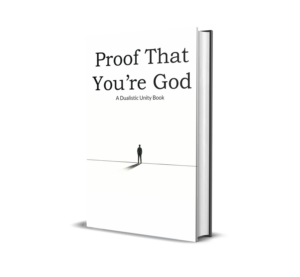
And if this perspective resonates beyond dating — into motivation, purpose, and identity — it’s explored more fully in Proof That You’re God.
The book isn’t about relationships specifically.
It’s about the inner freedom that allows relationships to stop carrying what they never should have.
From there, dating — and connection itself — becomes something far less stressful, and far more real.