
There’s a moment many parents don’t expect to feel as strongly as they do.
Applications are sent. Bags are packed. Conversations turn toward schedules, logistics, and practical next steps. On the surface, it all looks like progress — exactly what you prepared for.
And yet something quietly tightens.
Not because you don’t want your child to grow.
Not because you regret the years you gave.
But because a role you lived inside for so long is beginning to loosen.
Parenthood doesn’t just take time — it organizes identity. And when that organizing force starts to shift, the ground beneath it can feel strangely unstable.
The Grief No One Warns You About
What’s often called “empty nest syndrome” isn’t really about an empty house.
It’s about an emptied structure.
For years, your attention was anchored by responsibility — someone needed you, depended on you, oriented their world around your availability. That wasn’t just something you did. It was something you were.
When that responsibility eases, there’s relief. But there’s also disorientation.
Who am I when I’m no longer the one holding everything together?
What happens when the vigilance softens?
Where does my attention go now?
This tension echoes the same pattern explored in why relationships so often feel hard — the way identity forms around roles, and how difficult it can be when those roles begin to change.
What you’re feeling isn’t failure or selfishness.
It’s the natural friction of identity shifting.
You Weren’t Just Raising a Child — You Were Becoming Someone
Parenthood isn’t just a phase of life. It’s a full reconfiguration of self.
Schedules change. Priorities reorder. Attention narrows around protection, provision, and presence. Over time, that orientation becomes automatic. You don’t decide to care — caring is the default state.
You became the one who noticed.
The one who anticipated.
The one who stayed alert even when exhausted.
And that identity was reinforced every day.
So when your child steps into greater independence, it’s not just their life that changes. Yours does too — often without ceremony or acknowledgment.
That early intensity of parenting — the relentless responsibility of being the one — is something you’ve already explored deeply in Parents and the Relentless Responsibility of Being the One. What’s happening now isn’t separate from that. It’s the other side of it.
The responsibility isn’t vanishing. It’s transforming.
Why Letting Go Feels Like Losing Ground
Letting go is often framed as a virtue — something you should do gracefully, proudly, without resistance.
But letting go isn’t an action. It’s a loss of structure.
When a role dissolves, the mind doesn’t automatically know where to stand. The habits of attention that once felt purposeful suddenly feel unanchored.
This is why parents can feel:
- Unnecessary anxiety about their child’s choices
- A persistent urge to advise, correct, or intervene
- A quiet emptiness that doesn’t match how “successful” things look
It’s not because you don’t trust your child.
It’s because your identity hasn’t yet reorganized around the new reality.
And identity doesn’t update instantly.
The Subtle Pressure Parents Carry Into This Moment
Just as children feel pressure to “get it right,” parents often feel pressure to have raised them right.
University acceptance can feel like validation:
I did my job.
I prepared them well.
I didn’t fail.
And rejection can sting in unexpected ways — not because of the school itself, but because it brushes against deeper questions of worth, effort, and outcome.
But your success as a parent was never determined by where your child ends up.
It was shaped in moments no application will ever see:
- How you showed up when things were hard
- How you allowed them to struggle without rescuing
- How you modeled curiosity, repair, and presence
Those things don’t disappear when they leave home.
They live on — invisibly — in how your child meets uncertainty.
When Control Was Love — and Now Isn’t
For a long time, control and care were deeply intertwined.
You monitored because it mattered.
You intervened because safety depended on it.
You planned because consequences were real.
That wasn’t dysfunction. It was appropriate.
But there comes a moment when control no longer protects — it constrains. And sensing that shift can feel unsettling, especially when control has been synonymous with love for so long.
The discomfort isn’t about needing to hold on.
It’s about learning how to care without steering.
That’s a different skill. One most parents were never taught.
Attention Is Looking for a New Home
When parenting was central, your attention had a clear purpose.
Now it’s freer — and freedom isn’t always comfortable.
Unclaimed attention often turns inward:
Toward worry.
Toward self-judgment.
Toward revisiting old decisions.
Or it turns outward, scanning for ways to reinsert itself where it no longer belongs.
But attention doesn’t need a problem to solve.
It needs something to be with.
This transition isn’t asking you to stop caring. It’s asking you to notice where your care naturally wants to land next — without forcing it, without rushing to fill the space.
Your Child’s Path Isn’t a Measure of Your Life
Just as your child’s future isn’t determined by one acceptance letter, your life isn’t defined by how needed you remain.
Their independence doesn’t erase your years of devotion.
And your worth doesn’t decrease as their dependence does.
Parenthood isn’t something you graduate from. It’s something that changes shape.
The challenge isn’t letting go of love — it’s letting go of the identity that required constant necessity to feel real.
This Isn’t an Ending — It’s a Reorientation
There’s no ceremony for this moment. No guidebook. No clear next role to step into.
There’s just a quiet invitation to notice:
Who am I when I’m not organizing my life around someone else’s survival?
That question doesn’t need to be answered quickly.
It doesn’t need to be answered at all.
It just needs space.
Staying Present Through the Shift
The temptation in moments like this is to rush — to redefine yourself, fill the quiet, or grasp for new purpose immediately.
But this transition isn’t asking for action.
It’s asking for attention.
Attention to the grief that isn’t sadness.
Attention to the pride that isn’t triumph.
Attention to the love that no longer needs to manage.
Because what’s changing isn’t your bond.
It’s the way identity has been holding it.
An Invitation to Look Inward
The identity shifts parents experience during transitions like this don’t stop here. They appear again and again throughout life — whenever roles loosen, certainty fades, or meaning feels unmoored.
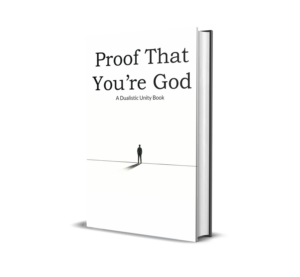
If this reflection resonates, you may find Proof That You’re God meaningful. The book explores how identity forms around roles, responsibility, and striving — and what becomes visible when attention turns toward awareness rather than outcomes.
Not as a solution.
Not as guidance.
But as an invitation to notice what remains when roles change.