
There’s a subtle but powerful reward that comes with being right.
A tightening of the chest. A quiet lift. A sense of being positioned above—more informed, more aware, more aligned with reality than someone else.
It can feel satisfying. Stabilizing. Even meaningful.
And yet, over time, many people begin to notice something uncomfortable:
Being right doesn’t actually bring them closer to life.
It doesn’t deepen relationships. It doesn’t soften conflict. It doesn’t create intimacy with reality or with other people. Often, it does the opposite.
This is where a deeper distinction begins to matter.
Not between right and wrong—but between being right and understanding.
Why being right feels so compelling
Being right offers something immediate.
It gives the mind a sense of orientation. It answers uncertainty with certainty. It turns ambiguity into position.
Most importantly, it provides identity.
When you’re right, you know where you stand—and often, where others don’t. This subtle comparison can feel grounding, especially in a world that often feels confusing and unstable.
But this grounding comes at a cost.
Because being right usually requires something else to be wrong.
And that requirement quietly shapes how we relate to others.
How correctness creates distance
Correctness tends to narrow attention.
Once you’re focused on defending a position, curiosity fades. Listening becomes strategic. The goal shifts from seeing clearly to maintaining coherence.
In conversations, this often shows up as:
- waiting to respond instead of listening
- collecting evidence rather than understanding context
- feeling threatened by disagreement
Even when you’re factually correct, something relational can be lost.
Understanding asks, What’s actually happening here?
Being right asks, How do I maintain my position?
These questions lead in very different directions.
The short-term high of comparison
Part of what makes being right addictive is comparison.
When you’re right, you’re not just aligned with truth—you’re aligned against someone else’s misunderstanding.
This creates a subtle hierarchy:
- informed vs uninformed
- aware vs asleep
- correct vs mistaken
The emotional reward is real, but it’s short-lived.
Comparison can temporarily boost self-image, but it rarely builds connection. Over time, it often leads to defensiveness, isolation, or quiet contempt—both for others and for yourself.
Understanding, by contrast, doesn’t require anyone to be beneath you.
Why understanding is relational
Understanding isn’t something you have.
It’s something that happens between—between you and another person, between you and experience, between you and reality as it unfolds.
To understand, you have to remain open.
Open to nuance. Open to being incomplete. Open to having your perspective changed.
This openness makes understanding slower and less gratifying than being right.
But it also makes it alive.
Being right protects identity
One reason being right feels safer than understanding is that it protects identity.
If you’re right, you don’t have to change. You don’t have to risk uncertainty. You don’t have to let go of who you think you are.
Understanding, on the other hand, often dissolves the very positions identity depends on.
It asks you to see beyond your role, your stance, your story.
This can feel destabilizing.
Which is why many people unconsciously choose correctness over clarity—even when it costs them intimacy.
How this shows up in relationships
In relationships, being right often masquerades as honesty or integrity.
But correctness rarely heals.
You can be right about what happened and still miss what mattered. You can be right about your feelings and still fail to meet someone else’s experience.
Understanding doesn’t mean agreeing. It means seeing.
And being seen—by another or by yourself—is what actually changes relationships.
This is why many relationships remain tense even when both people feel justified.
No one is wrong.
But no one feels understood.
Understanding reality instead of mastering it
This distinction extends beyond relationships into how we relate to life itself.
Being right treats reality as something to be mastered, explained, or controlled.
Understanding treats reality as something to be met.
Met with curiosity rather than certainty. With humility rather than dominance.
This shift—from mastery to relationship—is explored more broadly in reflections on why clarity often feels harder the more we understand.
When understanding becomes more important than winning
There often comes a point where the cost of being right becomes visible.
Conversations feel hollow. Conflicts repeat. Life feels strangely flat despite having strong opinions.
This is usually when a deeper question emerges:
What do I actually want from this interaction?
To be correct—or to be connected?
Understanding doesn’t guarantee agreement. But it creates space for honesty, nuance, and movement.
And movement is what keeps life from hardening into positions.
A final reflection
Being right can feel powerful.
But understanding is what allows life to respond.
When understanding becomes more important than being right, relationships soften. Curiosity returns. Reality feels less like something to defend against and more like something to participate in.
This isn’t a moral stance.
It’s a relational one.
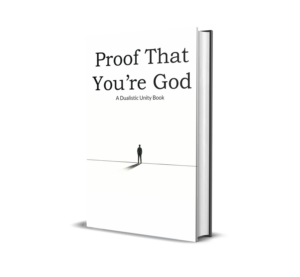
This shift—from correctness to understanding—is explored more deeply in Proof That You’re God. Not as an argument to abandon truth, but as an invitation to notice what changes when identity no longer needs to win.
There’s no prize for being right.
But there is something quietly transformative about understanding.