
There’s a moment many people recognize on this path.
Something clicks.
A pattern is seen. An insight lands. For a brief window, life feels cleaner — less conflicted, more coherent. Identity loosens. Anxiety softens. The mind relaxes into the sense that something important has been understood.
And then life continues.
The clarity fades. Old reactions reappear. The insight that felt obvious doesn’t seem accessible when it’s actually needed.
This is often interpreted as failure. As not having gone deep enough. As something that needs to be re-accessed, stabilized, or achieved again.
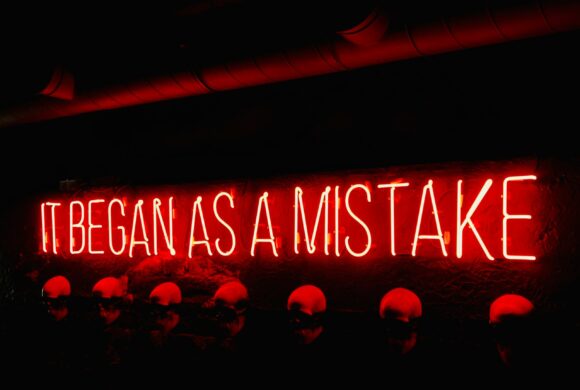
But what if clarity was never the point?
What if the real work was always quieter than that?
The Seduction of Insight
Clarity is seductive because it reorganizes perception.
In a moment of insight, confusion collapses into simplicity. Cause and effect appear obvious. The mind loves this because it feels like orientation — like control has been restored.
It’s easy to mistake that feeling for transformation.
But insight is an event. Integration is a process.
Insight happens to the system. Integration happens through it.
And they move at very different speeds.
Why Integration Is Quiet
Integration doesn’t announce itself.
There’s no emotional high. No clean narrative. No moment you can point to and say, This is where it changed.
Instead, it shows up indirectly:
- You react a little later than you used to.
- You notice tension sooner, with less urgency.
- Familiar patterns still arise, but they don’t dominate the moment as completely.
From the mind’s perspective, this can feel underwhelming.
Nothing resolved. Nothing concluded.
And yet something fundamental is reorganizing beneath the surface.
Clarity Wants Closure
The mind loves clarity because clarity feels like an ending.
A solved problem. A completed loop.
But lived experience rarely resolves that way.
Patterns don’t dissolve because they’re understood. They unwind as the nervous system learns there’s no longer a threat.
That learning happens through repetition, contradiction, and time — not explanation.
This is why trying to hold onto clarity often backfires.
The effort to preserve insight quietly turns it into another identity:
The one who understands.
The one who sees through things.
The one who shouldn’t be struggling anymore.
And when struggle inevitably returns, confusion follows — not because clarity was lost, but because expectation was added.
The Nervous System Learns Slowly
Much of what we call suffering isn’t cognitive.
It’s physiological.
The body learned its patterns long before language arrived. Safety, threat, belonging, and rejection were encoded through experience — not explanation.
So when insight lands, it may make immediate sense to the mind, but the nervous system hasn’t caught up yet.
And it doesn’t need convincing.
It needs time.
Time spent not reacting the old way. Time spent allowing sensation without immediately resolving it. Time spent letting life quietly contradict the stories that once felt necessary.
This is integration.
Slow, unremarkable, and deeply thorough.
Integration Happens in Ordinary Moments
This is why application matters more than explanation.
Not application as self-improvement or performance — but as contact.
Quiet, ordinary contact with life as it’s actually unfolding.
Integration doesn’t come from remembering insights. It comes from letting understanding seep into small behaviors.
Trimming your nails with attention. Feeling the impatience to finish.
Singing karaoke. Not to be impressive — but to willingly step into discomfort. To feel the nervous system flare and stay anyway.
These moments seem trivial.
But they’re where learning actually happens.
Not through ideas, but through experience:
- That nothing bad happens when attention stays.
- That discomfort doesn’t need to be avoided.
- That imperfection doesn’t require correction.
This kind of application doesn’t look impressive.
It looks ordinary.
Which is precisely why it works.
Another simple — and often underestimated — practice is gently returning attention to what’s real.
The feeling of your hands. The weight of your body in a chair. The sound of an apartment settling, traffic passing, wind outside.
This can feel strangely unproductive.
It doesn’t solve anything. It doesn’t advance a narrative. It doesn’t offer control.
And that’s exactly the point.
This kind of attention quietly reprioritizes reality over the obsessive, control-based thoughts that keep looping in the mind.
Nothing is fixed. Nothing is argued with.
Reality is simply allowed to take precedence again.
When Practices Become Another Distraction
There’s a subtle danger here.
Once attention and integration are valued, it’s easy to assume that traditional practices must be more effective.
Yoga. Meditation. Breathwork.
Not because they’re wrong — but because they’re culturally reinforced as important.
That assumption quietly undermines their power.
The moment a practice is treated as special, authority is outsourced:
This is the thing that works.
This is the right way.
But these practices weren’t powerful because they were formalized.
They were formalized because someone once paid attention — and others followed when it promised the way.
Attention came first. Structure came later.
Your Way Is the Way
The truest form of integration isn’t borrowed.
It’s personal.
It lives inside your routines, your body, your environment.
Your stretch is the best stretch when it’s done with awareness. Your breath is enough when it’s felt, not managed. Your pause counts when it’s honest, not performed.
You can do yoga. You can meditate.
But they aren’t special.
They’re simply contexts where attention can happen — no different than washing dishes or standing quietly in your living room.
What matters isn’t the form.
It’s whether reality is being met directly, without using practice to escape or control what’s already here.
That’s where integration actually lives.
Quiet Change
Quiet integration doesn’t give you something to defend.
No position. No identity. No insight to protect.
Just a gradual softening of urgency.
A little less friction. A little more space between stimulus and response.
Clarity feels good.
But integration is what changes how life is lived.