
Ancient Rome has become one of history’s most recognizable civilizations.
Its emperors, soldiers, senators, gladiators, and philosophers continue to appear in films, television series, video games, and online discussions. At the same time, Rome has become something of a cultural obsession within parts of the online manosphere. Quotes attributed to Roman emperors circulate widely. Marble statues fill profile pictures. The phrase “Think about the Roman Empire” became a viral meme after many women discovered that the men in their lives really did think about Rome surprisingly often.
But beneath the jokes lies a more interesting question.
Why has Rome become such a powerful symbol?
And why is it so often portrayed in popular culture as an overwhelmingly white, English-speaking civilization when the historical evidence paints a much more diverse picture?
Understanding Rome requires separating mythology from history.
Hollywood’s Rome Often Looks Like Victorian England
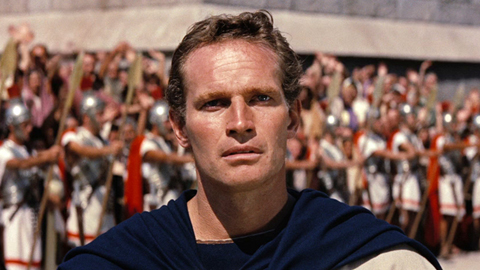
Watch enough films about Ancient Rome and certain patterns become difficult to ignore.
Roman senators speak with British accents.
Emperors often resemble nineteenth-century European aristocrats.
The population appears overwhelmingly white.
The streets are filled with people who look culturally and ethnically similar despite ruling one of the largest empires in history.
This image did not emerge because historians concluded that Rome looked this way.
Much of it developed because early epic films about Rome were produced by British and American studios using primarily European casts. Productions such as Ben-Hur, Spartacus, Cleopatra, The Fall of the Roman Empire, and later Gladiator reflected the film industries that created them as much as the ancient world they attempted to portray.
British accents also became a cinematic convention. To English-speaking audiences, Received Pronunciation came to symbolize education, nobility, and authority. Since no one knows what Classical Latin actually sounded like in everyday conversation, filmmakers adopted British English as a convenient shorthand for prestige.
The result feels familiar.
It is not necessarily historical.
Rome Was One of the Most Diverse Societies of the Ancient World
The Roman Empire stretched across three continents.
At its greatest territorial extent during the second century CE, it included Britain, Spain, France, Italy, Greece, Egypt, modern-day Turkey, Syria, Israel and Palestine, Lebanon, Libya, Tunisia, Algeria, Morocco, parts of Germany, the Balkans, and large portions of the Middle East and North Africa.
Millions of people from vastly different cultures lived within Roman rule.
Merchants crossed the Mediterranean constantly.
Soldiers were stationed far from their birthplaces.
Enslaved people were brought from throughout Europe, Africa, and Western Asia.
Officials moved between provinces.
Citizenship gradually expanded across the empire, culminating in Emperor Caracalla’s Edict of 212 CE, which granted Roman citizenship to nearly all free inhabitants of the empire.
Archaeology confirms this diversity.
Burials in Roman Britain reveal individuals whose ancestry traced to North Africa and the eastern Mediterranean. Ancient inscriptions document officials, merchants, soldiers, and families originating from Syria, Egypt, Gaul, Hispania, Numidia, Judea, Thrace, and countless other regions.
Rome was not a nation-state built around modern racial categories.
It was an empire.
Empires bring people together through conquest, trade, migration, diplomacy, and movement.
Modern Ideas of Race Did Not Exist in Ancient Rome
One of the greatest challenges in discussing Rome is that modern concepts of race developed many centuries later.
Romans certainly held prejudices.
They distinguished between citizens and non-citizens.
Romans and barbarians.
Free people and enslaved people.
Educated and uneducated.
Elite and common.
They frequently mocked foreign customs and languages.
But these distinctions did not map neatly onto today’s racial categories.
Someone born in North Africa could become a Roman emperor.
Septimius Severus, who ruled from 193 to 211 CE, was born in Leptis Magna in what is now Libya. His family reflected the cultural complexity of the empire, with Punic and Italian ancestry. Other emperors came from Spain, the Balkans, Syria, and elsewhere throughout the empire.
Roman identity centered more on citizenship, law, military service, political loyalty, and culture than on the modern idea of belonging to a single race.
Why the Manosphere Finds Rome So Appealing
The popularity of Ancient Rome within parts of the manosphere is equally fascinating.
It is easy to assume this fascination is purely historical.
In many cases, it appears symbolic.
Rome represents strength.
Discipline.
Order.
Military achievement.
Expansion.
Hierarchy.
Masculine ideals.
These themes resonate strongly with communities that believe modern society has become weak, uncertain, or disconnected from traditional definitions of masculinity.
The Roman soldier becomes less a historical person than an idealized archetype.
A symbol.
The problem with symbols is that they are often simpler than reality.
Ancient Roman Men Were Not the Men the Internet Imagines
Consider what Roman masculinity actually involved.
Elite Roman men were expected to demonstrate courage, political influence, military competence, and self-control. Public reputation mattered enormously.
Yet Roman society also accepted practices that many modern manosphere communities strongly reject.
Sexual identity operated very differently from modern categories. Roman masculinity was generally judged less by the gender of one’s sexual partners than by questions of status, dominance, citizenship, and social role. The expectations surrounding masculinity were shaped by power rather than by contemporary ideas of heterosexual identity.
Roman men also spent considerable effort on appearance. Elite men wore elaborate clothing, carefully styled their hair, practiced sophisticated public speaking, studied philosophy, wrote poetry, and participated in artistic patronage.
Many famous Roman writers argued endlessly about ethics, self-discipline, emotional regulation, and virtue.
Marcus Aurelius’ Meditations is remembered not as a military manual but as a philosophical reflection on humility, mortality, compassion, and self-control.
Rome was considerably more intellectually diverse than internet stereotypes often suggest.
Rome Was Built by Cooperation as Much as Conquest
Popular culture frequently emphasizes Roman conquest.
That history is real.
Rome expanded through warfare, colonization, and imperial domination.
At the same time, empires do not survive through conquest alone.
Rome required engineers.
Teachers.
Architects.
Doctors.
Merchants.
Farmers.
Craftspeople.
Lawyers.
Administrators.
Road builders.
Sailors.
Tax collectors.
Interpreters.
Diplomats.
Its greatest achievements—roads, aqueducts, legal systems, architecture, engineering, and administration—depended upon cooperation across cultures as much as military strength.
The image of Rome as nothing more than relentless masculine aggression overlooks much of what actually sustained the empire for centuries.
Why We Romanticize the Past
The deeper question is not simply why people admire Rome.
Human beings have always looked backward for certainty.
Periods of rapid social change often produce nostalgia for imagined golden ages.
Psychologists have found that nostalgia can provide comfort, identity, and meaning during times of uncertainty. The past begins to feel simpler than the present.
The difficulty begins when nostalgia transforms history into mythology.
Ancient Rome becomes a place where every man supposedly knew his role.
Where society functioned perfectly.
Where weakness disappeared.
Where hierarchy solved every problem.
The historical record tells a different story.
Rome experienced political corruption, economic inequality, civil wars, assassinations, public scandals, slavery, epidemics, inflation, religious conflict, succession crises, and constant struggles over identity and power.
In many ways, Romans argued about society just as passionately as we do today.
Seeing Rome as It Was
Another way of looking at Ancient Rome is not as an ideal civilization but as an extraordinarily complicated human experiment.
It was brilliant.
It was violent.
It was innovative.
It was unequal.
It produced extraordinary philosophy alongside brutal slavery.
Remarkable engineering alongside imperial conquest.
Profound legal innovations alongside political instability.
Like every civilization, Rome reflected both the highest and lowest capacities of human beings.
Reducing it to either heroic perfection or complete oppression misses its complexity.
Beyond the Marble Statue
Perhaps that is why Rome continues to fascinate us.
Not because it offers easy answers.
Because it reflects ourselves.
Every generation recreates Rome in its own image.
Hollywood often recreates it through familiar European aesthetics.
Some online communities recreate it as a symbol of lost masculinity.
Historians continually reconstruct it through archaeology, ancient texts, and new discoveries that reveal a civilization far more diverse and complicated than popular culture usually admits.
The question is not whether Rome should inspire us.
The question is which Rome we are choosing to remember.
The historical one.
Or the imagined one.
Continue the Exploration
History often becomes a mirror more than a window. We look into the past believing we are discovering ancient civilizations, yet we frequently end up revealing our own assumptions, fears, and identities. The stories we choose to celebrate often say as much about the present as they do about the past.
If this article resonated with you, consider reading Proof That You’re God. The book explores how identity, culture, certainty, and awareness shape the stories we tell about ourselves, our history, and one another. Sometimes understanding the past begins with noticing the lens through which we are viewing it.