
Growing up isn’t simply about taking on more responsibilities. It’s about discovering that life doesn’t always unfold according to the assumptions we inherited.
At some point, almost everyone has the same thought. Why is being an adult so hard? As children, adulthood often appears simple. Adults seem confident. They have jobs, homes, cars, families, routines, and answers. They appear to know what they’re doing. Then one day, almost without noticing, you become one of them.
Only now you’re expected to pay bills, manage relationships, build a career, maintain your health, navigate uncertainty, care for other people, make important decisions, and somehow still have time to enjoy life.
Many people quietly wonder if they missed the class where everyone else learned how to do this.
The surprising truth is that everyone is making it up as they go.
We Expect Life to Eventually Feel Stable
One of the biggest surprises of adulthood is realizing that uncertainty doesn’t disappear. As children, life is structured largely by other people. School schedules are planned. Meals appear. Rules are established. Someone else is responsible for solving many of the problems that arise.
Growing up gradually shifts those responsibilities onto us.
It’s easy to assume that once we reach adulthood, we’ll finally arrive at a place where everything feels under control. We imagine that confidence comes automatically with age. Reality tells a different story. Every stage of life introduces new questions. Choosing a career. Finding meaningful relationships. Managing finances. Raising children. Caring for aging parents. Facing illness. Planning retirement. The responsibilities change, but uncertainty remains.
Many people aren’t struggling because adulthood is uniquely difficult. They’re struggling because they expected uncertainty to eventually end.
Responsibility Can Feel Like Pressure
Responsibility isn’t inherently stressful. Pressure often appears when responsibility becomes tied to identity. Notice what happens when every decision begins carrying the weight of proving your worth.
A career isn’t simply a way to contribute. It becomes evidence of success. A home isn’t simply a place to live. It becomes a measure of achievement. Relationships become proof that you’re lovable. Parenting becomes proof that you’re good enough. Money becomes proof that you’re responsible.
The more identity becomes attached to outcomes, the heavier every decision begins to feel. Suddenly, ordinary responsibilities start carrying extraordinary emotional weight.
Nobody Talks About Invisible Work
Much of adulthood consists of tasks that are never truly finished. Laundry returns. Dishes accumulate. Emails multiply. Appointments need scheduling. Groceries run out. Repairs appear. Bills continue arriving. The list quietly rebuilds itself every week.
This creates a unique psychological experience because many adult responsibilities don’t offer the satisfaction of permanent completion. Instead, life becomes an ongoing rhythm of maintenance.
The difficulty begins when we interpret this endless cycle as failure rather than recognizing it as the normal nature of living. You’re not falling behind because there’s always more to do.
Life simply continues unfolding.
Comparison Makes Growing Up Feel Harder
Modern adulthood comes with an unusual challenge that previous generations experienced far less intensely. Constant comparison. Social media allows us to witness thousands of carefully edited moments every day.
Someone graduates at the top of their class.
Someone gets promoted.
Someone travels the world.
Someone announces an engagement.
Someone starts a successful business.
Someone buys a house.
Rarely do we see the anxiety behind the scenes, the failed attempts, the debt, the loneliness, the uncertainty, or the compromises that accompany those achievements. Comparison creates the illusion that everyone else has figured life out while you’re still trying to catch up. That illusion becomes exhausting because the finish line keeps moving.
Freedom Can Feel Overwhelming
As children, many of our choices are made for us. Adulthood offers remarkable freedom. Ironically, freedom can create its own form of stress. There are countless careers to pursue. Endless places to live. Unlimited information to consume. Thousands of opinions about how to eat, invest, parent, date, exercise, and succeed.
Consider how many decisions your mind makes before lunch. Each one seems small. Together, they create decision fatigue. Having more options doesn’t always make life easier. Sometimes it makes commitment more difficult because every choice appears to eliminate countless alternatives.
We Keep Waiting to Feel Like Adults
One possibility is that many people never actually feel like the version of adulthood they imagined. They continue learning. They continue making mistakes.
They continue changing their minds. The image of the perfectly competent adult exists largely in memory because that’s how children often perceive the adults around them.
Looking back, we recognize something surprising. Our parents were learning too. Our teachers were improvising more often than we realized. The adults we admired were carrying doubts they rarely expressed. Growing older doesn’t eliminate uncertainty.
It simply changes the questions.
Life Isn’t a Checklist
Many people unknowingly approach adulthood as though life follows a universal sequence. Graduate. Find a career. Pay Off College Debt. Buy a home. Get married. Have children. Retire.
Be happy.
Life rarely follows such clean lines. Some people marry young. Some divorce. Others never marry. Some become parents. Others don’t. Some change careers multiple times. Some lose everything and begin again. Some discover fulfillment in places they never expected.
The deeper question isn’t whether your life matches someone else’s timeline. It’s whether you’re living according to your own values instead of someone else’s expectations.
Adulting Isn’t About Becoming Perfect
The word “adulting” has become popular because it acknowledges something surprisingly honest. Being an adult often feels like learning through experience rather than mastery.
No one graduates into complete certainty.
Everyone continues adapting. Everyone encounters challenges they didn’t anticipate. Everyone occasionally feels overwhelmed. Recognizing this doesn’t remove life’s responsibilities. It removes the unnecessary expectation that you should already know everything. Growth has never required perfection. It only requires participation.
A Different Way to Measure Success
Consider measuring adulthood differently. Not by income alone. Not by possessions. Not by productivity. Not by how busy you appear. Instead, ask quieter questions.
Are you becoming more honest? More resilient? More compassionate?
More capable of facing uncertainty without immediately trying to escape it?
More willing to learn from mistakes instead of hiding them?
These qualities rarely receive public recognition. Yet they shape the quality of life far more profoundly than many traditional markers of success.
Life Was Never Meant to Feel Finished
Many people spend years waiting for the moment life finally settles into permanent certainty. That moment rarely arrives. Life continues changing because change is one of its defining characteristics.
Relationships evolve. Careers shift. Dreams mature. Bodies age. Priorities transform.
At first this can feel disappointing. Eventually it can become liberating. You no longer have to treat uncertainty as evidence that you’re doing adulthood incorrectly. It becomes evidence that you’re still participating in life.
And that may be one of the clearest signs that you’re growing—not because you’ve figured everything out, but because you’re continuing to meet life as it unfolds.
Continue the Exploration
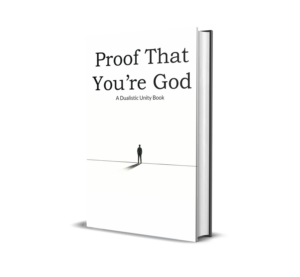
Much of what makes adulthood feel difficult isn’t the responsibilities themselves, but the assumptions we carry about who we’re supposed to become. Proof That You’re God explores how identity, expectation, and the search for certainty quietly shape our experience of everyday life. If you’ve ever felt like you’re falling behind, the book offers a different perspective—one that begins not with becoming someone better, but with understanding who you already are beneath the stories you’ve learned to believe.