
The Hidden Cost of Judging Mistakes
Every human being begins life knowing almost nothing.
No language.
No mathematics.
No social customs.
No understanding of gravity, cooking, driving, taxes, relationships, or even how to tie a shoe. Everything we now consider “obvious” was once completely unknown.
Yet somewhere along the way, many of us begin acting as though not knowing something is embarrassing. Asking a question becomes risky. Making a mistake becomes something to hide. Admitting confusion can feel like exposing a personal flaw rather than revealing an ordinary part of learning.
The result is a strange contradiction.
We celebrate intelligence, but often shame the very process that creates it.
Nobody Starts as an Expert
Learning has always depended on mistakes.
Neuroscience has shown that the brain continually updates itself through prediction and error. When our expectations fail to match reality, the brain receives information that allows it to adjust its internal models of the world. These “prediction errors” are fundamental to learning. Without them, improvement would be nearly impossible.
Children demonstrate this naturally.
A toddler does not feel ashamed for falling while learning to walk. They stand, fall, adjust, and try again hundreds of times. They mispronounce words for years before speaking fluently. They ask endless questions because curiosity matters more than appearing knowledgeable.
Somewhere between childhood and adulthood, many people stop treating mistakes as information.
They begin treating them as identity.
The Fear of Looking Incompetent
Consider what happens in many classrooms or workplaces.
A teacher asks whether anyone has questions.
Silence.
Not because everyone understands. Because someone worries their question will sound foolish.
Psychologists have studied this phenomenon extensively. Research on social anxiety and evaluation apprehension shows that people frequently avoid asking questions because they fear negative judgment from others. This reluctance can reduce learning, participation, and even workplace safety, particularly in environments where mistakes are punished rather than discussed.
Ironically, someone else in the room is often wondering the exact same thing.
The question that feels embarrassing to ask is frequently the question everyone needed answered.
“You Should Already Know That”
Few phrases discourage curiosity faster than these words. “You should already know that.”
The statement sounds informative, but it rarely teaches anything. Instead, it communicates something else. Your worth is being measured by what you already know. The difficulty begins when knowledge becomes confused with intelligence.
Knowledge is accumulated.
Intelligence involves the ability to learn, adapt, reason, and solve problems.
Someone who knows the answer today simply encountered the information earlier. That does not make them inherently more capable than the person asking the question.
Time and opportunity often explain far more than talent.
Living Doesn’t Come With Instructions
Another way of looking at this is to recognize how many aspects of adulthood require skills that few people are formally taught.
How do you build a healthy relationship?
How do taxes work?
How do mortgages work?
How do you grieve?
How do you comfort someone experiencing loss?
How do you recognize manipulation?
How do you communicate during conflict?
How do you raise children?
How do you cope with anxiety?
Most of these lessons arrive while we are already expected to know them. People are often learning how to live while simultaneously trying to appear as though they already understand life.
That is an exhausting performance.
The Internet Didn’t Eliminate Ignorance
The internet has given us unprecedented access to information. It has also increased the fear of asking questions publicly.
Many people have experienced posting a sincere question online only to receive replies like, “Just Google it,” “How do you not know this?” or “That’s common sense.”
Notice what happens when curiosity is repeatedly met with ridicule.
People stop asking.
They become quieter.
They pretend to understand.
The unfortunate consequence is that misinformation often spreads more easily than honest uncertainty. Someone afraid of appearing ignorant may never ask the question that would have corrected a misunderstanding.
Curiosity shrinks.
Confidence becomes performance.
Mistakes Are Evidence That You’re Participating
There is an important difference between making mistakes carelessly and making mistakes while genuinely trying to learn.
A writer produces rough drafts before publishing.
A scientist conducts experiments that fail.
An athlete loses competitions.
A child falls while learning to ride a bicycle.
Failure is often built directly into improvement.
Research on expertise consistently finds that deliberate practice involves repeated correction rather than effortless success. High performers are not people who never make mistakes. They are people who learn from them more effectively.
Mistakes are often evidence that growth is occurring.
Avoiding mistakes entirely usually means avoiding challenges.
The Stories We Attach to Failure
One possibility is that the mistake itself hurts far less than the story we tell about it.
Missing a question on an exam becomes “I’m not smart.”
A failed relationship becomes “I’m impossible to love.”
A rejected job application becomes “I’ll never succeed.”
A forgotten appointment becomes “I’m irresponsible.”
Notice how quickly isolated events transform into seemingly permanent identities.
Psychologists describe this pattern as overgeneralization, a common cognitive distortion in which one experience becomes evidence for sweeping conclusions about ourselves.
The event passes.
The story remains.
Sometimes for years.
Curiosity Requires Humility
It is easy to assume confidence means always having answers. In reality, genuine confidence often looks remarkably different.
Confident people can say: “I don’t know.”
“I’ve never learned that.”
“Can you explain it differently?”
“I was mistaken.”
“Thank you—I hadn’t considered that.”
These statements require humility, but they also require security. Someone whose identity depends on always being right will naturally resist situations where they might be wrong.
Curiosity begins where certainty loosens its grip.
We Are All Learning at Different Times
Consider two people discussing investing. One began learning at sixteen because their parents taught them. The other grew up in a household where money was rarely discussed.
Who is more intelligent?
The question itself misses something important. They simply encountered different experiences.
The same applies to cooking, relationships, parenting, technology, history, emotional regulation, communication, and countless other areas of life.
Knowledge accumulates unevenly. No one receives identical opportunities.
Judging someone for not knowing what we happen to know ignores the countless things they understand that we do not. Every person carries expertise that someone else lacks.
A Better Way to Learn Together
Imagine how different classrooms, workplaces, families, and friendships would become if questions were treated as contributions rather than interruptions.
Instead of laughing, we explained.
Instead of judging, we became curious.
Instead of competing over who already knows the answer, we celebrated another opportunity for everyone to learn. The deeper question is not whether mistakes can be avoided.
They cannot.
The more meaningful question is whether we create environments where mistakes become stepping stones instead of sources of shame. Because every expert was once a beginner.
Every teacher was once a student.
Every answer began as someone’s question.
Continue the Exploration
Much of our fear surrounding mistakes comes from something deeper than the mistakes themselves. We often believe our value depends on appearing competent, knowledgeable, or successful in the eyes of others. The moment we do not know something, our identity can feel threatened. Yet learning has never required perfection. It has always required honesty.
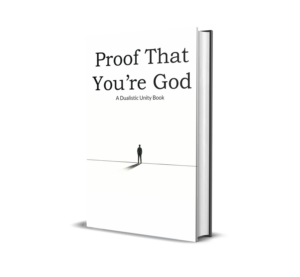
If this article resonated with you, consider reading Proof That You’re God. The book explores how identity, fear, certainty, and awareness shape the way we experience ourselves and the people around us. Sometimes the most transformative question is not the one we answer—it is the one we finally become willing to ask.