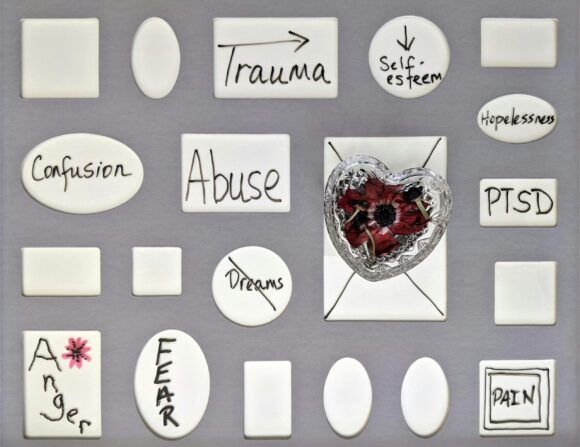
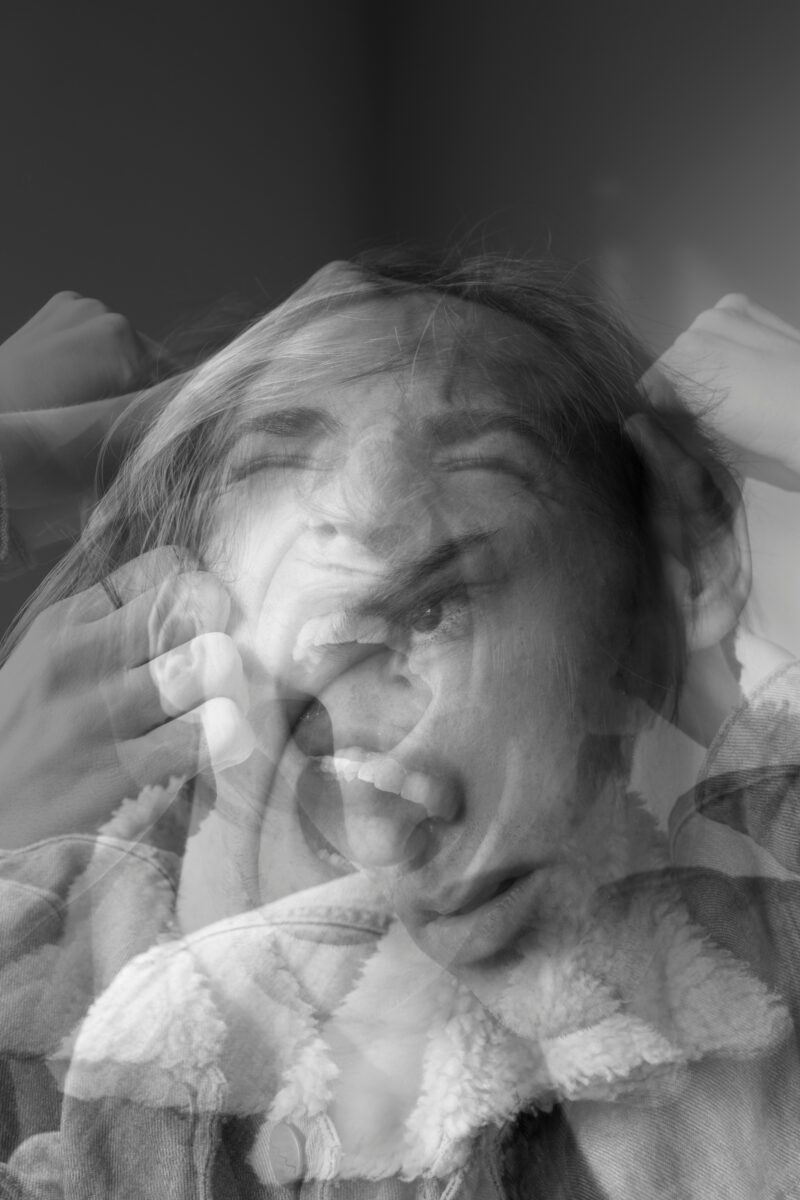
Inner turmoil rarely announces itself clearly.
It doesn’t arrive as a single emotion or a simple thought. It shows up as a storm: racing narratives, surging feelings, self-criticism, urgency, confusion — all tangled together in a way that feels personal, overwhelming, and impossible to step back from.
When you’re in it, inner turmoil doesn’t feel like something you’re experiencing.
It feels like you.
This is why it can be so frightening. And why it’s so easy to believe something has gone wrong.
But what’s happening during inner turmoil is not a failure of awareness — it’s the mind doing exactly what it’s learned to do when identity, emotion, and thought collapse into one lived experience.
Why inner turmoil feels like chaos instead of emotion
Most people assume inner turmoil is simply “strong emotions.” But if that were true, intense joy or excitement would feel the same way.
They don’t.
What makes turmoil chaotic is not intensity alone — it’s entanglement.
Thoughts generate emotions. Emotions fuel more thoughts. Those thoughts revolve around a growing sense of me: my problem, my failure, my future, my safety.
The mind begins narrating about itself while simultaneously reacting to its own narration.
There’s no distance. No pause. No outside reference point.
This is why turmoil feels urgent and personal. The system is no longer observing experience — it’s inside the story it’s telling.
The invisible center of the storm: the sense of “me”
At the heart of inner turmoil is not a problem to be solved, but an identity being constructed in real time.
When thought and emotion loop around the question of “what this says about me,” experience tightens.
Fear becomes my fear. Confusion becomes my confusion. Uncertainty becomes my future at risk.
This self-referential loop gives turmoil its claustrophobic quality. Everything points back to a single center that feels solid, endangered, and in need of protection.
The more this sense of “me” is believed, the more chaotic the experience becomes.
Not because the thoughts are true — but because they’re no longer being seen as thoughts.
Being in inner turmoil vs being aware of it
There’s a subtle but profound distinction that often goes unnoticed:
- Being in inner turmoil
- Being aware that inner turmoil is happening
This isn’t a technique. It’s a difference in context.
When you’re in it, every thought feels authoritative. Every emotion feels final. Insight feels impossible because the system generating the distress is also the one trying to solve it.
Awareness doesn’t make turmoil disappear.
What it does is loosen identification.
Thoughts can still be loud. Emotions can still surge. But they’re no longer the unquestioned center of reality. They’re experiences occurring within awareness, not definitions of who you are.
This shift doesn’t arrive on command. It often emerges gradually, through honesty rather than control.
Why self-honesty matters more than calming down
When people are in turmoil, the instinct is to regulate, manage, or suppress the experience.
But inner turmoil isn’t asking to be silenced.
It’s asking to be seen clearly.
Self-honesty means noticing what the thoughts are actually circling:
- What feels threatened?
- What feels unfinished?
- What image of self is being defended?
This isn’t about fixing the answers. It’s about allowing the real motivations and fears to come into awareness without moral judgment.
Insight arises not from analysis, but from seeing what’s already there.
And that seeing often happens inside the turbulence — not after it’s gone.
Why inner turmoil is a developmental process
This is the part that’s often misunderstood.
Inner turmoil isn’t just distress — it’s frequently a sign of identity reorganization.
Old ways of understanding yourself stop working. New ones haven’t stabilized yet. The space between feels chaotic because there’s no longer a clear reference point.
This is why inner turmoil often appears during periods of growth, loss, transition, or increased self-awareness.
Something familiar is dissolving, but nothing stable has replaced it.
From the inside, this feels like breakdown.
From a wider perspective, it’s reconfiguration.
This same dynamic appears in broader reflections on why clarity often feels harder the more we understand — because the collapse of old frameworks precedes the formation of new ones.
Why going through turmoil matters
No one chooses inner turmoil. And there’s no virtue in suffering for its own sake.
But bypassing it — trying to leapfrog over the confusion — often preserves the very structures that created it.
Moving through turmoil allows:
- deeper empathy for others in distress
- humility around one’s own narratives
- compassion that isn’t theoretical
- awareness that’s grounded, not conceptual
People who haven’t faced inner turmoil often interpret distress as weakness. People who have lived through it recognize it as part of being human.
This is not because turmoil makes you better.
It’s because it dissolves certainty in ways that open understanding.
When the chaos begins to soften
As identification loosens, something subtle changes.
The storm doesn’t necessarily stop — but it becomes less personal.
Thoughts arise and pass. Emotions move through. The sense of “me” becomes less rigid, less central, less demanding.
This isn’t relief in the way the mind imagines relief.
It’s space.
Space to feel without drowning. Space to see without needing answers. Space to remain present even when clarity hasn’t arrived.
A final reflection
If you’re experiencing inner turmoil, it doesn’t mean you’re failing at life or awareness.
It often means you’re encountering the edges of an identity that can no longer hold everything together.
Inner turmoil feels chaotic because the mind is trying to protect a sense of self that’s in the process of changing.
This territory — where thought, emotion, and identity collide — is explored more deeply in Proof That You’re God. Not as a promise of escape from turmoil, but as an invitation to understand what you actually are when the storm is fully felt.
There’s nothing to force here.
Only something to be seen — from within the chaos itself.